As I reflect back on what I achieved in 2014 I realized that what made this year different from previous ones was the level of collaboration with other skilled people that made the shots. In prior years the images were mainly the result of a single model (who did there own makeup) and me.
But at the start of this year I started to work more with stylist, hair and makeup artists and the results were so much better.
I thanks each and every one of you for your help this year and I look forward to working more with you in 2015. Unfortunately I do not have behind the scenes images from all of the shots but here are a sample.
To Ivy, Grace, Crystal, Tiffany, Sophie, Samantha and Alan thanks for the help this year.
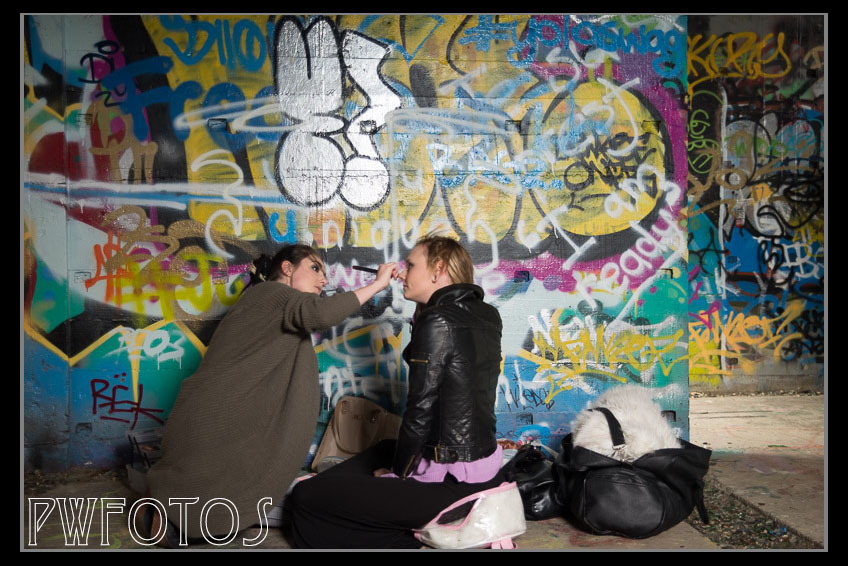
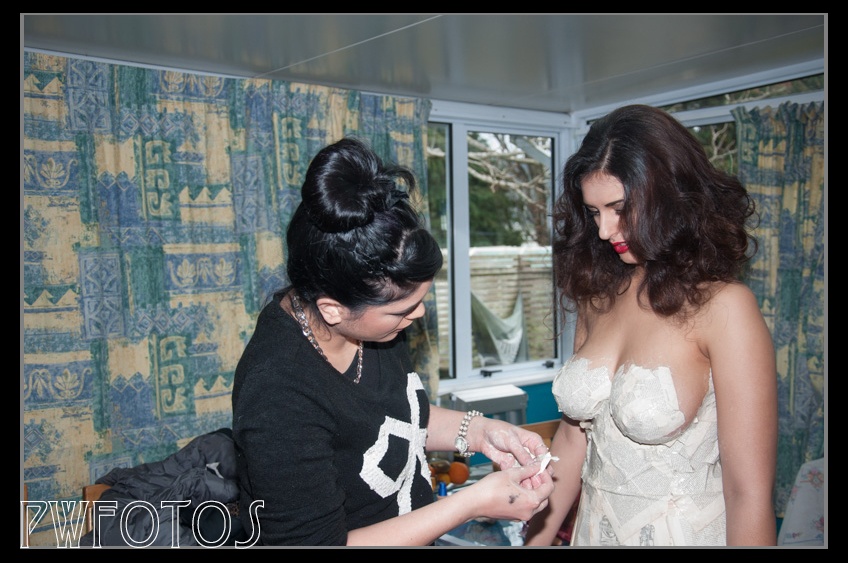
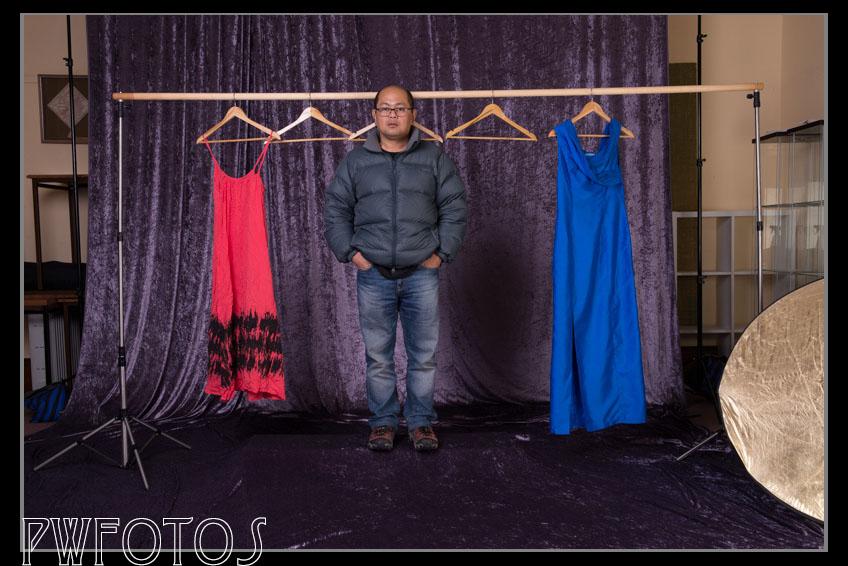
Sophie applying makeup to Megan on location at Palmer HeadTiffany starts the process of attaching the paper for my Paper Queen shootGrace applying a makeup fix to Kat in my Autumn Goddess shootAlan helping out with a lighting test
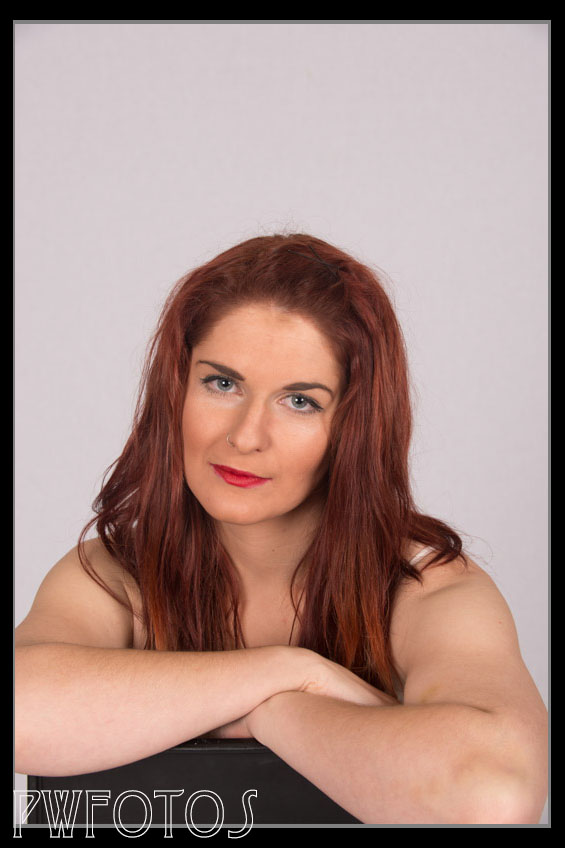
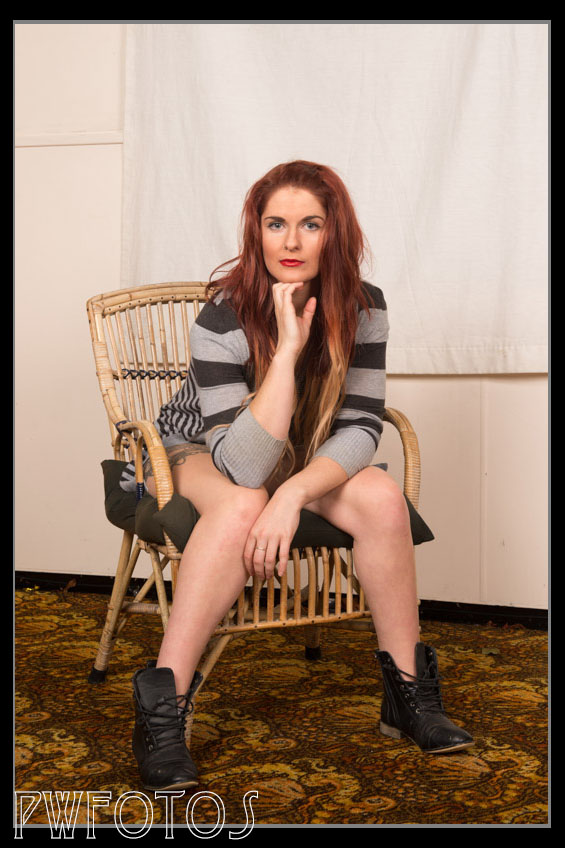
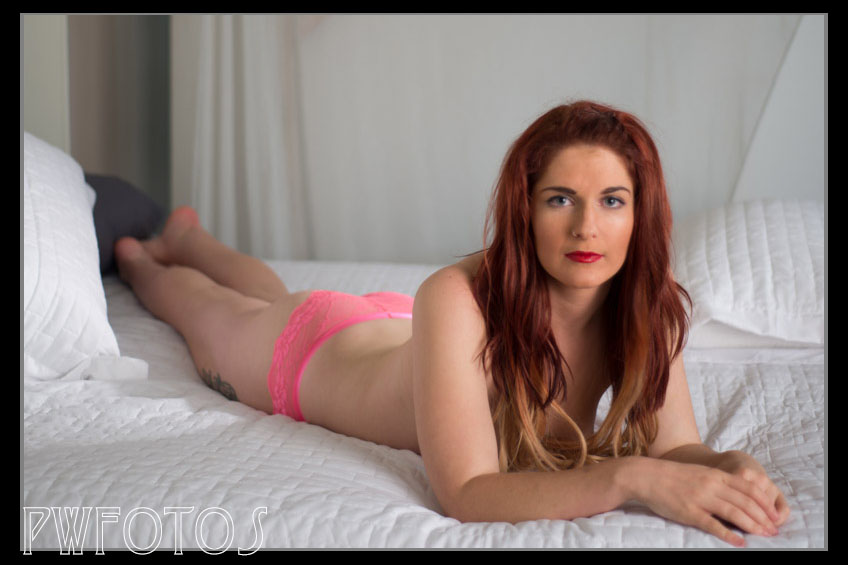
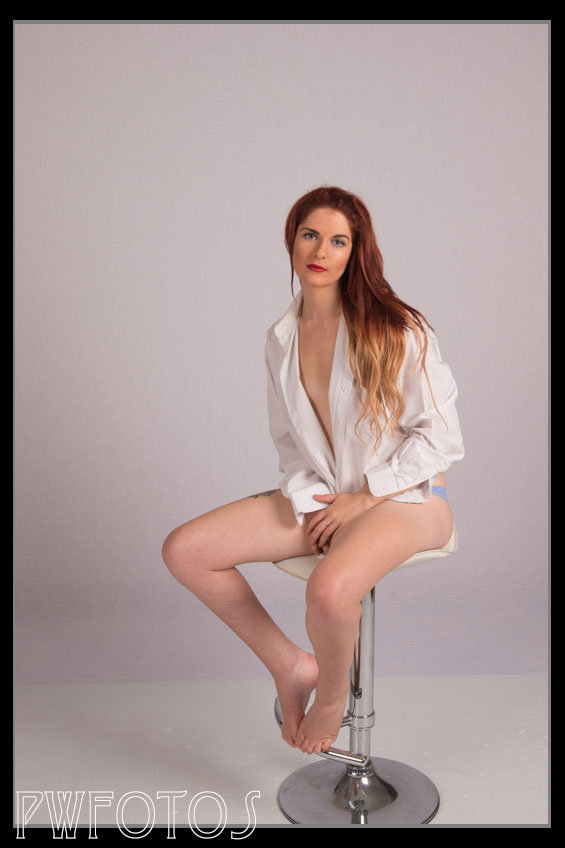
I met Ali through a casting call she had placed on Facebook. She had wanted to have some lingerie shots taken, and I generally make it a rule to never go into a shoot like this without meeting the model first. It helps build up a rapport and a trust which is really important.
We met at a local cafe on a Sunday morning. She had agreed to shoot with another photographer the day before and had not enjoyed the experience at all. He had constantly pushed for her to reveal more than she wanted and she had found the whole experience sleazy.
I promised her that that I she would have a much better experience with me. I thought that it was a great opportunity to try put a new studio in Upper Hutt run by Paul Maka-Kea. We arranged the shoot for Friday night.
The studio is based at Trentham Racecourse and is huge, offering a seamless backdrop, a small bed set and plenty of other space.
Once Ali arrived we discussed the various shots that we were going to do and then selected the outfits for each. Given her first experience it was importantly to take the shoot slowly so we started with fully clothed sequences against the white seamless and then using some of the furniture.
Part of the area includes a very large powder room with full length mirrors and so I knew that I wanted to incorporate those. Having a room with mirrors presents interesting challenges when it comes to placing the lights but not impossible.
When I meet a model for the first time I always ask them what they do not like about themselves. Ali said her feet so it became a little bit of fun throughout the shoot when I said that I would break her of that phobia by having lots of the them in the shots.
By the time that we moved to the bed set Ali was very relaxed and it came across in her images.
We had planned to do a series of high key images but simply ran out of time however we did finish with another series against the white but this time with Ali only wearing a white shirt.
She tells me that she really enjoyed the session and we are planning on doing another one early in 2015 to get the shots we didn’t get around to.
The studio space worked out really well and I intend to use it again next year.
Sometimes the best way forward, is to admit that what you are doing has gone of the rails, and the best way to fix it is to start again.
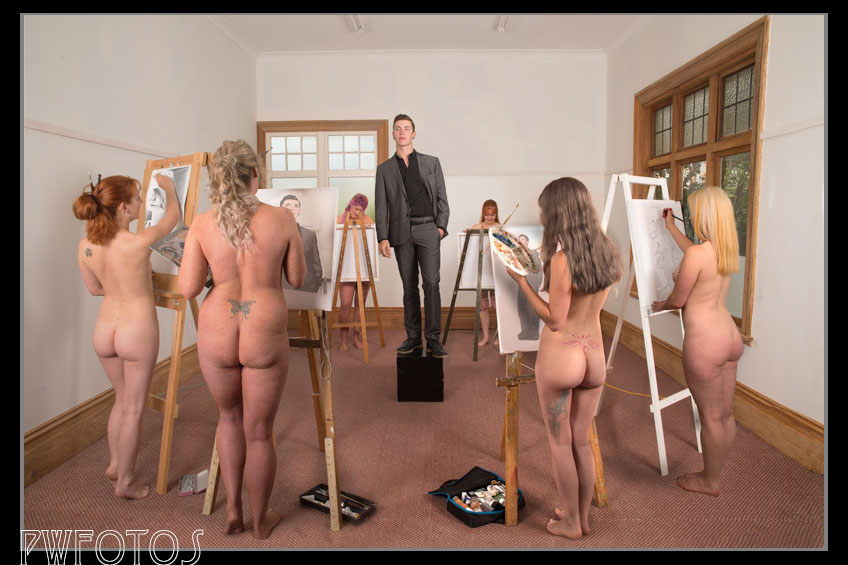
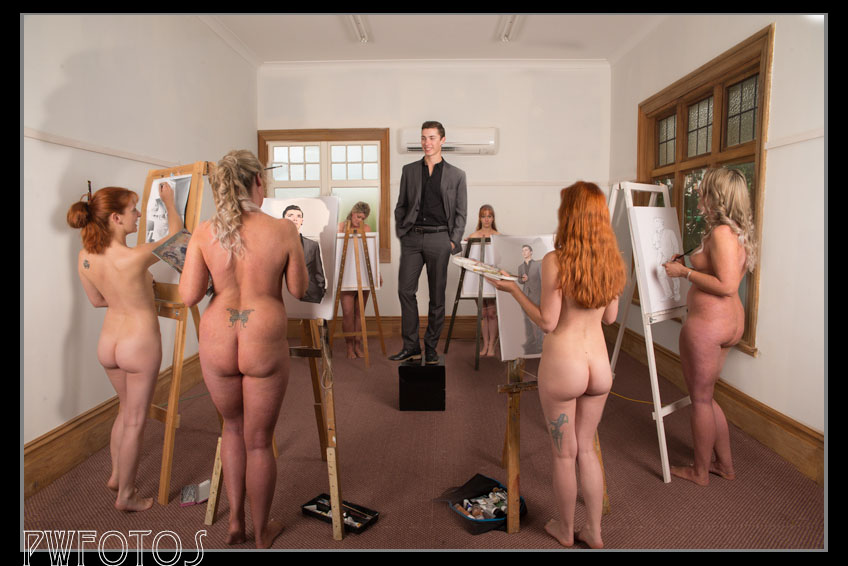
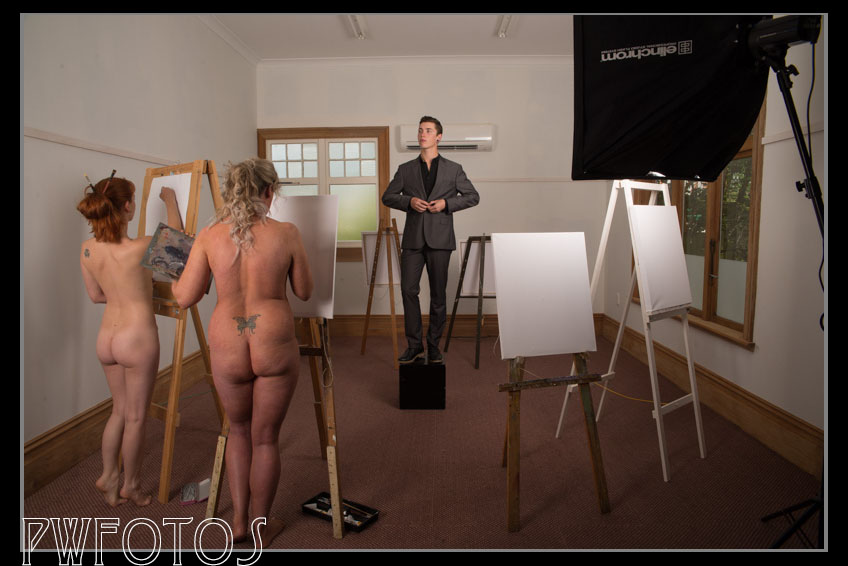
This was certainly the case when I started out to build the composite of the Art Class together. In Part One of this blog post I went through how the image was shot and that because a number of models had been unable to make it, I had to shoot it as a composite and assemble it in Photoshop.
The early draft image
I selected the best images in lightroom and starting with the elements closest to the viewer, combined them as layers in photoshop masking out what I wanted to show through. After an hour I has a reasonable first cut. In order to save space I had only copied in the part of the element that I wanted rather than leaving a full layer.
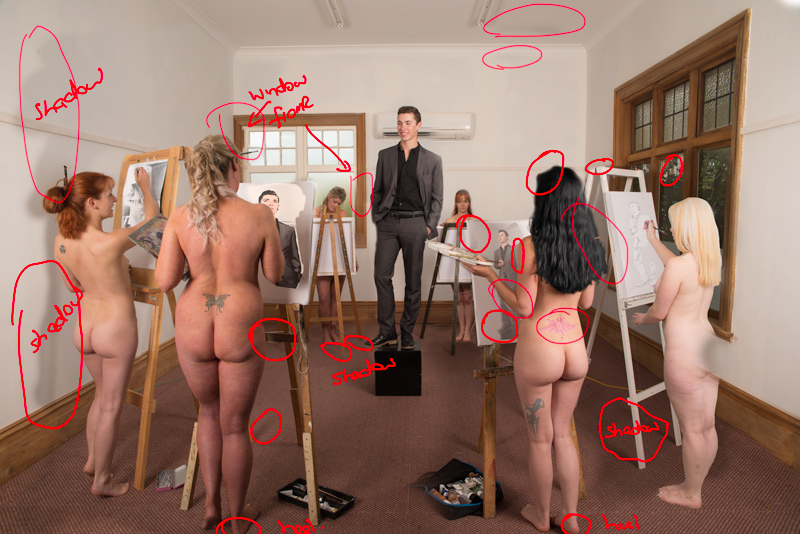
I had an issue with shadows on the wall but other than that the image looked ok. The problem was that I did not want the viewer to immediately see that they were only two artists. Despite the fact that they had changed hair styles it was too obvious.
With Sian (redhead) adding a couple of extra tattoos and changing her hair colour made sufficient difference. But nothing I did really worked with Kylie so at that point I contacted Renee (who has been sick on the day) to see if she was available to shoot.
Once I had that image and tried to incorporate it the composite started to fall apart.
The image at the point I abandoned it.
I could not get the light to look consistent across the image and elements were not lining up. I also realised that I had cropped off the heels and needed to enlarge the canvas at the bottom and rebuild the missing part of the heel. Then I discovered that some of the elements on the layers that I had discarded was actually needed. After 45 minutes of struggling and getting nowhere fast I decided that the best approach was to scrap it and start again.
This time I started with the empty room which I enlarged slightly at the bottom so that I had space to deal with the missing heel. I placed the girls at the back first, balanced the exposure and then moved forward. Admittedly incorporated Renee into the image was the hardest element as she was not shot in the same environment and some more work is still needed there, as the feet are not there yet. Unfortunately feet are the hardest part of a composite to get right, and the usual techinques (not showing them, or making the area around them very dark) are not available to me.
Given that I have plenty of time before I have to exhibit the image I am sure that I will get it looking right by then. If you want to learn more about composites then the best resource I have found are the videos produced by Aaron Nace at www.phlearn.com
Sometimes the time between getting an idea and actually executing it can be a long interval. About two years ago when my wife was doing art school and bringing home lots of drawings from her “life studies” classes, I got the idea to create a satirical image based on a class. In that I wanted to revert the roles whereby the model was clothed and all the class were nude.
I never really took it further than a concept but this year I decided that I needed to actually bring it to life as I am planning on submitting it for an exhibition next year. So I booked a studio and posted a casting call as well as contacting a number of models who had taken part in the body painting competitions. I also thought it would be more satirical if the model was male, as most life art models are female.
By the end of casting I has six models selected as artists and a male model, and everything seemed to be going to plan.
As often happens that plan went out the window when the male model and two female models became unavailable, then one got sick and then on the day two didn’t show. So having gone from being able to do the whole shoot in a single image I had a male model (Jacob) and two female artists (Sian and Kylie). This was going to change the way that the image was put together.
Below are a series of images and explanations of the various shots that made up the final image.
The first priority was to determine what f-stop would give me sufficient depth of field (DOF) to ensure that my model and artists were in sufficient focus. Generally the DOF runs from one third in front, and two thirds behind the focus point. In the case of my image that focus point was to be on the male model.
With the camera set on the tripod i estimated that f9 would be a good starting point, and with the help of a willing volunteer we shot two images. The camera was set to Aperture priority and the lights were not turned on at this stage.
First shot taken where the model was standingSecond shot where an artist would be standing
My guess was correct and so we now turned the lights on and made sure that the exposure was at f9 where the front easels were positioned.
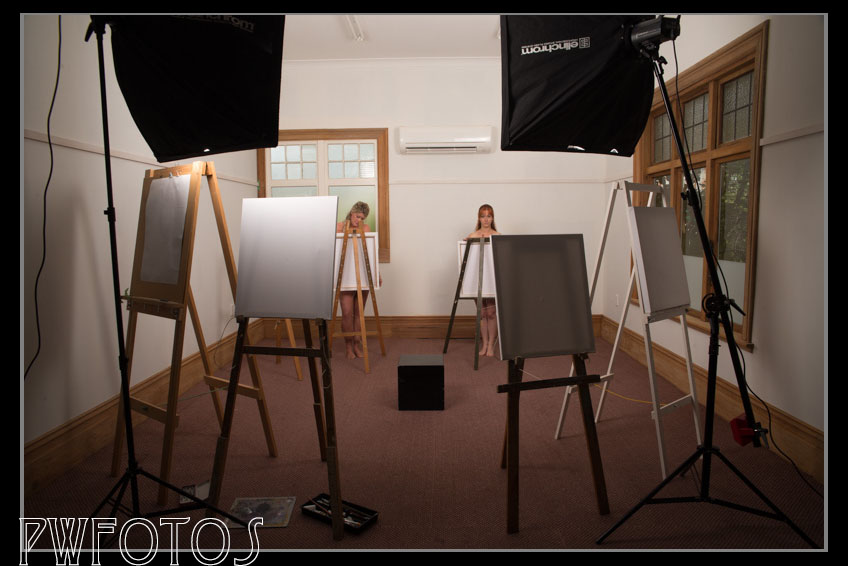
Knowing that shoot had now become a composite the first image taken was of an empty room that would enable me to use as a base.
At this stage the lighting was from two lights fitting with 1 metre soft boxes positioned at 45 degrees to the camera. You can see the lighting by the shadows cast.
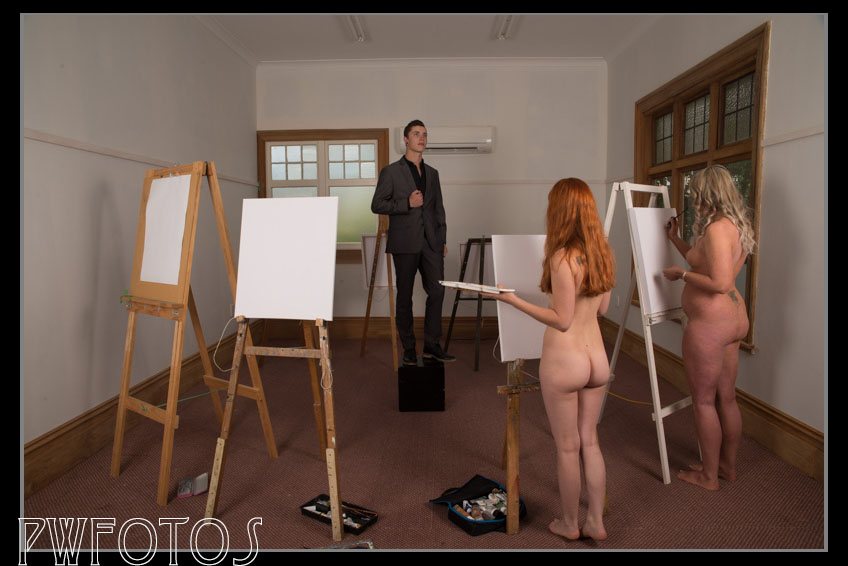
Having only two models, and sox easels meant that they would be shot three times. I started with the right hand side of the image. At this stage Jacob was only in position to give the girls a reference point.
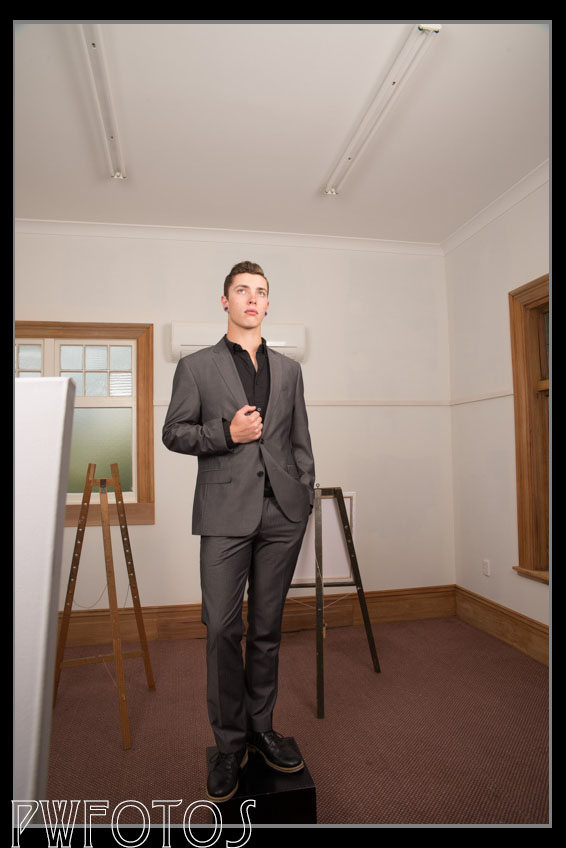
I then moved the girls to the other side and repositioned a light so that it was providing f9 at the point where Jacob was standing so that from this series i Would select one for Jacob.
We then moved Jacob out of the way, and moved both lights forward and metered the rear easels to f9 and shot the girls at the back of the room.
I then positioned a light back on the central spot and had Jacob strike a pose. I took the camera off the tripod and moved to a position behind each easel and shot what the artist standing there would have seen.
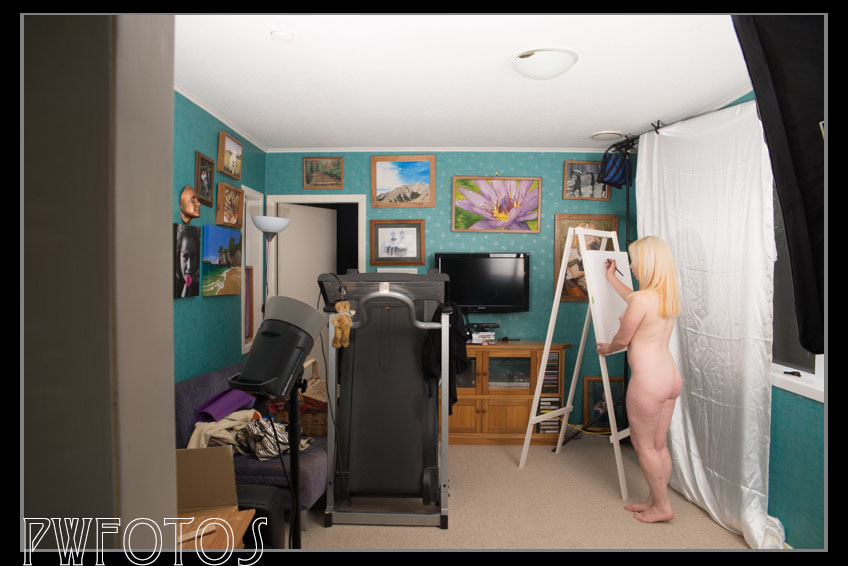
I thought that I had everything I needed for the image but as I was working through the composite (which will be in part 2) I realised that an element was not working. I decided that I needed a third model in the shot so I contacted Renee (who was the sick one) and a fortnight after the original shoot she came round home and we shot her.
This was shot in my family room with the stuff just moved around so please excuse the mess.
Getting the angles, and the distance right was the hardest part of the set up here.
In part two I will go into putting the image together.
We are at that time of year when people think of great promises that they will try to keep in the following year. We call them “New Year resolutions”. Now in all honesty very few survive the month of January but occasionally one of them will stick.
At this yearend I encourage everyone to make a resolution to improve their photography and the easiest way to do this is to challenge yourself to shoot a photo a day through 2015.
At the end of 2010 I decided to embark on such a challenge and encouraged a number of members of my camera club to do the same. Everyone started with great gusto, which did fade as the holidays ended, but there are still three of us going strong. On December 31 those remaining will shoot day 1461.
Now before you all say that this is to hard, consider the following:
Firstly and most importantly a photo a day challenge does not require you to photograph a prize winning image each day. It is simply about training your eye to see images around you and capturing them. You may choose to share them or keep them to yourself. It is fully acceptable to have images that actually fail if you are learning from them.
This image from April 2011 will never win any awards. It simply records an event.
You don’t need to have a wide variety of subjects or themes. There are people who challenged themselves to shoot the same lighthouse each day and another person shot 365 self-portraits. You choose how you want to plan the shoots
Don’t stress about having to get the shot each day. If you look at some of the work of the great street photographers you will find that they have excelled at shooting the mundane everyday life around them.
From December 2012 a street scenes shot and then given a different treatment.
You don’t need expensive gear. Simply shoot with what you have but get into a routine of carrying the gear with you. For most people now that camera will be the one in your phone.
Shot with an iPhone
Photo a day gives you the perfect opportunity to explore photographic genres that you may not consider to be your main areas (for example landscapes for me).
On the basis of four years experience there are some tips that I will share
When you start make a list of fall back items. This may be things that you see one day after you already have that day’s image and others that you will shoot if all else fails on the day. And don’t worry we all have still life images shot late in the evening. On the first day that I went out walking I came back with a list of 30 items to shoot. Within a week there were 40 on it. Four years later there are still 40 items on it.
Build the shooting into a daily routine. For me I find the weekends more troublesome than the week. This is because it is part of my routine that I shoot most of my images during my lunchtime.
Once you have a shot do not worry about trying to improve on it immediately. Save that for another day. Generally speaking after I get my shot I will not bother trying to take another, unless I see something else that will only occur on that day.
Last Sunday I had a studio booked for an art project I am working on so as I was going to have all my lighting gear set up decided that I would run a lighting workshop as well.
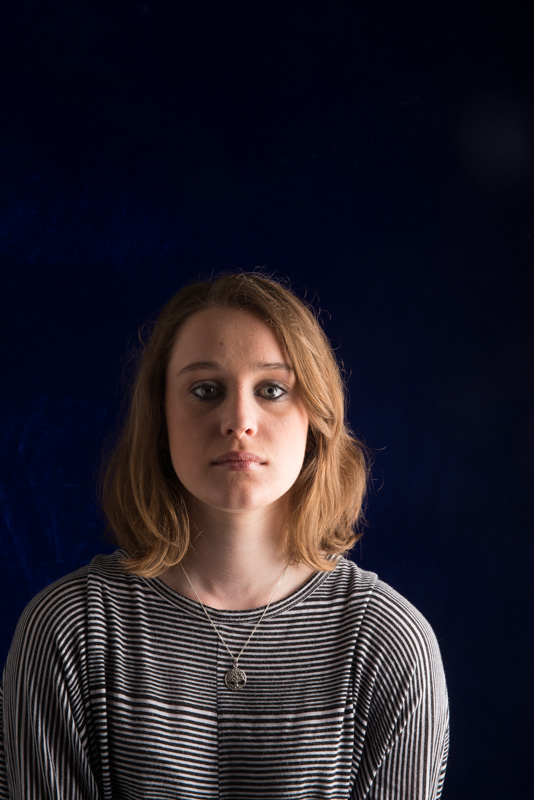
Over the course of 4 hours I took the photographers through seven different lighting arrangements using the lights and then finished utilising natural light. I had booked an experienced model for the event but she contacted me the night before to say that she was ill and not able to make it. So my daughter ended up stepping in to help and she did quite a good job.
I wanted to emphasise that lighting is an art and not a science and that the process of working with lights was to add them one at a time. I was mindful that not everyone can afford expensive studio lights so we started with arrangements that could be replicated with off camera flash using speed lights.
As I was instructing the others what to do I did not have time to shoot example images with each arrangement.
These are the seven arrangements that I demonstrated:
Using one light
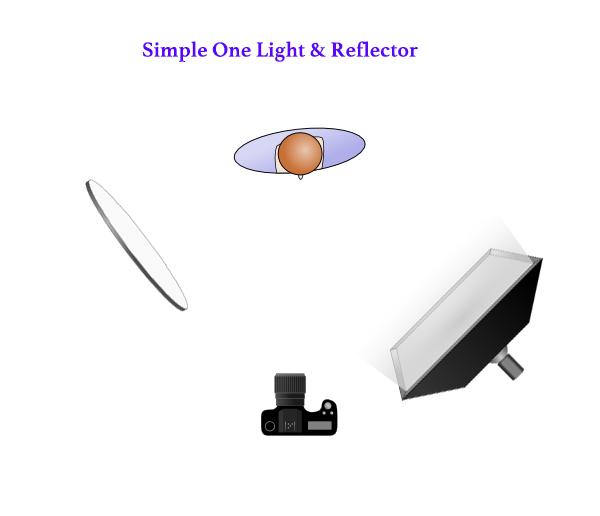
One light with reflector (45degrees)
This is one of the simplest and most common lighting arrangement. A single light is set at a 45 degree angle to the subject and then a reflector is introduced on the other side at a similar angle to bounce some light into the shadows. In this and the next arrangement the main light was in a 1 meter softbox.
One light at 45 degrees with reflector
One light with reflector (rim)
This lighting arrangement is similar to the first however the main light is brought alongside the subject. This produces a must stronger ratio of the light between the two sides of the face.
One light set as full rim
Clamshell
This lighting involves a single light mounted above the camera aiming down at the subject and a reflector positioned below to fill in the shadows. The arrangement produces butterfly lighting with a shadow below the nose. For the clamshell the main light used a beauty dish.
Clamshell
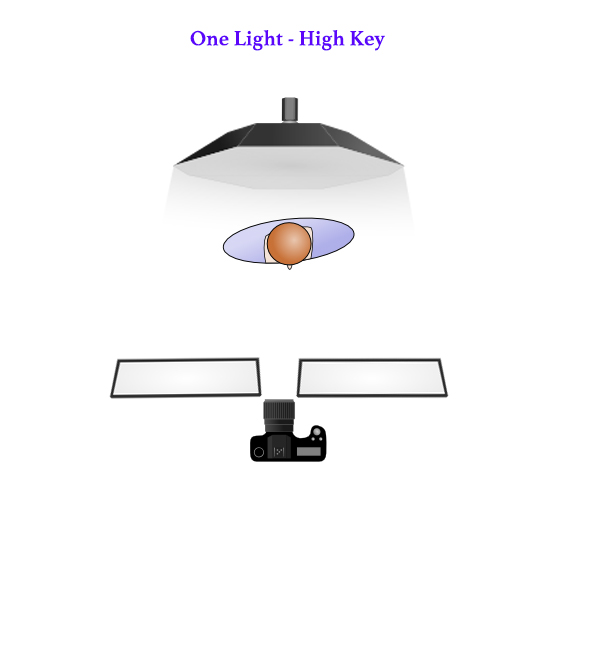
Single Light Highkey
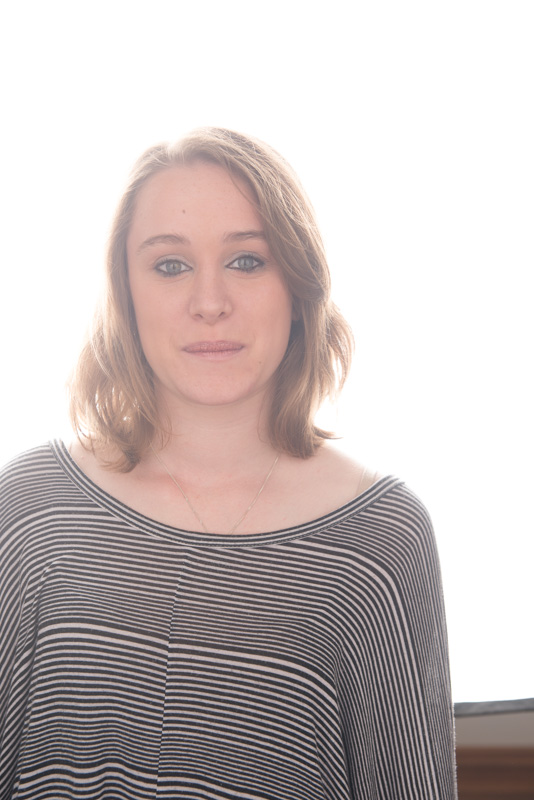
Normally when you think of highkey lighting you would think that it involves multiple lights. It can be produced with a single light and a couple of reflectors. In this case the single light is placed behind the subject and essentially becomes both the light and the backdrop.
In front of the subject two large white reflectors are placed and you shoot between them. The light is metered for the front of the subject resulting in a background blowing out.
The arrangement
For the shot ideally I would have liked to use my 1.5 meter October but I forgot to pack the adapter ring that allowed the Bowen mount to fit my Elinchrom lights so instead had to use a 1m softbox.
Two Light arrangements
Two light axis lighting
An axis lighting arrangement has the subject standing in the middle of two lights aimed on the same axis. I demonstrated two arrangements. In the first both lights have the same modifiers. In the second arrangement the rear modifier was fitted with a small honeycomb grid. In this case its was much more of a hair light.
Equal front and rear lightsSecond light was now solely set up as a hair light
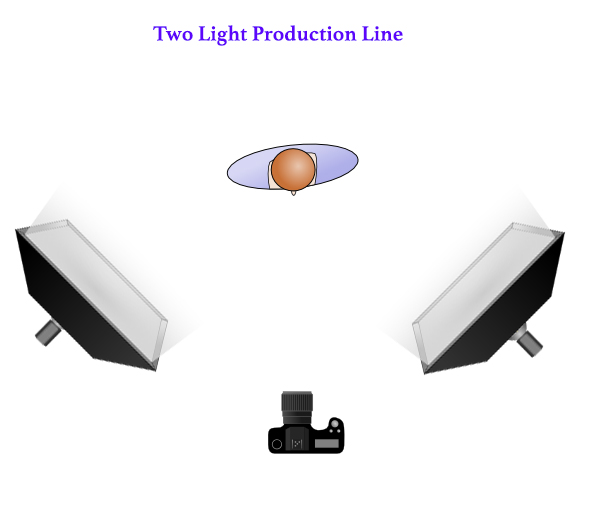
Production
The final arrangement show was what a referred to as “production lighting”. This is used when you wish to shoot a large number of subjects quickly and the aim is to have well lit rather than dramatic lighting on the subjects.
In this arrangement both lights are set to the same power.
No Lights
As the studio we were using had large north facing windows at the end of session we simply used the window and reflector to produce images like this one, proving that you don’t need to spend much money at all.
It is very easy in photography to get extremely wrapped up in the gear that we use. The companies that sell are always making the implications that if we bought better gear we would miraculously take better photographs. The reality is that this is mostly rubbish.
As Ansel Adams stated
“The single most important component of a camera is the twelve inches behind it!”
There is an expression that the best camera you have is the one that you have with you. I am not sure who that is actually attributed to. Over recent years that camera has tended to be the one connected to your phone rather than being a dedicated one. In fact Nokia became the world’s largest suppliers of cameras a number of years ago and long before the smartphone came into being.
Now I have been somewhat sceptical of cellphone photography, thinking that they were really only good for selfies and drunken group shots. Even so I did use my old cellphone on a number of occasions with my Photo A Day project last year. The photos were ok but nothing compared to what my SLR could produce, and as the phone aged there was a definite issue with keeping the lens clean.
I was blown away when I saw the detail that was in this image.
About a month ago I was lucky to be given a new iphone 5s and after I used it’s camera for the first time I was blown away with the quality of the image that it produced. I was so impressed that my photo a days since 31 October have been taken using it (with the exception of the two days of the Central Regional Conference.
No it is extremely unlikely that I would use the phone as a replacement for my SLR’s in a a serious shoot for three reasons:
The phone can only shoot in JPG format and I do like the additional control that I have shooting in RAW.
I like to have the option of controlling aperture and having lens that let me get closer or further from the action without having to physically move.
It is not professional looking enough.
Using a phone does make shooting in a crowded restaurant a lot easy.
On the third point I know that there are professional photographers such as Richard Woods (www.richardwood.co.nz) who have shot weddings using them, but those were very much “proof of concept” ideas rather than a serious attempt at a switch in technology.
On the Saturday afternoon of the Central Region PSNZ Conference there were three field trips scheduled. I decided to go on the one over to the Silver Stream Railway museum. Not necessarily because I wanted to shoot trains but rather because I knew that models had been arranged for this location, and that sounded a much better option than other two trips.
We had arranged for one of the old engines and carriages to be available. Unfortunately we were not able to arrange for it to be steamed up.
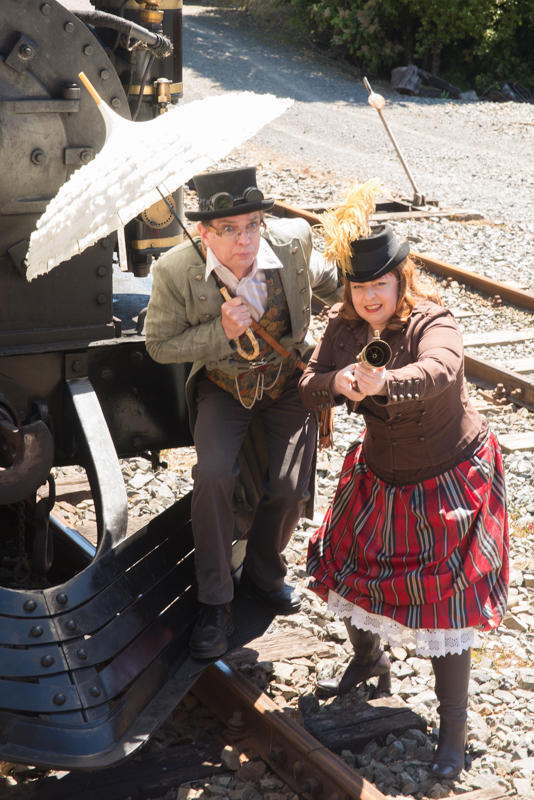
The last time the Hutt Camera club organised the conference the same venue was used for a field trip and that time the models had been dressed in wedding dresses as “trash the dress” had been a theme of the main speaker. This time they continued with the usual theme in that we had Kylie in full ballerina gear, Chrissy in classic 50’s outfit and a couple in steampunk outfits.
This made for very interesting shots and a fun afternoon, even if the light conditions were extremely difficult.
I loved the outfit of the museum person and asked that he pose with Kylie. He reluctantly agreed.Kylie posing on the tracksIt took a couple of attempts to get the timing of this image right.Chrissy
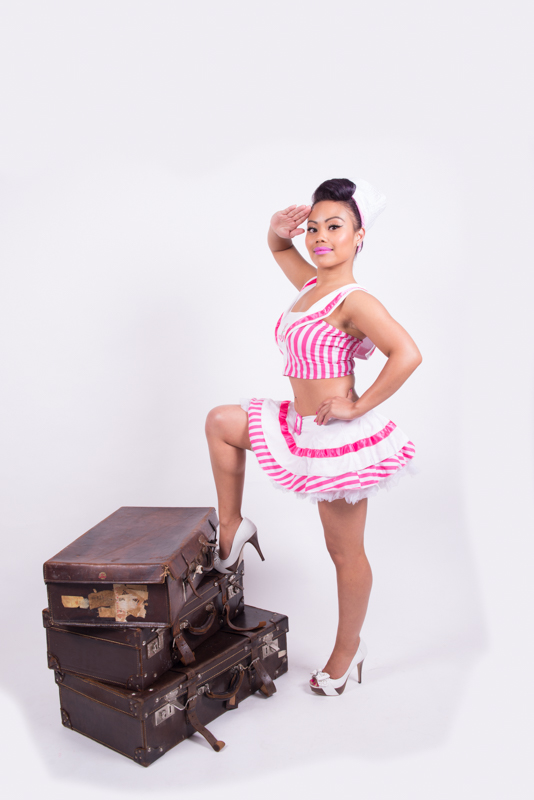
On the second day of the PSNZ Central Regional conference I took part is a completely different workshop that centred on Retro Pinup and was run by Ngahuia Davey at Ataahua Pinups. These are the type of pinup images that were popular in the 1940’s and 50’s that have recently come back in popularity.
The room was set up with a white seamless backdrop on one side and a red on the other. Nga has organised two models, a number of costumes and a whole lot of props. She had also provided a sheet with the most common poses used and so the groups of photographers took turns with the trigger for the lights and giving instructions to the model. As modelling lamps were turned on many of group shot without the use of the strobes.
The two models were very different is just about every aspect. Ivory was experienced in both modelling and particularly this style and so she moved effortless between the poses and even suggested her own. Sharon on the other hand was very new to modelling and was very nervous. She required quite a lot of direction and it was fairly obvious that she was not overly enjoying the experience.
It was quite a bot of fun and something that I think I would like to try further at a later stage.
Over the weekend of November 7 – 9 I was involved in organising the Regional Convention for the Central Area of Photographic Society of New Zealand. We offered a wide variety of speakers, workshops and fieldtrips that pretty much covered every aspect of photography.
On the Saturday I took part in a “Natural Light Portraiture” session run by Dave Sanderson (www.manipula.co.nz). It could have been subtitled “How to shoot at the worst time of day” as it ran right through the 11:00am to noon on a day that turned out brilliantly fine.
Now I will generally admit that I am not a natural light shooter, as I prefer the control that one can have with strobes. However if you shoot weddings then you need to be to able to shoot regardless of the conditions.
The key, as Dave explained, was to try to locate something to provide an element of shade. This could be a tree, building or even a reflector used as a diffusion panel. Alternative you shot in the open and used a reflector to reduce some of the harsh shadows that the sun would cast.
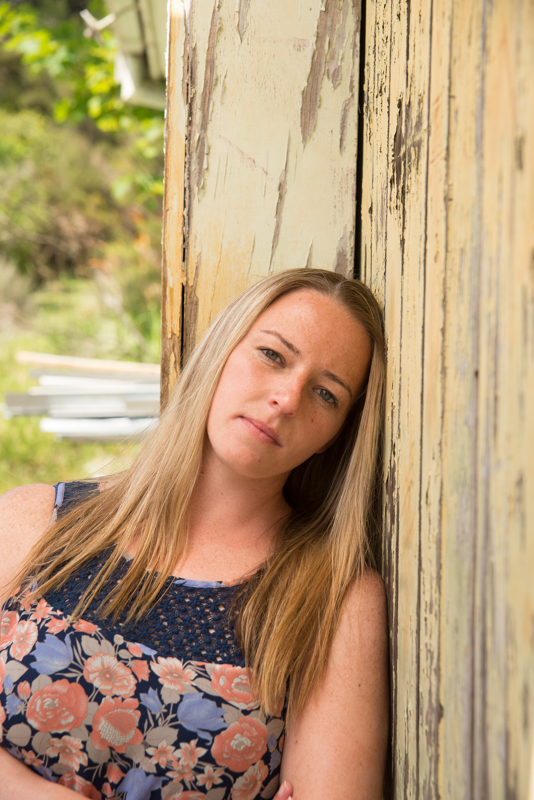
We had three models for the shoot who were all very new and the three groups took it in turn with each model. I am reasonably pleased with the shots that came out. They are nothing stella but then when you are merely practising a technique you don’t expect super results all the time.
Using a wall to bounce back an amount of light.A reflector out of shot fills in a little bit of shadow on the face.A group effort in using a reflector as a diffusion panel which shades the model


















 pwfotos