Category Archives: Workshops

Basic Lighting Designs

Last Sunday I had a studio booked for an art project I am working on so as I was going to have all my lighting gear set up decided that I would run a lighting workshop as well.

Over the course of 4 hours I took the photographers through seven different lighting arrangements using the lights and then finished utilising natural light. I had booked an experienced model for the event but she contacted me the night before to say that she was ill and not able to make it. So my daughter ended up stepping in to help and she did quite a good job.

I wanted to emphasise that lighting is an art and not a science and that the process of working with lights was to add them one at a time. I was mindful that not everyone can afford expensive studio lights so we started with arrangements that could be replicated with off camera flash using speed lights.

As I was instructing the others what to do I did not have time to shoot example images with each arrangement.

These are  the seven arrangements that I demonstrated:

Using one light

One light with reflector (45degrees)

This is one of the simplest and most common lighting arrangement. A single light is set at a 45 degree angle to the subject and then a reflector is introduced on the other side at a similar angle to bounce some light into the shadows. In this and the next arrangement the main light was in a 1 meter softbox.
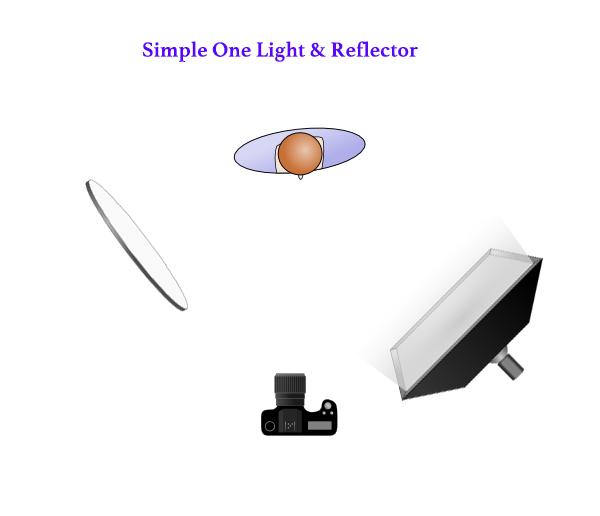
One light at 45 degrees with reflector

One light with reflector (rim)

This lighting arrangement is similar to the first however the main light is brought alongside the subject. This produces a must stronger ratio of the light between the two sides of the face.

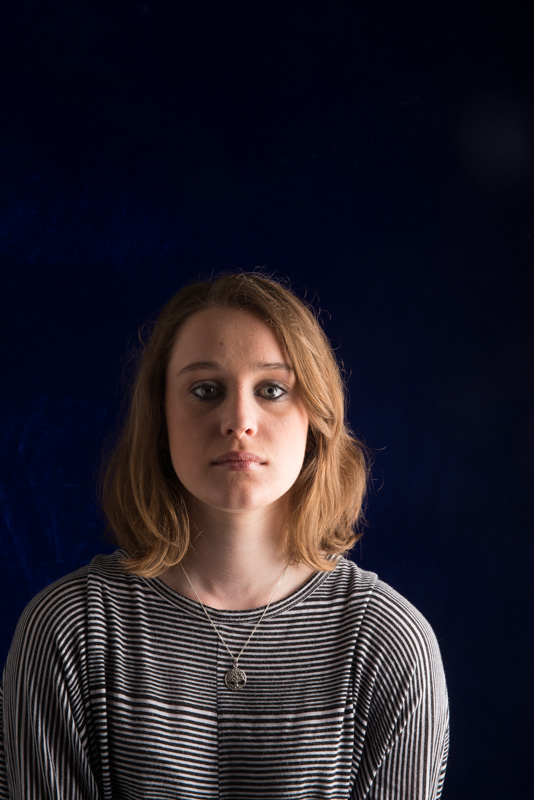
One light set as full rim

rim

Clamshell

This lighting involves a single light mounted above the camera aiming down at the subject and a reflector positioned below to fill in the shadows. The arrangement produces butterfly lighting with a shadow below the nose. For the clamshell the main light used a beauty dish.

Clamshell
Clamshell

Single Light Highkey

Normally when you think of highkey lighting you would think that it involves multiple lights. It can be produced with a single light and a couple of reflectors. In this case the single light is placed behind the subject and essentially becomes both the light and the backdrop.

In front of the subject two large white reflectors are placed and you shoot between them. The light is metered for the front of the subject resulting in a background blowing out.
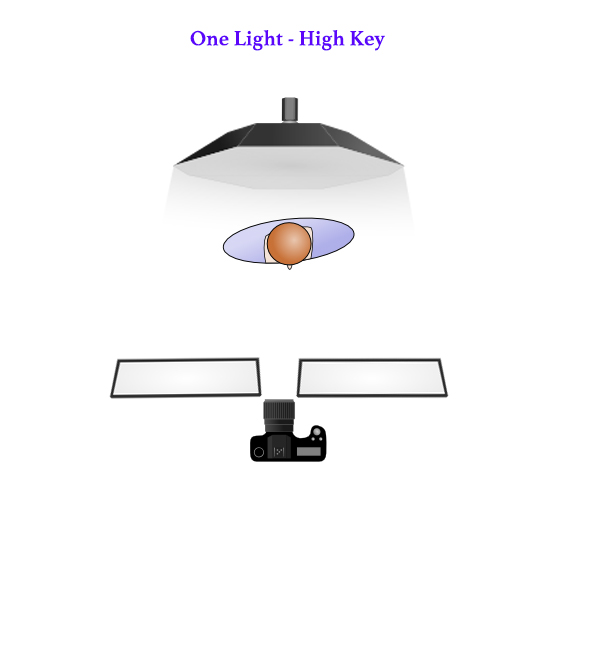
The arrangement
The arrangement

For the shot ideally I would have liked to use my 1.5 meter October but I forgot to pack the adapter ring that allowed the Bowen mount to fit my Elinchrom lights so instead had to use a 1m softbox.
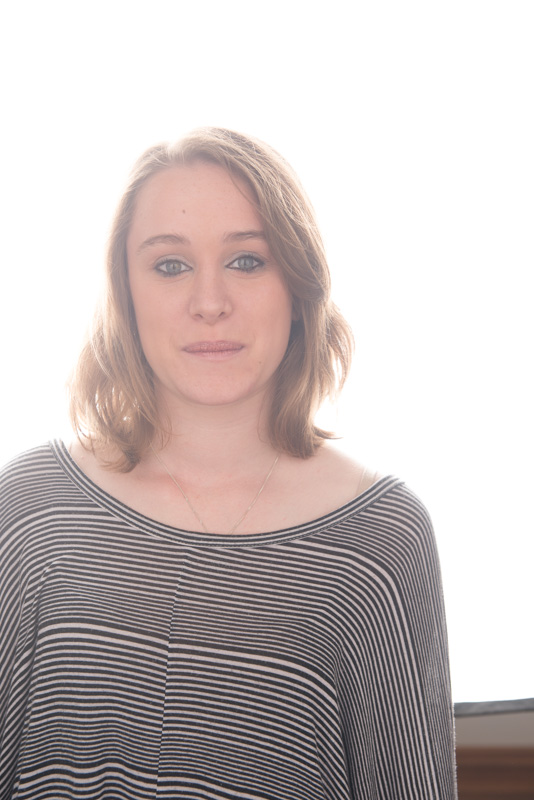
HIKey

Two Light arrangements

Two light axis lighting

An axis lighting arrangement has the subject standing in the middle of two lights aimed on the same axis. I demonstrated two arrangements. In the first both lights have the same modifiers. In the second arrangement the rear modifier was fitted with a small honeycomb grid. In this case its was much more of a hair light.

Equal front and rear lights
Second light was now solely set up as a hair light

Production

The final arrangement show was what a referred to as “production lighting”. This is used when you wish to shoot a large number of subjects quickly and the aim is to have well lit rather than dramatic lighting on the subjects.

In this arrangement both lights are set to the same power.
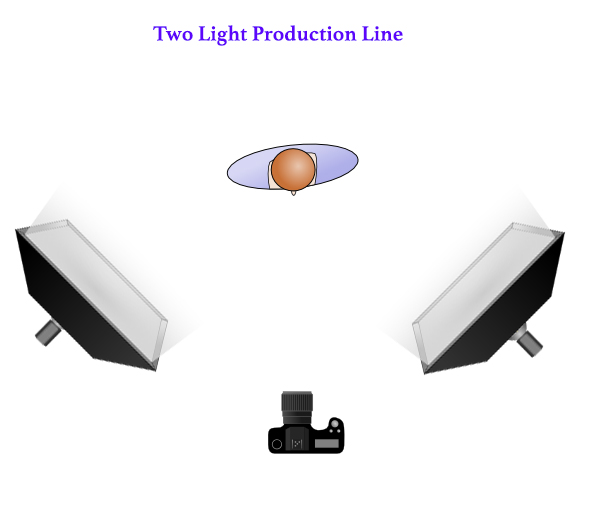
Lighting Workshop - 4

No Lights

As the studio we were using had large north facing windows at the end of session we simply used the window and reflector to produce images like this one, proving that you don’t need to spend much money at all.

window

Ballerinas & Steampunk at the Rail

On the Saturday afternoon of the Central Region PSNZ Conference there were three field trips scheduled. I decided to go on the one over to the Silver Stream Railway museum. Not necessarily because I wanted to shoot trains but rather because I knew that models had been arranged for this location, and that sounded a much better option than other two trips.

We had arranged for one of the old engines and carriages to be available. Unfortunately we were not able to arrange for it to be steamed up.

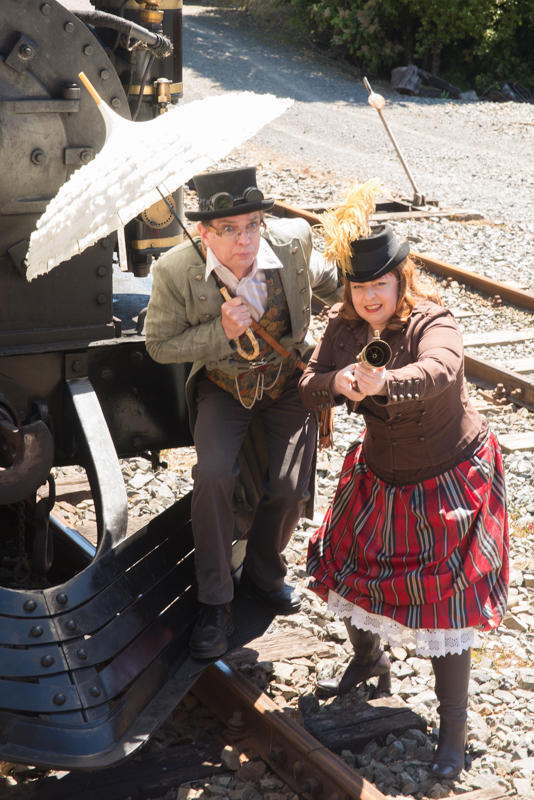
The last time the Hutt Camera club organised the conference the same venue was used for a field trip and that time the models had been dressed in wedding dresses as “trash the dress” had been a theme of the main speaker. This time they continued with the usual theme in that we had Kylie in full ballerina gear, Chrissy in classic 50’s outfit and a couple in steampunk outfits.

This made for very interesting shots and a fun afternoon, even if the light conditions were extremely difficult.

I loved the outfit of the museum person and asked that he pose with Kylie. He reluctantly agreed.
Kylie posing on the tracks
It took a couple of attempts to get the timing of this image right.
Chrissy
Chrissy

DSC_5531 DSC_5521

Pinup on a Sunday Morning

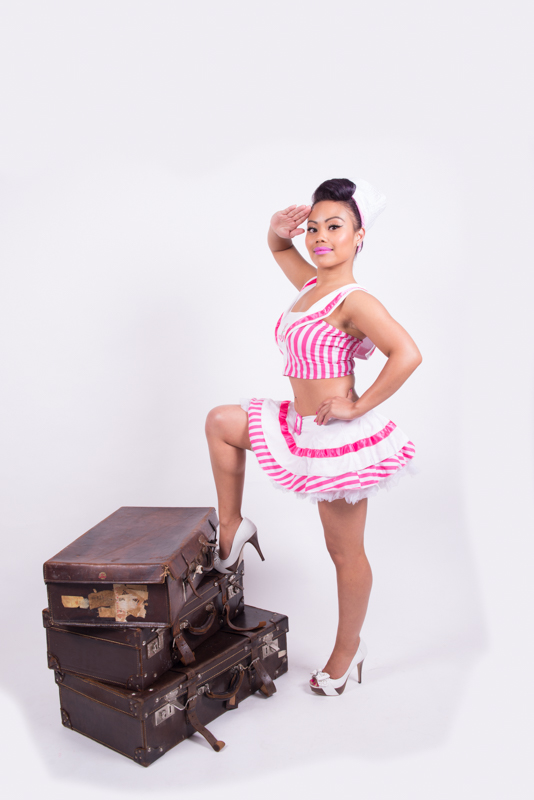
On the second day of the PSNZ Central Regional conference I took part is a completely different workshop that centred on Retro Pinup and was run by Ngahuia Davey at Ataahua Pinups. These are the type of pinup images that were popular in the 1940’s and 50’s that have recently come back in popularity.

The room was set up with a white seamless backdrop on one side and a red on the other. Nga has organised two models, a number of costumes and a whole lot of props. She had also provided a sheet with the most common poses used and so the groups of photographers took turns with the trigger for the lights and giving instructions to the model. As modelling lamps were turned on many of group shot without the use of the strobes.
The two models were very different is just about every aspect. Ivory was experienced in both modelling and particularly this style and so she moved effortless between the poses and even suggested her own. Sharon on the other hand was very new to modelling and was very nervous. She required quite a lot of direction and it was fairly obvious that she was not overly enjoying the experience.

It was quite a bot of fun and something that I think I would like to try further at a later stage.DSC_5633 DSC_5620 DSC_5608 DSC_5586-Edit DSC_5578-Edit


Shooting in Natural Light

Over the weekend of November 7 – 9 I was involved in organising the Regional Convention for the Central Area of Photographic Society of New Zealand. We offered a wide variety of speakers, workshops and fieldtrips that pretty much covered every aspect of photography.

On the Saturday I took part in a “Natural Light Portraiture” session run by Dave Sanderson (www.manipula.co.nz). It could have been subtitled “How to shoot at the worst time of day” as it ran right through the 11:00am to noon on a day that turned out brilliantly fine.

Now I will generally admit that I am not a natural light shooter, as I prefer the control that one can have with strobes. However if you shoot weddings then you need to be to able to shoot regardless of the conditions.

The key, as Dave explained, was to try to locate something to provide an element of shade. This could be  a tree, building or even a reflector used as a diffusion panel. Alternative you shot in the open and used a reflector to reduce some of the harsh shadows that the sun would cast.

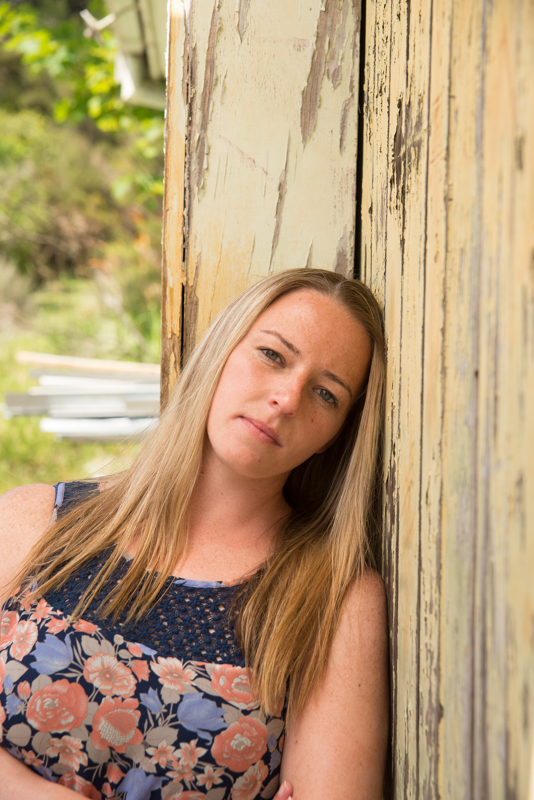
We had three models for the shoot who were all very new and the three groups took it in turn with each model. I am reasonably pleased with the shots that came out. They are nothing stella but then when you are merely practising a technique you don’t expect super results all the time.

Using a wall to bounce back an amount of light.
A reflector out of shot fills in a little bit of shadow on the face.
A group effort in using a reflector as a diffusion panel which shades the model

Body Art Rocks Conference

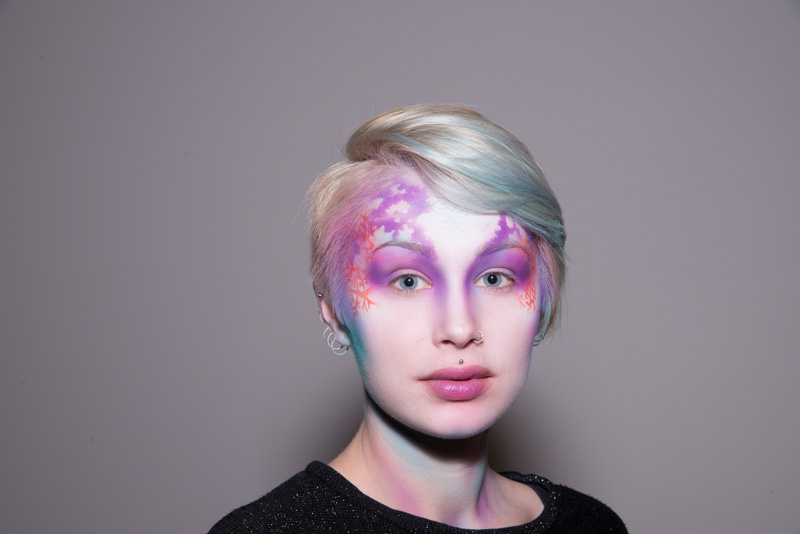
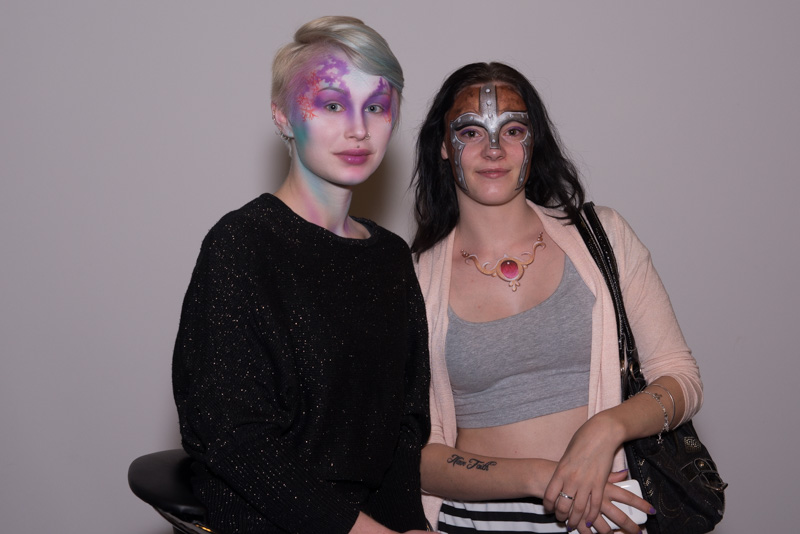
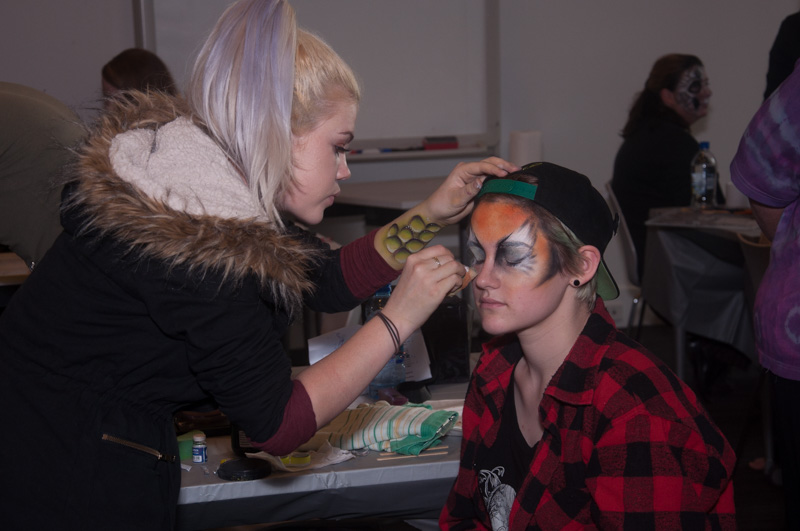
I have just spent three full on days photographing the Body Arts Rocks Conference 2014 which was organised by BodyFX .

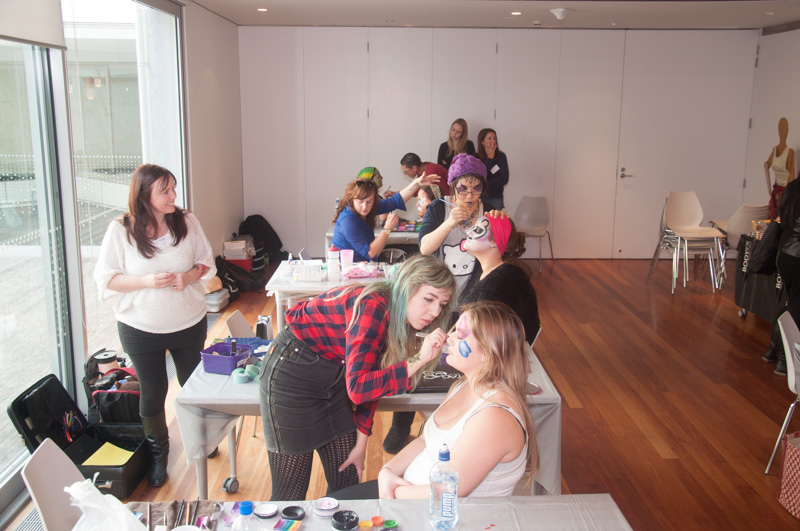
The event was held over three days at the Dowse Museum in Lower Hutt and it consisted of a range of workshops and competitions. I met with Nicole a couple of weeks before to go over the draft agenda and to try to plan what was needed and also where I could set up studio lights. The intention was that I would cover the workshops to document to event, as well as providing professional images of the finished looks in the competitions.

Shooting in the Dowse proved to be quite a tricky exercise as each of the four rooms that were being used had completely different light levels ranging from lots of natural light to non. They also ranged in size.

I had taken my D600 and D90 cameras with me and initially had speedlights fitted to both. The D90 was originally intended to be there as backup. The initial shots with the bare lights were too harsh so I fitted the Rogue Diffusion Panel to the light mounted on the D600. After the first shots in each of the rooms it became apparent that I didn’t need the flash in Room 4 and rather than keep swapping setting I set up the D90 for that room only.

As I have found that TTL metering with flash is not that accurate I set the flash to full power and then altered the camera setting. On the first day I played with the ISO between the rooms with mixed results but by day two I had a solid set of combinations of aperture and ISO that I knew would work in each room and also depending upon how close the subjects were too me. My aim with the shots was to get fairly close to a correct looking exposure as I knew that I could adjust it in post. I wanted a very quick turnaround of the image though so I made sure that the adjustments would be minor.

With the documentary type shots I moved from workshop to workshop and tried to record not only what the presenter was doing but also the participants.

By the Sunday I had built up a good rapport with a number of the attendees as well as a few of the models so when the time came to record the progress of the body painting competition everyone was comfortable with me being around.

I was told that BodyFX had experienced some issues with photographers in the past supplying images in a timely manner. So I made sure that this would not happen and the images from each day were processed that night and delivered the next day.

I have received quite a lot of praise for the shots that were delivered which was very pleasing. It was an enjoyable but very tiring three days.

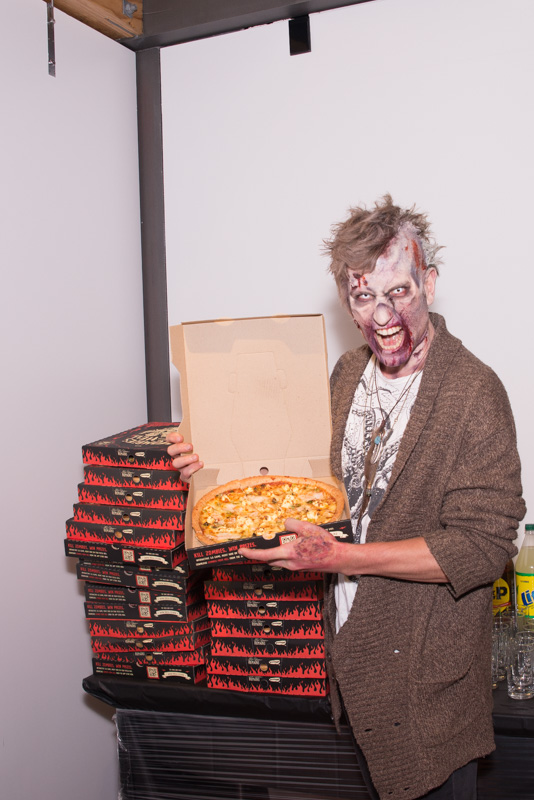
The zombie likes Pizza
Hell Pizza sponsored the Friday night dinner so I was asked to ensure we got some shots they could use.
BARC-9
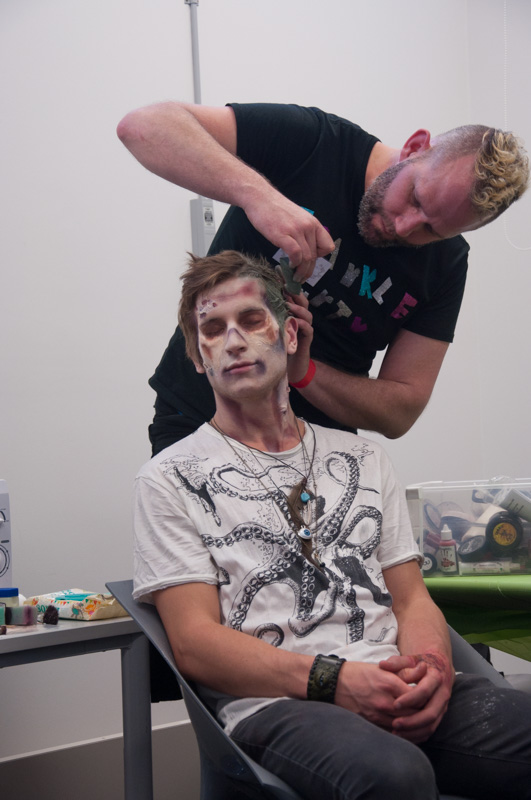
The finished Zombie makeup
Hannah airbrushed
Hannah looks stunning after Yolanda has finished airbrushing her makeup on
BARC-16
Contestants in the Beginners Face painting competitions work. They had 45 minutes to create something.
BARC-18
The winning look in the Advanced Facepainting competition
BARC-7
Julian applies mud to the models hair in order to create the zombie skull
BARC-1
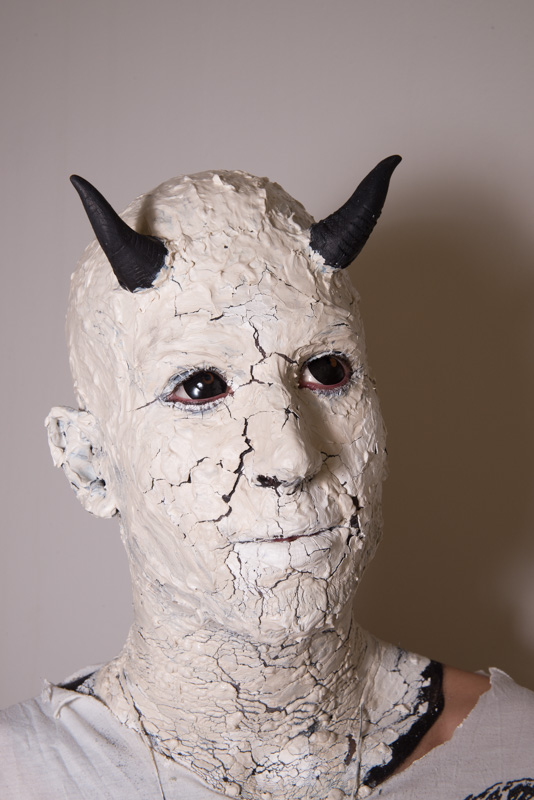
Nick Wolfe demonstrates how to create a monster skull
BARC-29
Emily Walker with her stunning creation on Hannah that won the body painting competition
BARC-28
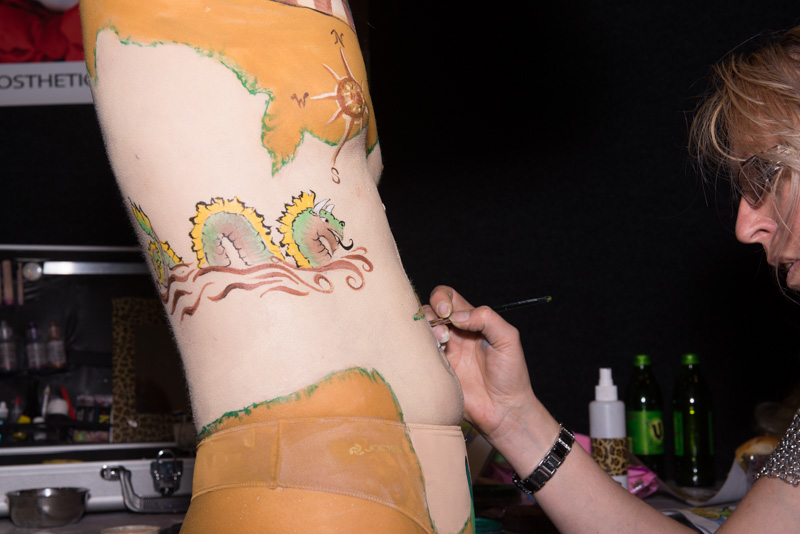
The flat earth was the inspiration of this painting by Karen Havican
BARC-27
A close up of Hannah’s headdress
BARC-26
Nick Wolfe paints up the prosthetic that he added to his model in the showcase
BARC-25
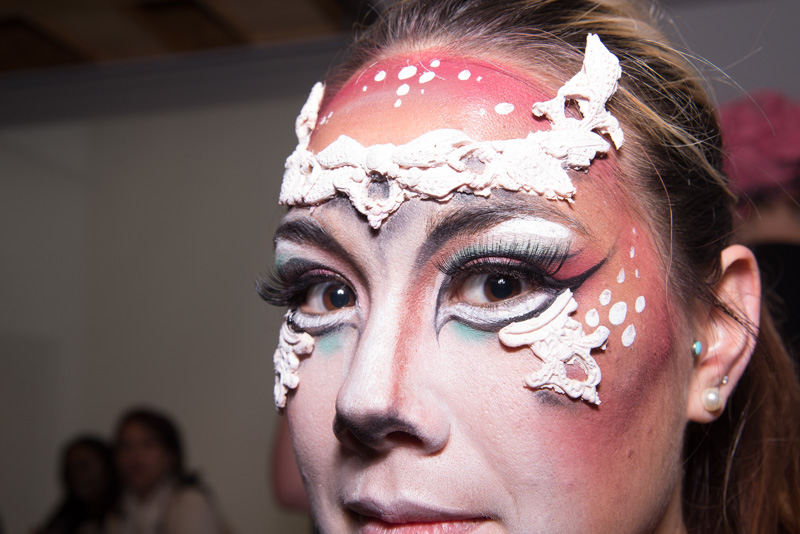
A close up of Stacie’s face.
BARC-22
The four contestants in the Extreme Makeup competition. The artist had 2.5 hours to produce this look. Third from the left was the winner.
BARC-2
Julian from BodyFX ran a fund session on communication
BARC-3
Amazing looking wounds created from Nicole Heydenrijk’s class on Gells
BARC-4
Nick Wolfe and the two models he painted in his first session
BARC-5
Annie Reynold from Australia demonstrates how to create advanced butterflies
BARC-8
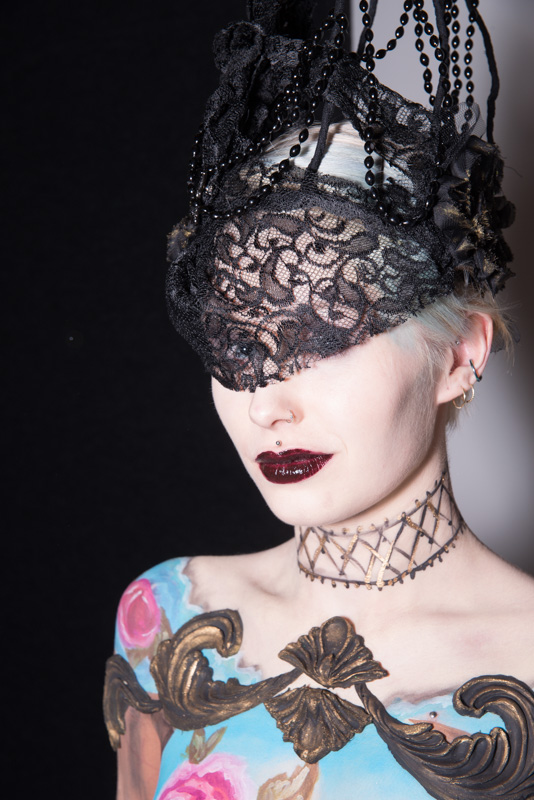
Lace inspired masks
BARC-11
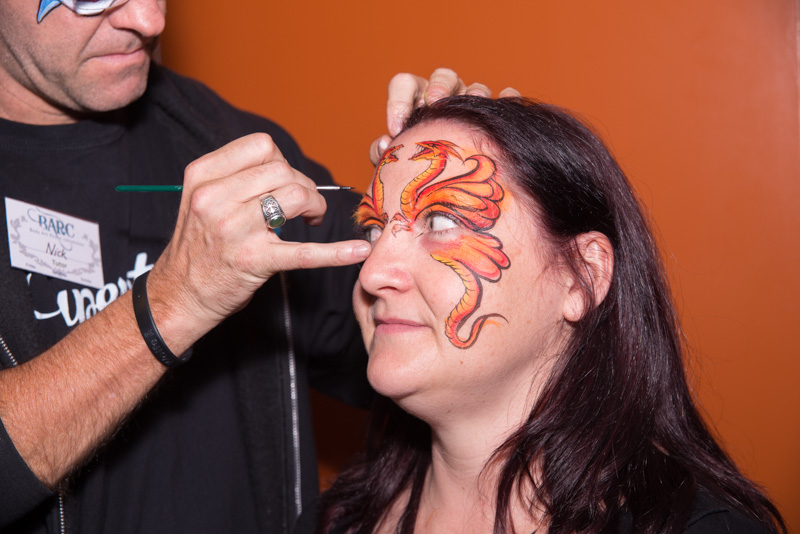
Nick produced some very intricate designs
BARC-6
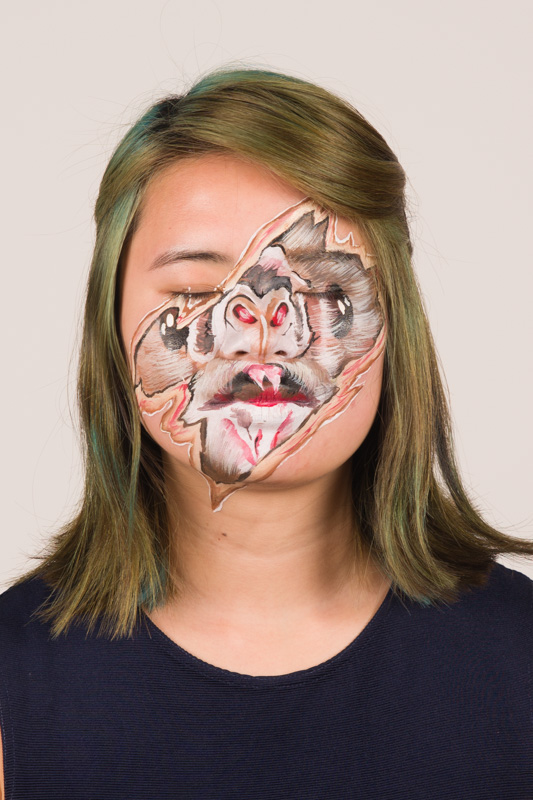
One of the workshops centred around half face animal designs and was run by Christy Lewis.
BARC-24
The detail in the body painting was very impressive
BARC-23
The makeup room was full on for the whole 5 hours that the artists had to work.
BARC-17
Contestants in the Beginners Face Painting competition
BARC-14
Annie applies finishing touches to a makeup that also included gems
BARC-12
Models compare looks
BARC-15
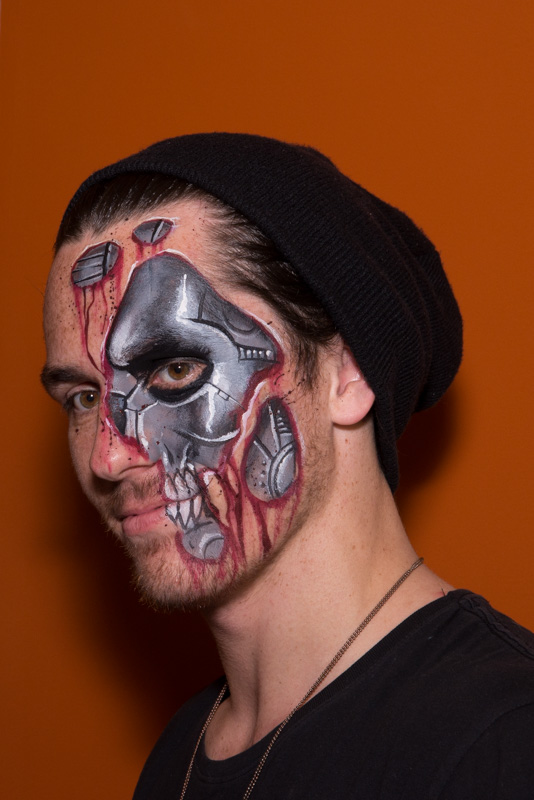
Nick turned Tom into the terminator in around 5 minutes.
BARC-19
Families visiting the Dowse on Saturday also ended up being painted.
BARC-20
Working through the Extreme Makeup competition
BARC-21
Dan applied most of this makeup to himself.

Sharing the knowledge

Now I do not process to be an expert but I am more than willing to offer advice so today I was able to do both, by running a workshop for members of the Hutt Camera Club and the Wellington Photographic Meeting Up Group on wedding photography. In this I was helped by Hutt Photographer Iris Kauffeld who has over 30 years of experience shooting weddings.

We started with a theory session covering all of the background that you need to contemplate before getting to the venue.

We then went inside St Johns’ Church in Upper Hutt that I has chosen for the day. The church is a very classic Anglican church which means it is incredibly difficult to shoot in. It has lead lights on all of the windows and only a single aisle so both light and movement are in limited supplies. Furthermore it is a church where flash photography is not allowed for most of the service.

We staged each major event that occurs during the church service. For parts of them  I split the participants into Main and Second shooters and pointed out where each would stand. With an empty church I was able to move around quite freely.

For the first set of shots our Bride Lydia was a real trooper as I asked her walk down the aisle ten times. Groom Adrian just had to stand there for that time, but later on he got to take a full part when we came to the kiss.

The weather forecast yesterday was extremely variable but we were very lucky that we were inside when it decided to rain, and then it cleared up when we went down to the river to practise some formals which are shown in the images below.

WeddingWS-1 WeddingWS-3 WeddingWS-4 WeddingWS-5

I understand that everyone got something out of the day which is the main goal in running day.

The final tip that I told everyone was this. “Once the images have been done, the only people who must love them are the bride and groom. Do not get wrapped up with negative comments from other photographers”.

Richard Wood Lighting Workshop

Richard Wood is an extremely talented photographer who lives in Havelock North. I first saw his work in 2011 when he won the NZIPP Photographer of the Year, and I have followed the progress he has made since. A lot of his work involves a lot of creative photoshop work, to a point where when he won his award comments were made that his talent lay more with the computer than the camera.

Richard and Lydia (One of our three models)

The following year he answered his critics in the best way possible. In addition to winning gold in the creative categories he entered several images into the “Classic” categories and received gold for them. The Classic category only allow limited post production adjustments. The dominant element in Richard’s image is the lighting so when I saw that he was running a half day workshop on both studio and natural lighting I jumped at it. That was despite the fact that it would involve a roundtrip six hours of driving to get there.

Now I have been learning lighting for quite some time and have built up a reasonable knowledge, so there is always the risk that you will attend a workshop that will only cover what you already know. The 20 people who attended were quite a mix from experienced professional to hobbyist who had been through Richard’s night courses. I have experienced workshops in the past where such a mix has proved problematic as those with limited knowledge have slowed the session down too much.

Richard explaining new styles of photos while our model balances on top of a fencepost

Fortunately Richard seemed to be able to cope with such a diverse group and the day progressed at a good place.

If I am honest from a technical viewpoint I did not really pick up anything new. However from the point of how that knowledge is applied I got heaps, simply from watching the way that Richard set up a shoot and arranged to lighting to get the images that he was after.

I am not going to go into the techniques that Richard taught. When all is said and done Richard needs to make a living out of running these courses and that will not be helped if those that attend go out and spread the techniques far and wide. Richard is planning running the course in other centres and needless to say that I fully recommend people going on it. Check out his website at www.richardwood.co.nz or his Facebook page.

A group shot of the three models. Posing & Lighting set up by Richard

Jess

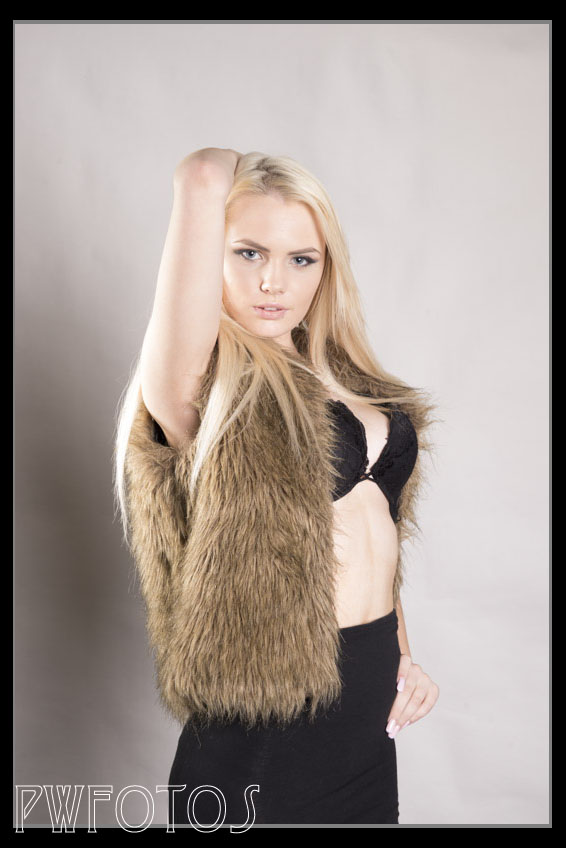
Yesterday I decided to attend a workshop on Portrait photography being run by Alan Raga. As I quite often end up teaching other people this aspect of photography it was good to be able to kick back and enjoy the session. More particularly to try out a large Octobox softbox and a gridded beauty dish.

Our model for the day was the lovely Jess.

Jessie-5 Jessie-1

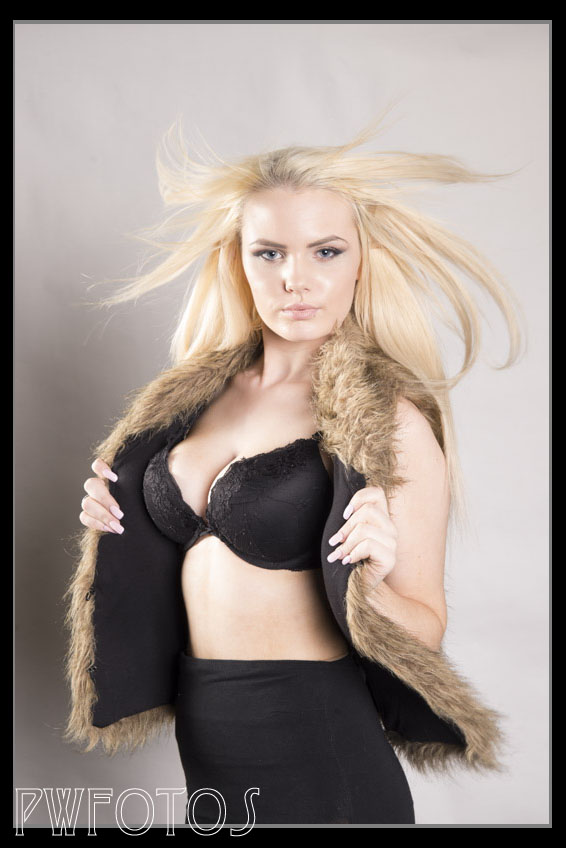
She moved effortlessly for one pose to another but I decided that I wanted something a little bit different and that movement. As she had beautiful long hair I knew that the answer was to get it to move.

In my own studio I have a fan to do but a reflector and a willing assistant will get you half way there.

Jessie-4

Wanting more movement still I had she twist at the waist and then release as I pressed the shutter. I am very happy with the result.

Jessie-6

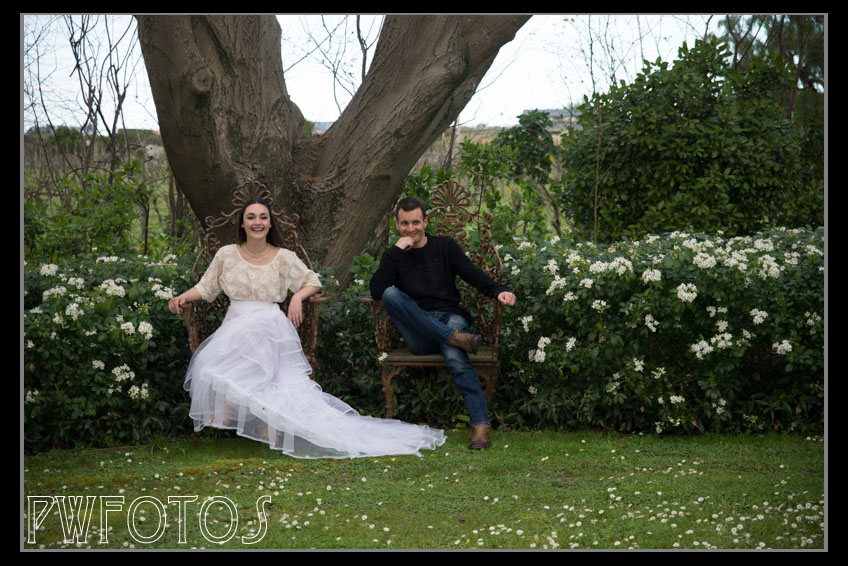
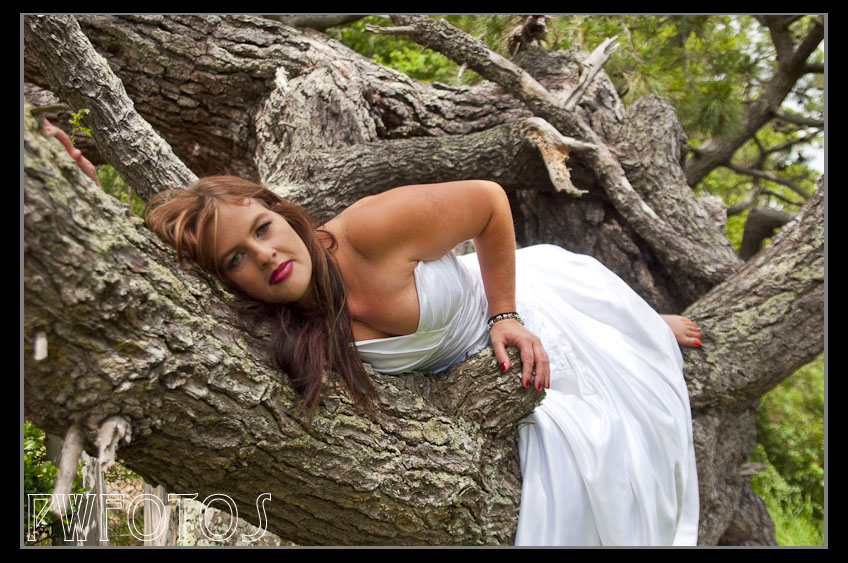
Trash the Dress Workshop

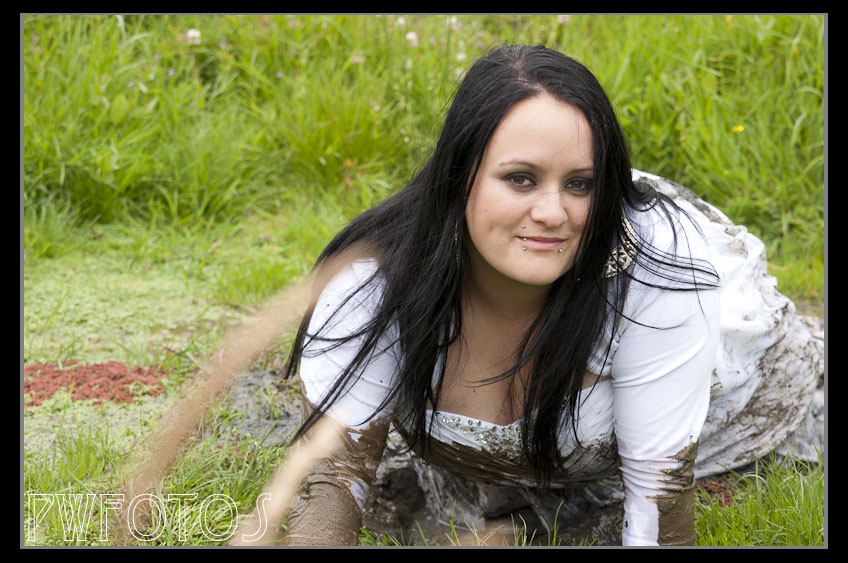
“Trash the Dress’ is a concept that arrived from America a number of years ago. Basically it is a series of photo taken of the bride in her gown well after the wedding in which she does things that would send her into major fits if they were done on the wedding day. They do necessarily involve water, but given our proximity to it they generally do.

Some months ago a Facebook group was set up to encourage photographers to get together and stage some shoot. The closest one to me was organised for Greytown in the Wairarapa by Masterton photographer Liz Rikiti. Liz really excelled arranging for 7 models, hair and makeup and an excellent venue fully catered that gave up a wide range of different locations to shoot in. She spent months buying dresses on TradeMe.

In the morning we concentrated on shots that were slight more traditional in that the dresses did not get too soiled but then after lunch it was all on with our “brides” ending up in a pond, in mud and in the creek. At the end one was even covered in paint, which unfortunately I was not able to stay around for. All of the girls were great and all seemed to be having a lot of fun, which ultimately is the whole idea behind a TTD shoot.

Although the images below were taken in a workshop situation, so it is likely you will find similar ones on the internet, in all cases the models were posed by me.

Choosing a workshop

Since the dawn of digital there are lots of photographers who have seen a market in teaching amateur DSLR users and have decided to enter it. With a fancy website or Facebook page there is plenty of demand. Courses range in price anywhere from $30 to $4,500.

The problem is that the old saying “those that can do, those that can’t teach” does not apply because for many they can “do” it, just that they cannot “teach” it.

A few weeks ago a friend forked out not an insignificant amount of money on a workshop that didn’t live up to expectations.

This got me thinking as to how I would evaluate potential workshops. I hope that these ideas will be of value to readers. Please note that I have both attended and organised a number of workshops so these items comes from “both sides of the fence” in terms of experience.

What is the level of the course aimed at relative to your level?
This is really important because it goes to heart about what you are likely to get out of the event. And you need to be honest. If you have absolutely no idea about what an f-stop is or the effect it has, then an advanced course will not be for you. Two things will happen. Firstly you will not be able to keep up, and secondly you are likely to slow down the whole course, which will not go down well with the other participants. I once attended a workshop on Photoshop retouching that people who ranged from those that had used to the program for years to some who had no idea how to use a mouse. Needless to say it was a painfully slow session and little was learned from it.

If you are a more advanced shooter, then the odds are that you will already know quite a bit of what will be covered. What you need to consider is how much you think you will gain from the “marginal” learning’s in the course.

How many participants are their likely to be?

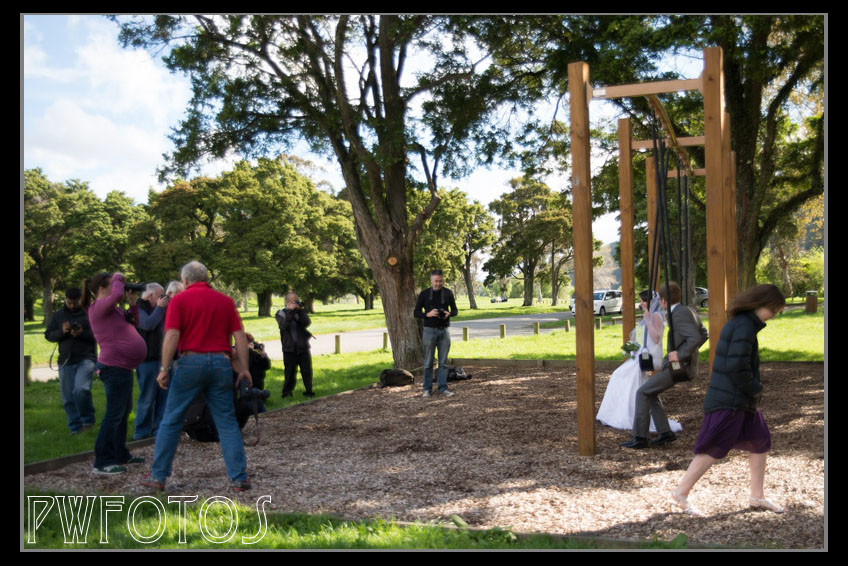
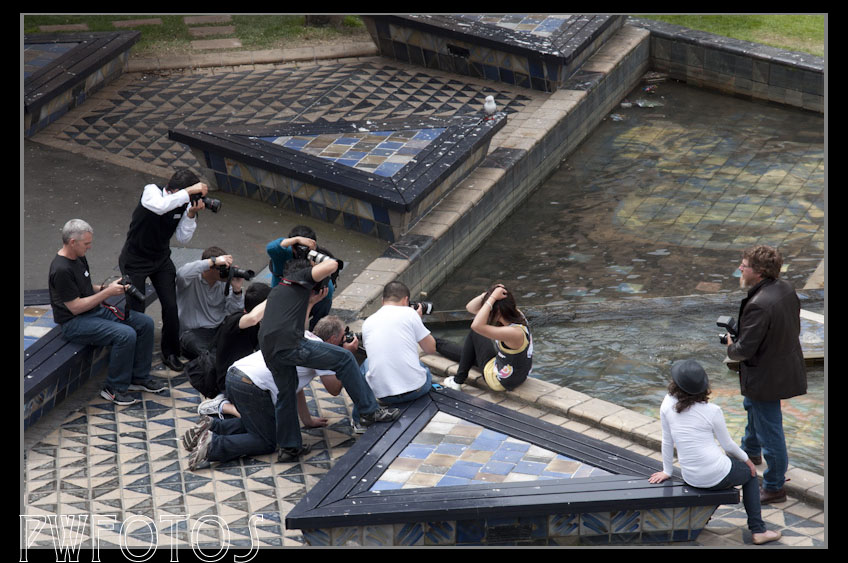
Too many on a course and your start to feel like the paparazzi

Generally for a workshop this will be stated because they will have set a maximum. From experience I have found that a ratio of one tutor to five students is the maximum that you want to allow for a hands-on course. Otherwise the group is too large to give everyone a fair go. 

Even if it is a seminar the smaller the group the more opportunity there may be to get the specific questions you have answered.

What is you learning style?
It is widely accepted that people have different ways of learning. Some pick up things better by seeing them in action, some by listening, some by reading at their own pace, and some by doings, or combinations of all of the above.

If you know which is you strongest area then that will help is deciding if the event is right for you, because if you learn best by doing, then a hands-on session will benefit you far more than a sit down seminar.

Check out the presenters
Now this is a biggie because ultimately the success or failure of the course rests with them. Don’t simply look at the event promotions website and references. Do a Google search on the presenters and find out what they are like. If possible see if you can find reviews from previous attendees that are not linked to promotional material, because quite frankly no one is going to put “couldn’t teach” on a promotional website.

It is very important that you look beyond they images, because unless it a show session only, you need to know that they can impart that knowledge to others. I know plenty of great photographers who could not present if they tried.

Also just because they are from overseas does not automatically make them an expert. In fact sometimes it can work against them because styles can be quite different between countries.

Is anything else offered?
Sometimes the value in a seminar can be extended beyond it so it useful to bear that in mind. The presenters of a glamour workshop I attended over a year ago maintain a Facebook group which is still active and they are available to answer follow up questions. Other presenters may have member only areas for former attendees.

Is it value for money?
I have left this one for last because quite frankly it is the most subjective. At its core are value judgements about how much you are going to get out of the course and how much you value your time.

I have attended two days workshops that cost $2,000 and thought they were great value, and yet attended a two hour one that cost $35 and thought it was a waste of time and money. So in terms of looking at the price consider the following:

  1. A smaller hands-on workshop will always cost more than a seminar but generally you will take more out of it because of the interaction with the presenter.
  2. Workshops that involve multiple people (hair, models etc) will be more expensive than a single presenter.
  3. Can what you learn on the course save you time in the longer term. This is particular important when you are more experienced because what you are going to pick up will only be a portion of the course. For example if you learned a technique that saved 5 minutes processing per image and you normally shoot 200 images a session, then that is the equivalent of 16 hours, and if your normal rate is $50.00 then that is $833.
  4. Is the charge reasonable? This does not mean is it cheap. If the tutor is a professional photographer then it is reasonable that the full amount earned on the course equates to the time they have put into it, plus any outgoings that are likely to be incurred. What is not reasonable is when there appears to be a super profit built in as was the case of a course I saw advertised for $1,500 per head. When I crunched the numbers there was $16,000 unaccounted for.
  5. What are the alternatives? For example a three day workshop will set you back thousands, but you can purchase a video of a three day workshop from CreativeLive for $US179.