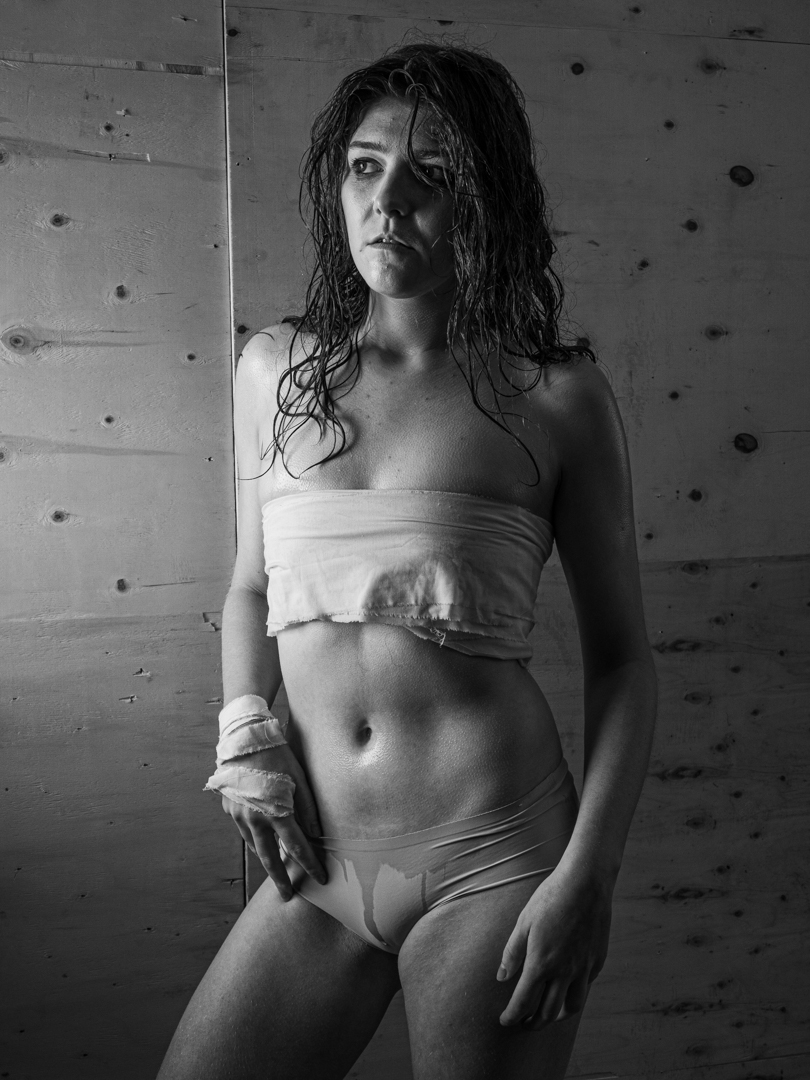
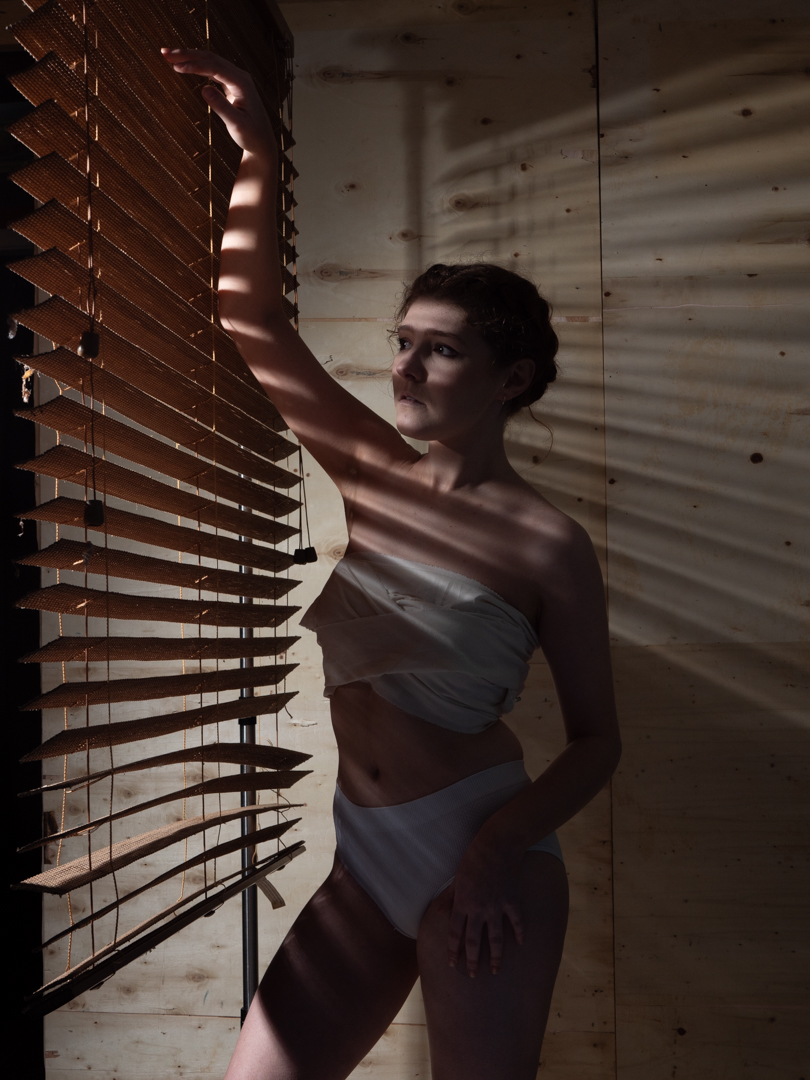
The second set with Devon involved water. She wanted to look like an athlete that had been competing really hard and was covered in sweat. She had brought some strips of fabric that she fashioned into a top and gloves.
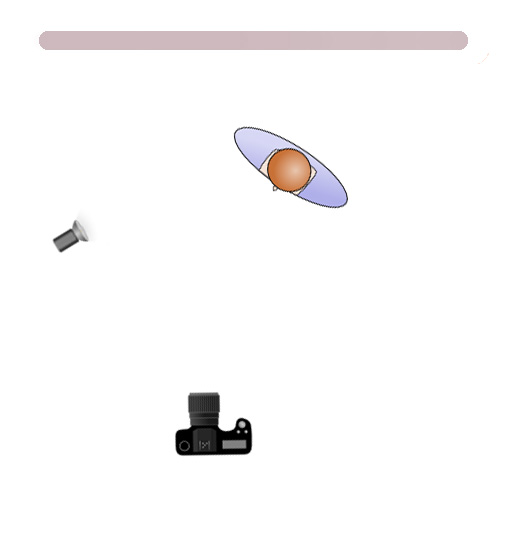
The example images she had shown me had a high degree of contrast. I knew that we needed to go with a punchy hard light. We essentially used it to create shadows in the previous post. It was a simple matter of removing the blinds. Then, we slightly adjusted the strength of the light.
Devon is a real trooper when it comes to getting into a character. She was not phased when she was asked to put baby oil over her skin. Then she was sprayed with water. The oil has two effects. Firstly it prevents the water from absorbing quickly into the skin and secondly it increases the skins reflection. Both of these add to a higher contrast image.
All images were shot using my Lumix G9 1/200s f8 ISO 200 at an equivalent focal length of 50mm. These settings ensured that I had full control over the ambient light.
Devon was really happy with the way that shoot turned out..
After we had such a great time with the Barbie shoot I arranged another session with Devon. I left it up to her to decide what concepts she wanted to shoot. As before, she created a Pinterest board. From it, we determined that she was looking for two quite distinct looks. The first involved heavy shadow and the second water.
In this post we’re going to cover the first one.
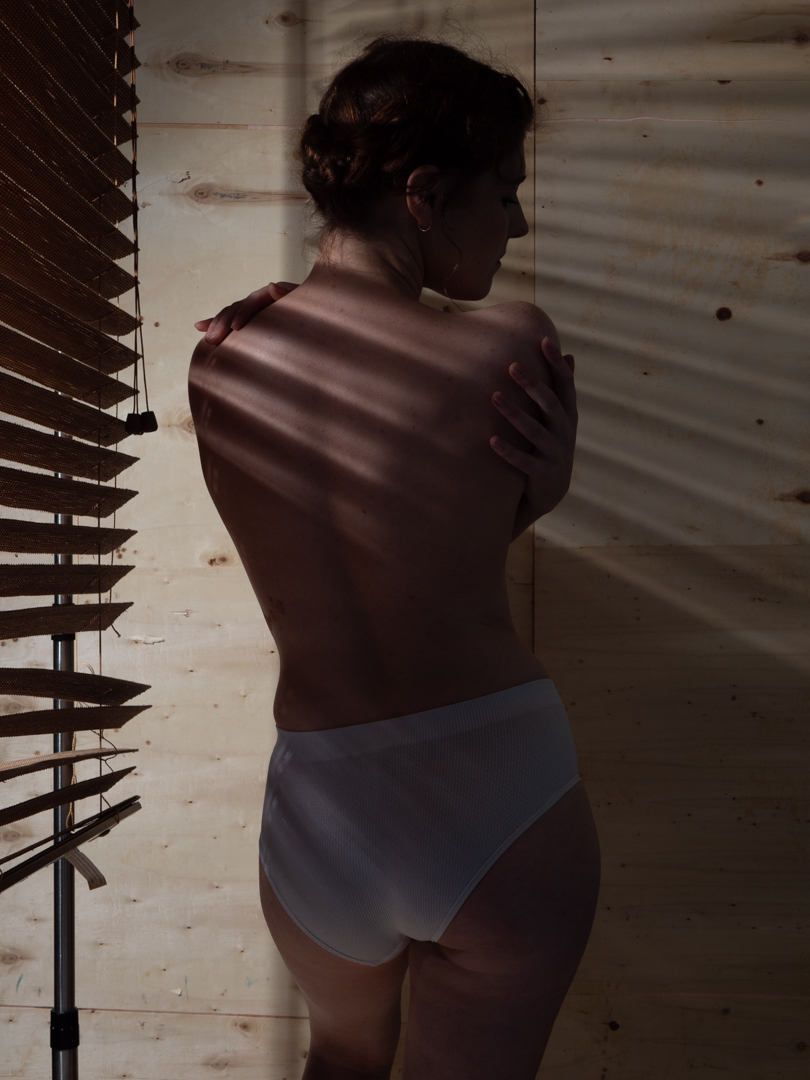
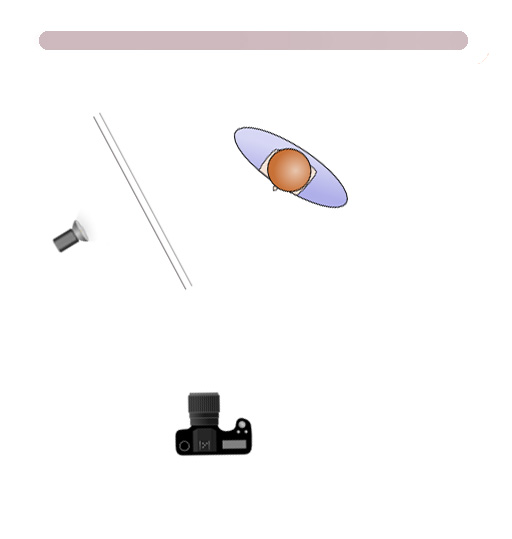
I knew from previous shoots that you could create interesting effects by shooting hard light through Venetian blinds. This appears quite often in film noir images. The key to getting hard shadow was that light had to be very hard. It also needed to be positioned reasonably close to the blinds.
The shoot was planned for the same weekend as the more elaborate record shoot with Rachel that will be covered in later posts. For that I had built a wall using plywood panels. These had interesting features in them so I did not bother covering them.
I clamped a bamboo Venetian blind to the crossbar of light stand and then positioned a strobe in front of it. It was in a 7 inch reflector which insured it delivered a lot of power.
Devon went through a number of costume changes so that we had a variety of images to use.
All images were shot using my Lumix G9 1/200s f8 ISO 200 at an equivalent focal length of 50mm. These settings ensured that I had full control over the ambient light.
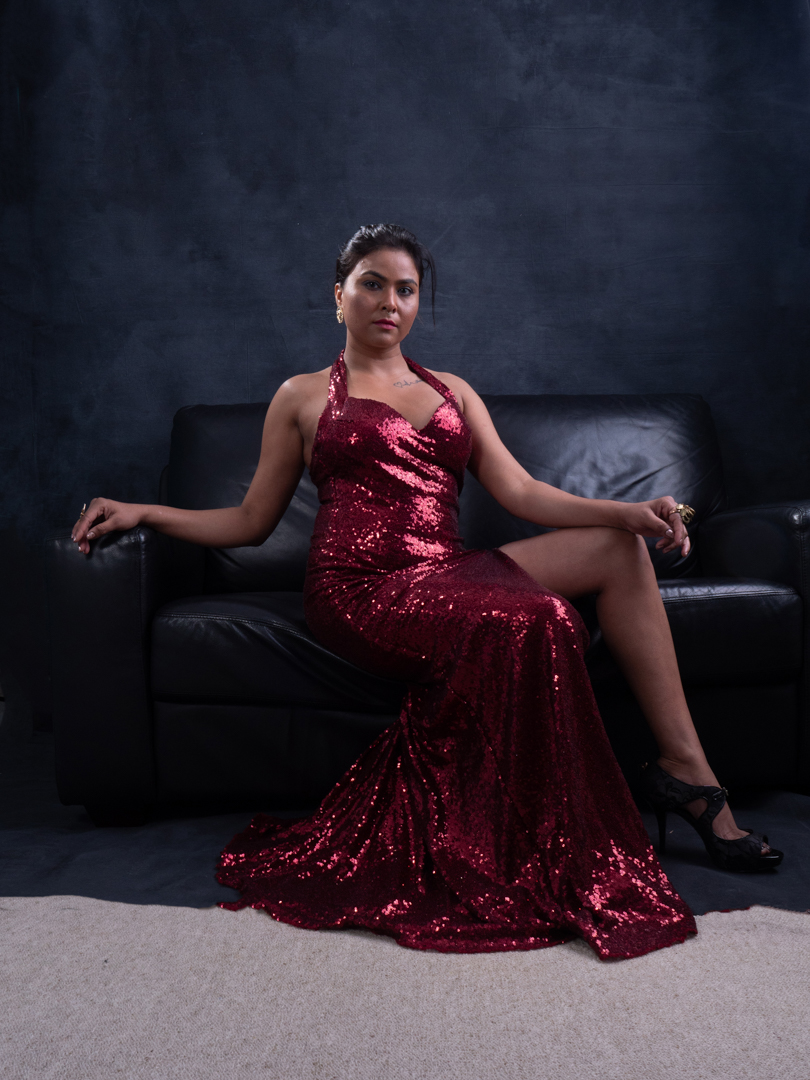
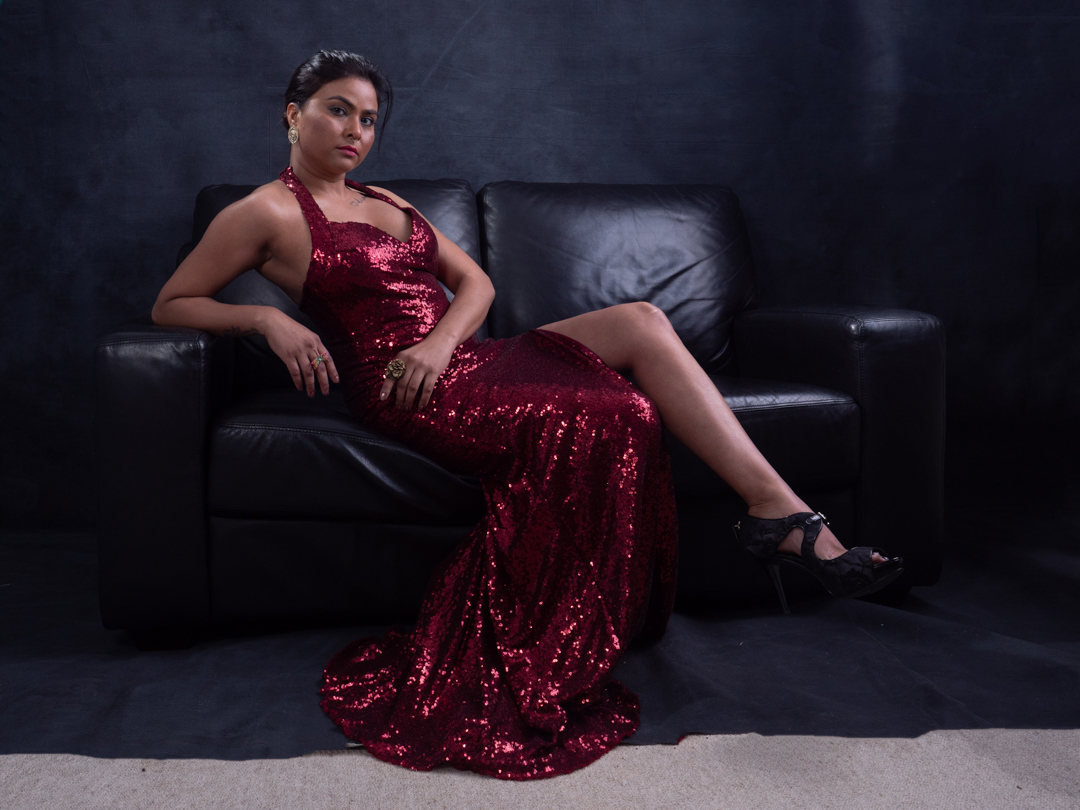
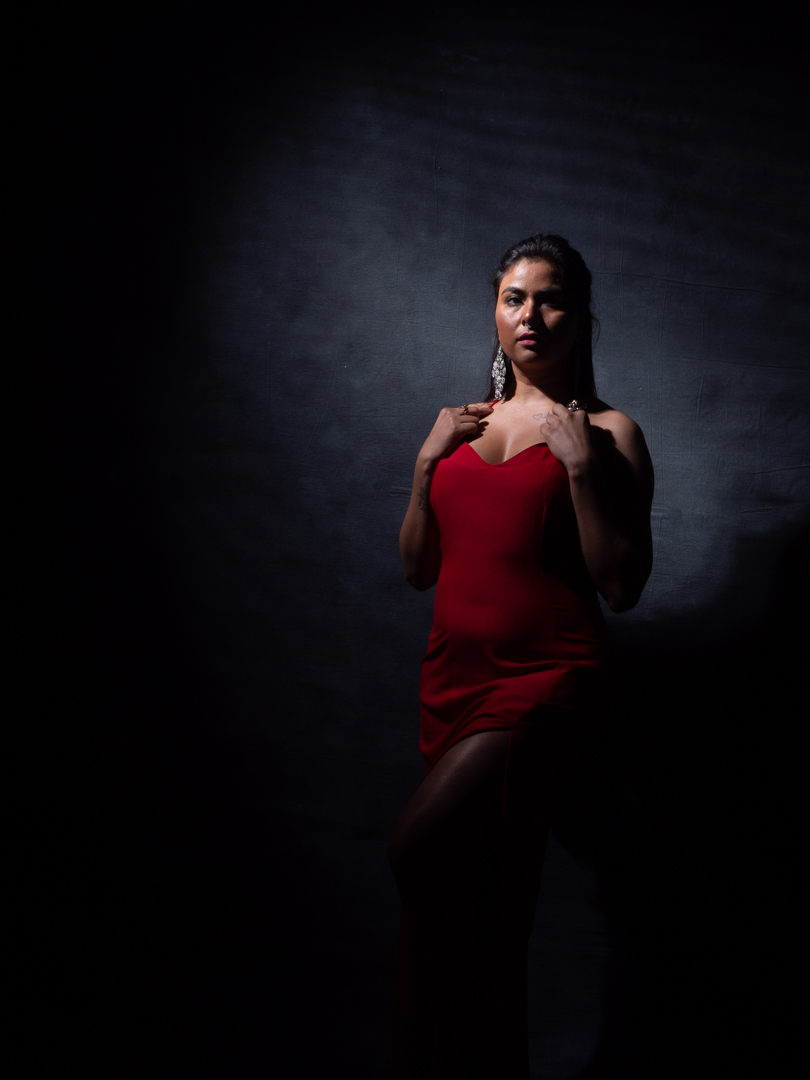
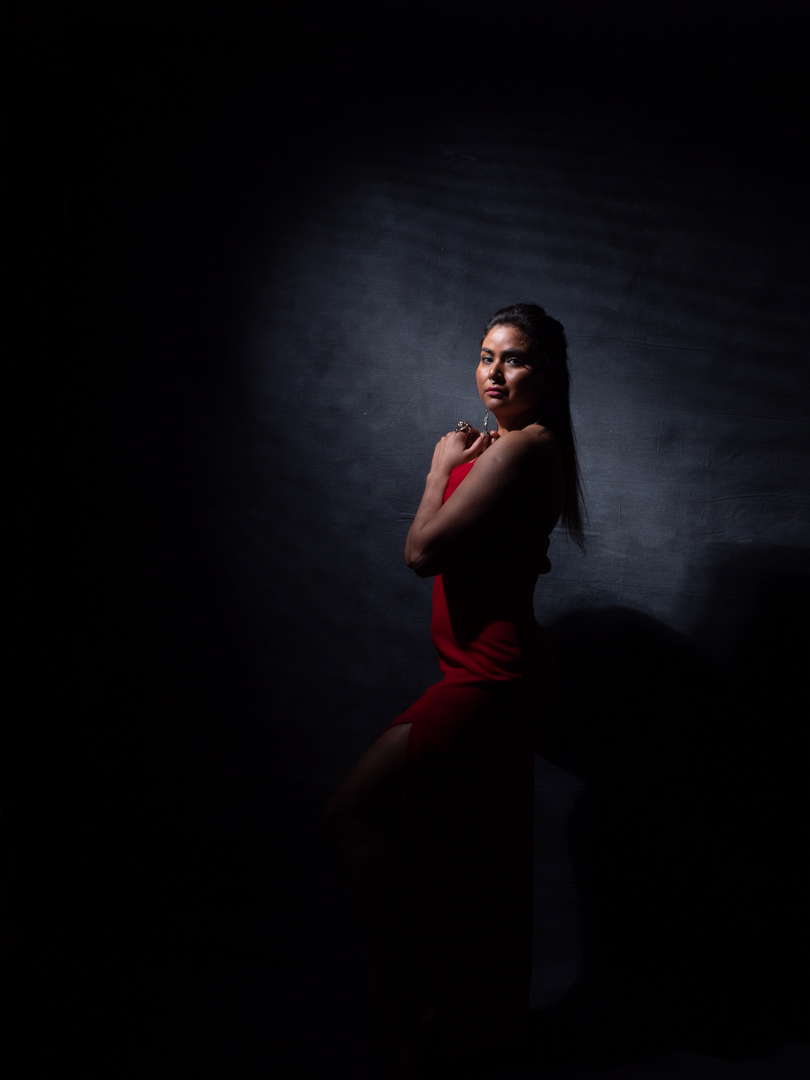
The final outfit that Mumtaz brought was a red sequinned red dress with a long slit up one side. Again it was a good opportunity to show off Mumtaz’s legs.
Unlike the previous shoots, I wanted this one to be slightly more relaxed. So, I brought in a black leather couch for her to recline on.
I asked her to think about a scene where she was relaxing after a night out on the town. Giving a model a concert also helps get them into the right frame of mind for the shoot.
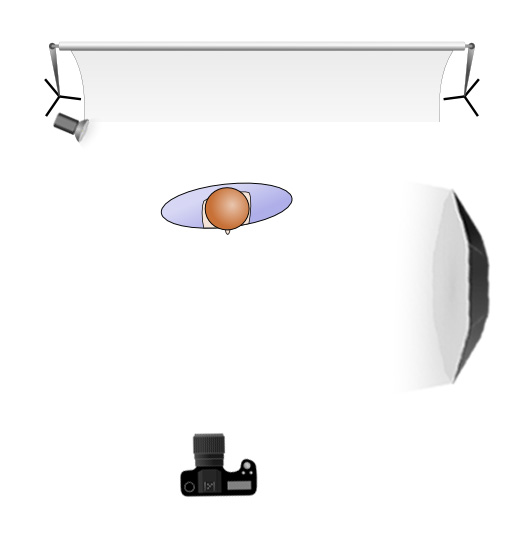
The lighting did not change from the previous shots. The main light was in 1.5m octabox positioned camera right and at a 90° angle to Mumtaz.
The grid was placed back on the the 7” reflector that was positioned camera left to act as a hairlight.
As with the previous set on the stool gave Mumtaz a prop to interact with.
All of the images in this post were shot with my Lumix G9. The settings were 1/200s f8 ISO 200. The focal lengths were at 24mm. Shooting so wide did mean that I was capturing more than I wanted. Fortunately Photoshop makes it fairly easy to remove elements you don’t want from the image.
The other impact of shooting so wide is that it makes anything close to the camera larger. In the final image, her legs are really emphasized.
Asking anyone to stand in front of the camera can be daunting. This is true even if they have substantial experience doing it. I have found that if you want someone to relax, give them something to interact with. This can be as simple as something to sit on or something to put in their hands.
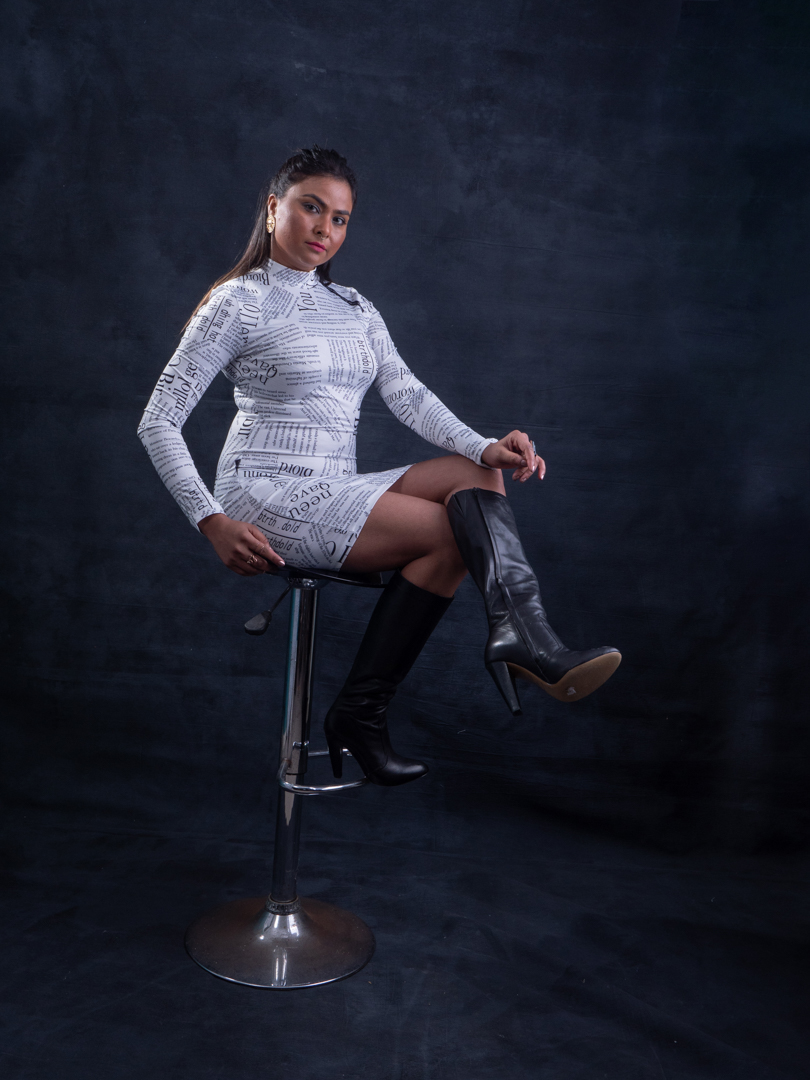
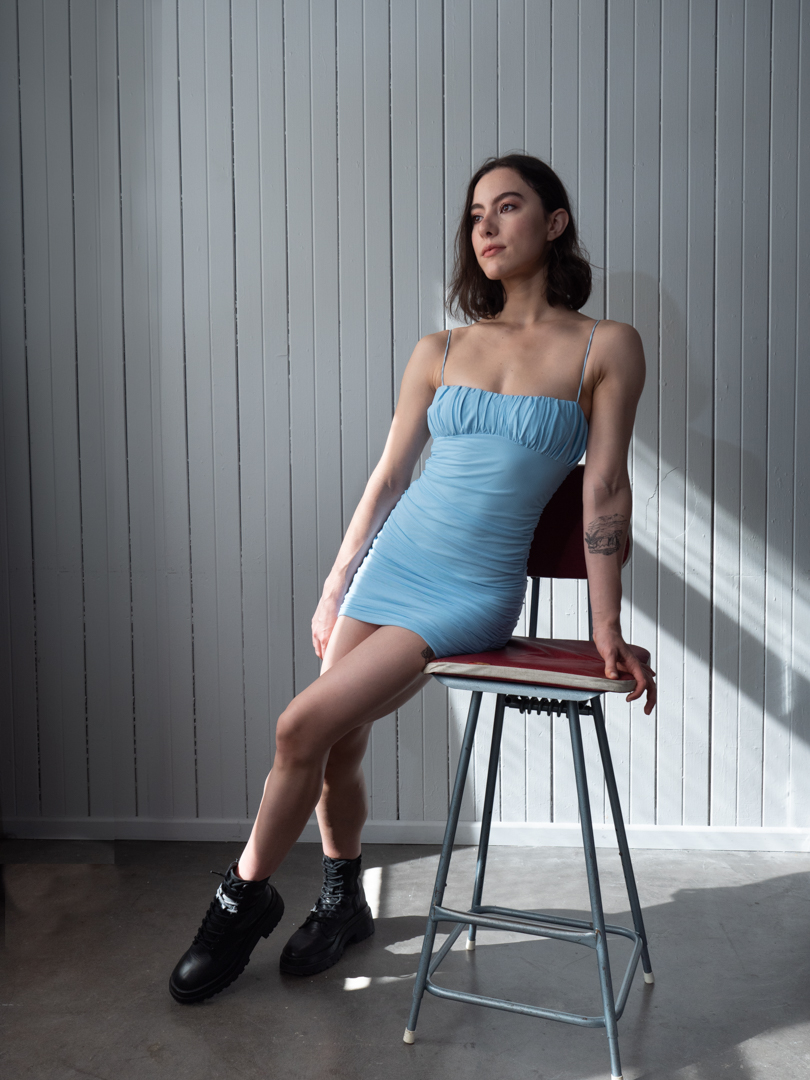
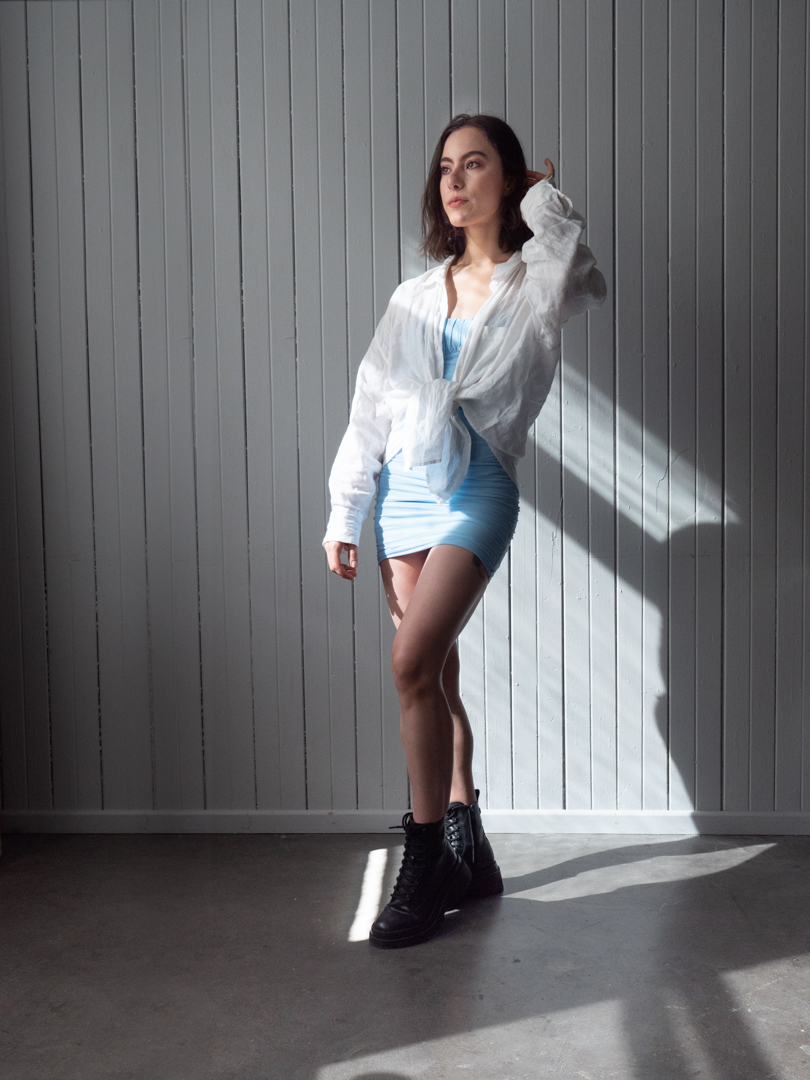
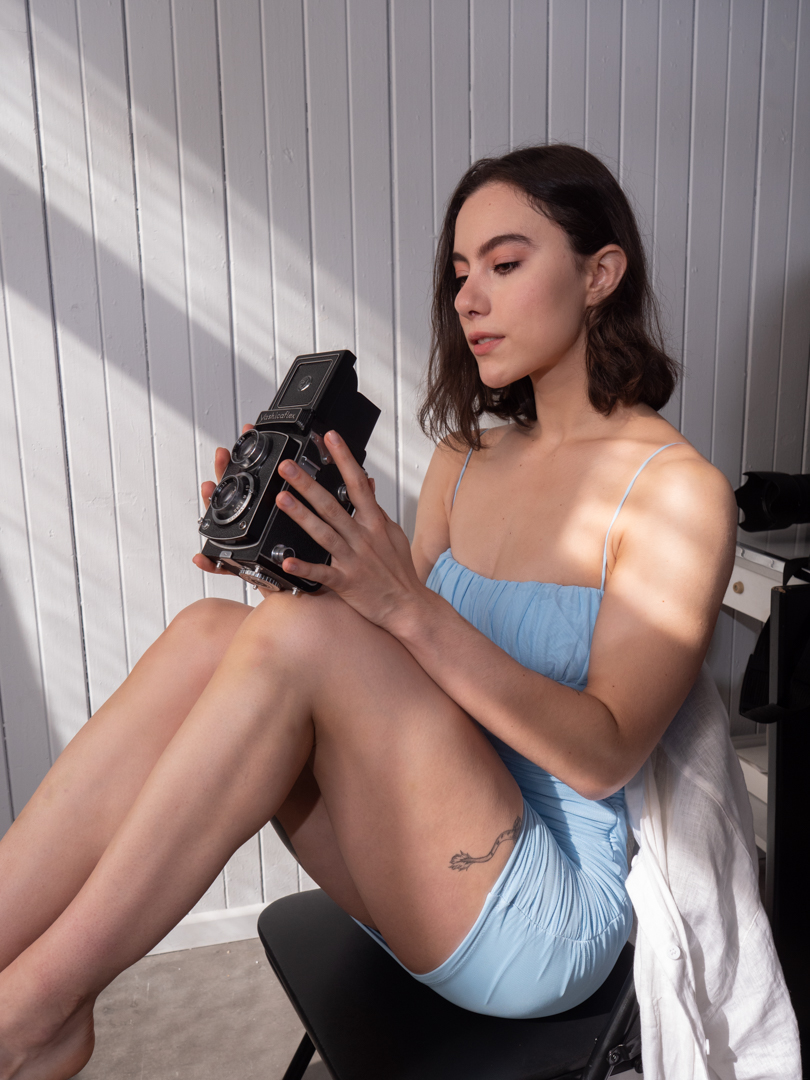
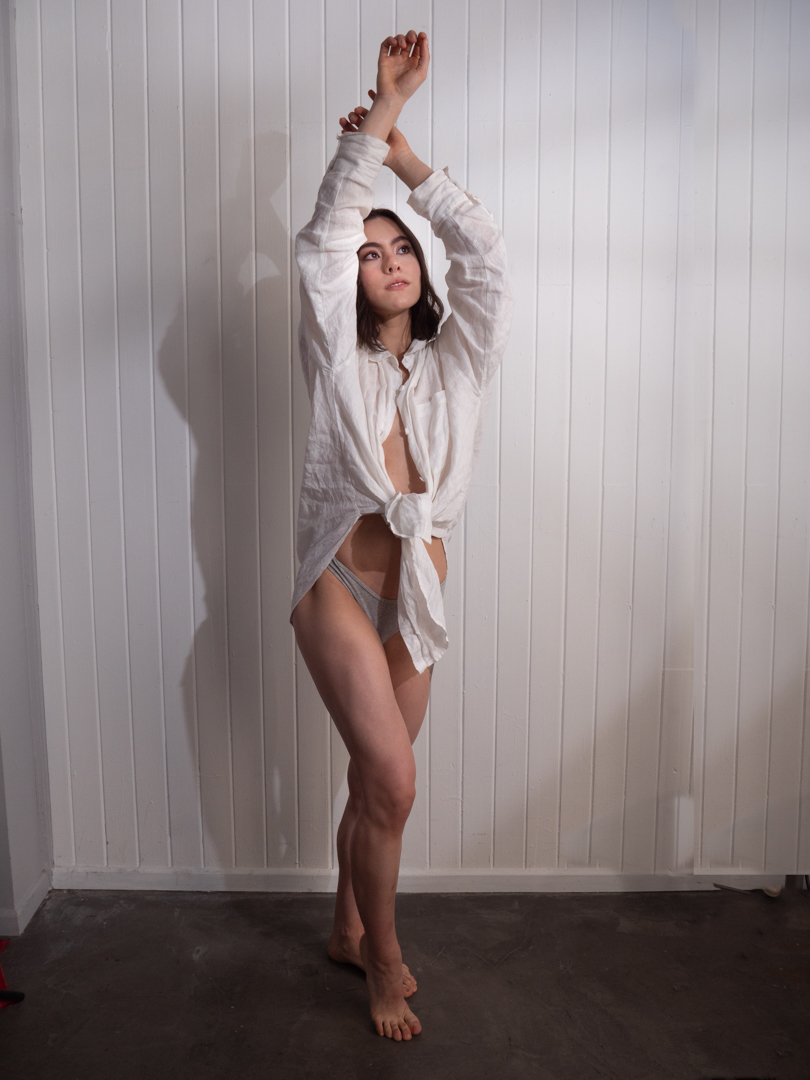
The fourth outfit that Mumtaz brought was a printed white dress. Unlike the previous outfits this one was quite short so it was a good opportunity to show off Mumtaz’s legs. I brought in an adjustable stool for her to sit on.
I also gave her some props to work with. The camera is part of my collection has become somewhat of a theme in that I try to get an image each time with a different models.
The lighting did not change much from the previous shots. The main light was in 1.5 m octabox positioned camera right and at a 90° angle to Mumtaz.
The grid was placed back on the the 7” reflector that was positioned camera left.
All of the images in this post were shot with my Lumix G9. The settings were 1/200s f8 ISO 200. The focal lengths were at 24mm.
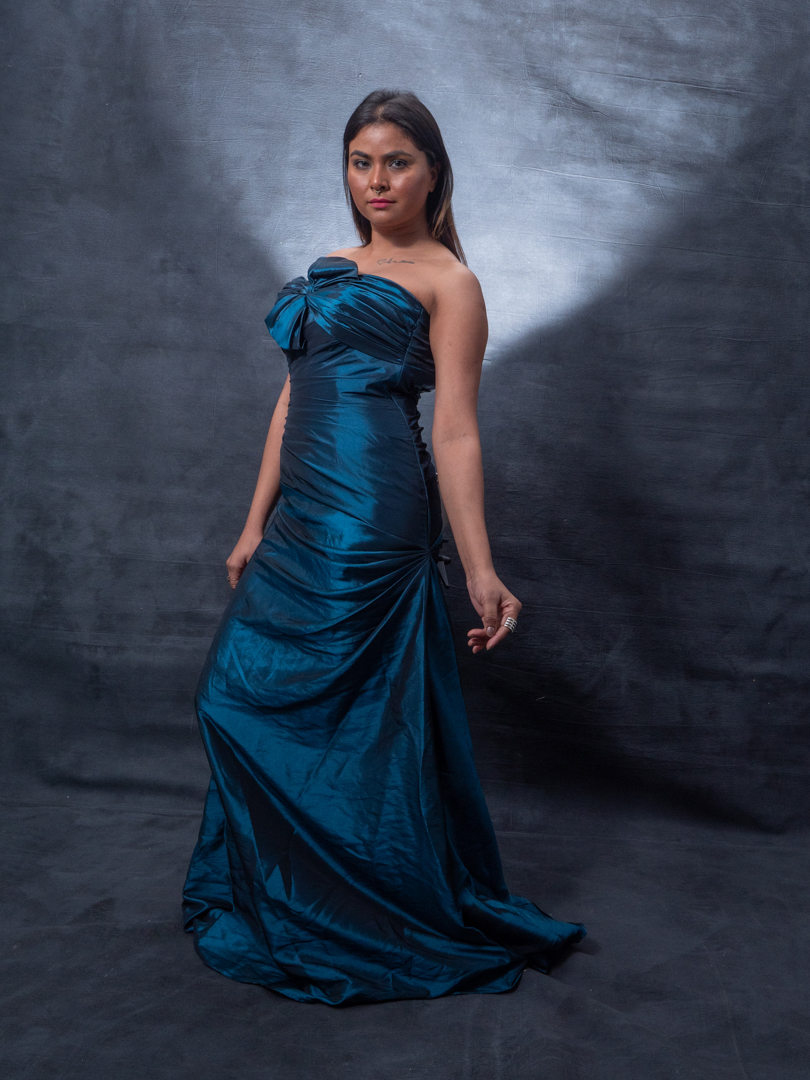
The second outfit that Mumtaz brought was a royal blue dress. This needed to be lit much more than the previous red outfit.
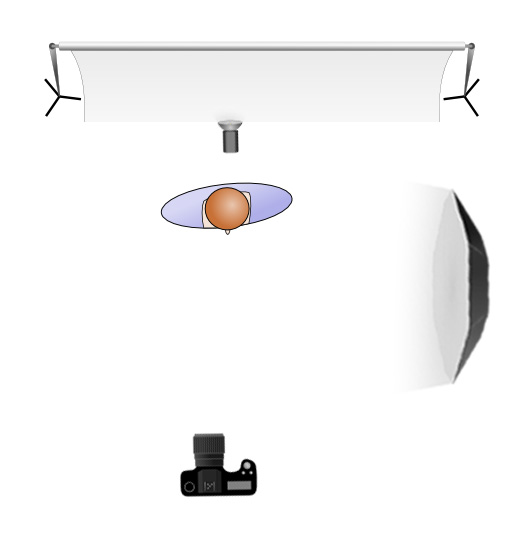
I brought in a 1.5 m octabox and positioned camera right and at a 90° angle to Mumtaz. This was a much bigger and softer light than the one used in the previous post.
The grid was removed from the 7” reflector and this was positioned camera left. In this position it acted as a hair light but also without the grid spilled on the background.
At the end of the session, I repositioned the hairlight. I put it on a floor stand behind Mumtaz, shooting upwards straight into the backdrop. This created definite separation and lighting pattern that I would not normally use.
All of the images in this post was shot with my Lumix G9 with settings 1/200s f8 ISO 200 with focal lengths at 24mm.
Mumtaz what’s the other model that had come to the portrait workshop held earlier in the year. At the end of that session, I had arranged for her to come to the studio. We could shoot under more controlled lighting.
She brought along a number of outfits. The shoot nearly lasted two hours that I will cover in this and the next three post. I have split the session into multiple posts because there were a number of lighting changes. I want to show the effect of these changes rather than confuse them in a long single post.
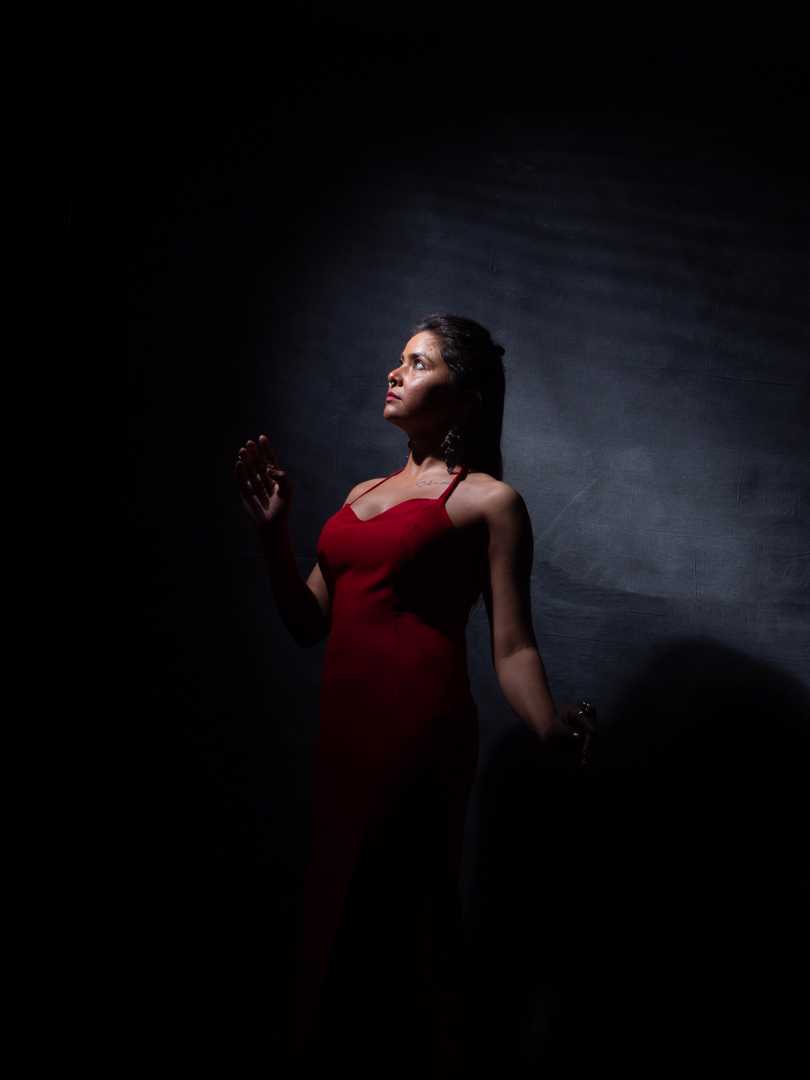
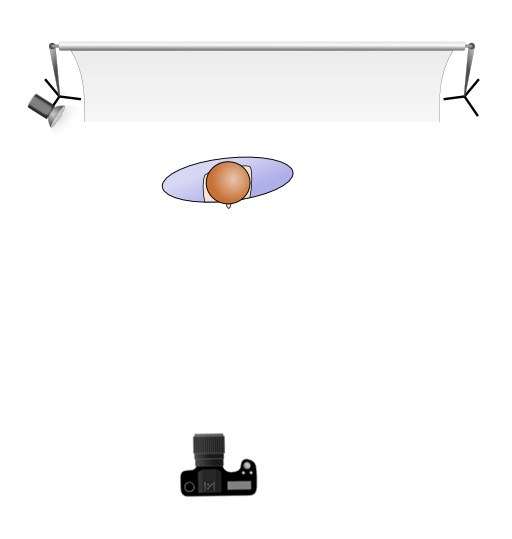
We started with a single light in a 7 inch gridded reflector positioned to camera left and at a 90° angle to Mumtaz. The grid was to control the amount of spill from the light onto the backdrop. This created a very dramatic light with strong contrast and dark shadows.
The disadvantage of such a small light source is that it is very difficult to get light in the models eyes unless they are looking directly towards it.
I shot all of the images in this post with my Lumix G9. The settings were 1/200s f8 ISO 200 with focal lengths at 24mm. The setting ensured that I had full control of the light while also giving me a good depth of field.
The focal length enabled me to shoot full body in my relatively small studio. The camera was tethered to the computer meaning that I could see them much larger than on the back of the camera. The computer also enabled my subject to see the images and make adjustments on the fly.
I used software developed by Panasonic for the tether. In addition to the memory card in the camera, the photos were transferred to the computer as they were taken. They were stored in a specific folder that I had said up Adobe Lightroom to monitor. As each image came in then appeared in Lightroom.
Lightroom does have a tethering function but at the time it was not available for my camera. I have also found it was not all that stable at the time I was shooting.
I genuinely believe that model shoots need to be full collaboration events. Therefore if a model is coming to help me with a concept I am more than happy to shoot whatever they want.
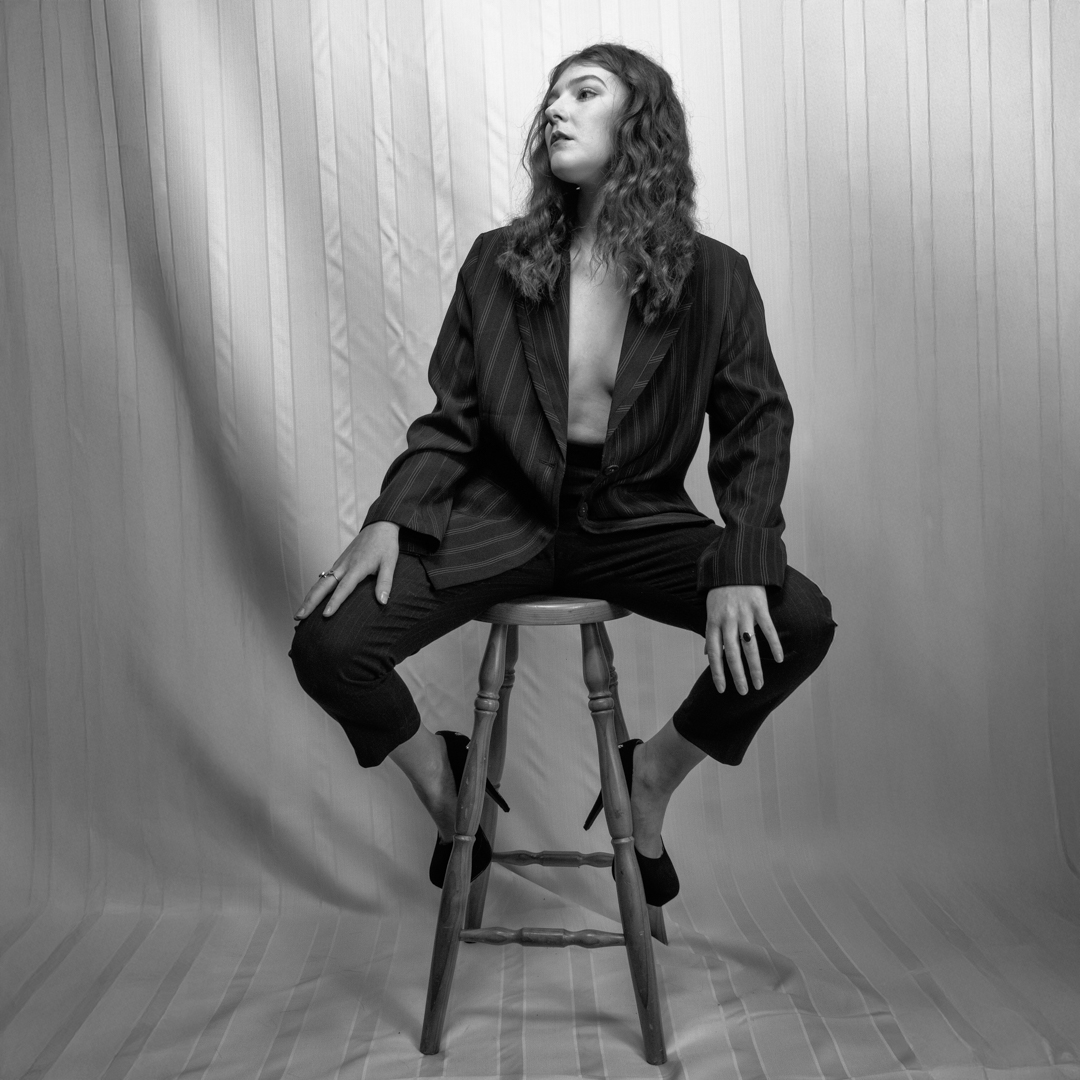
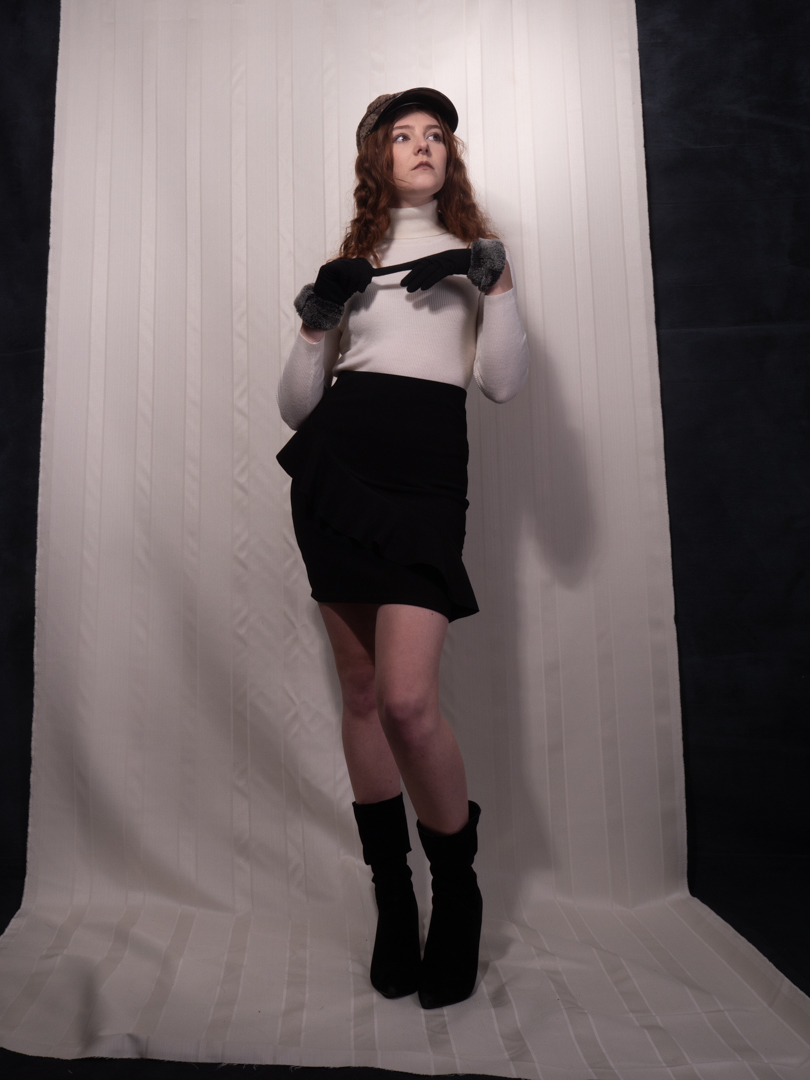
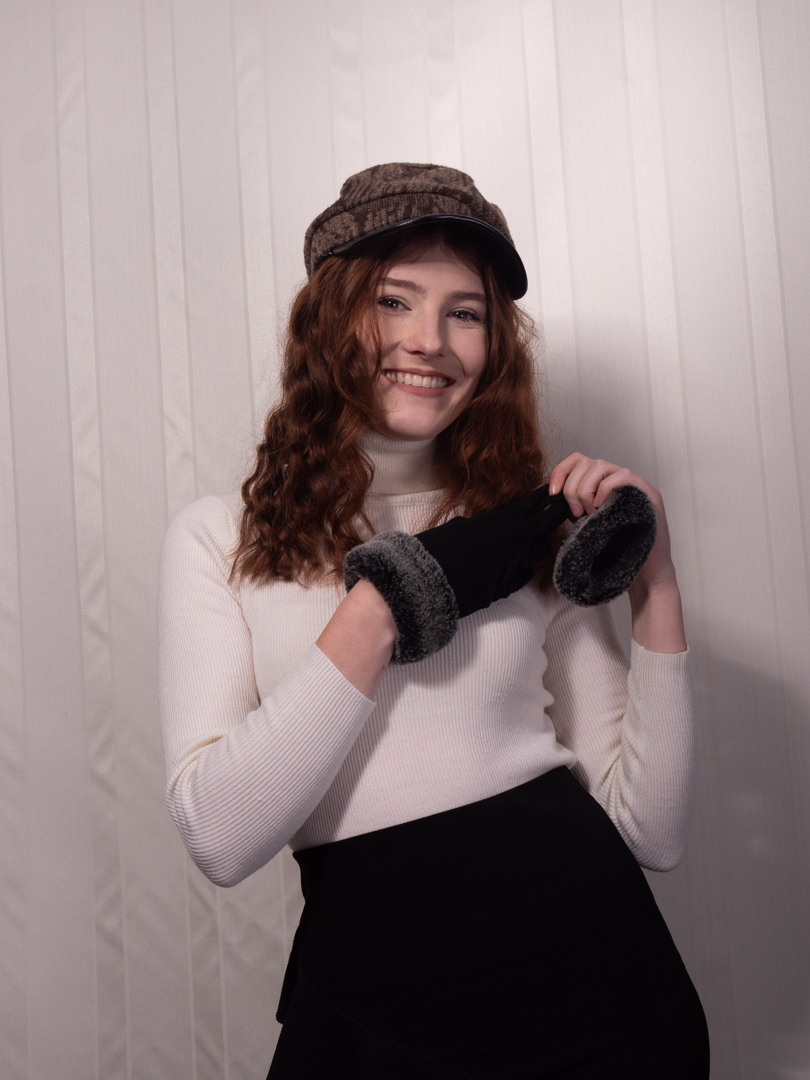
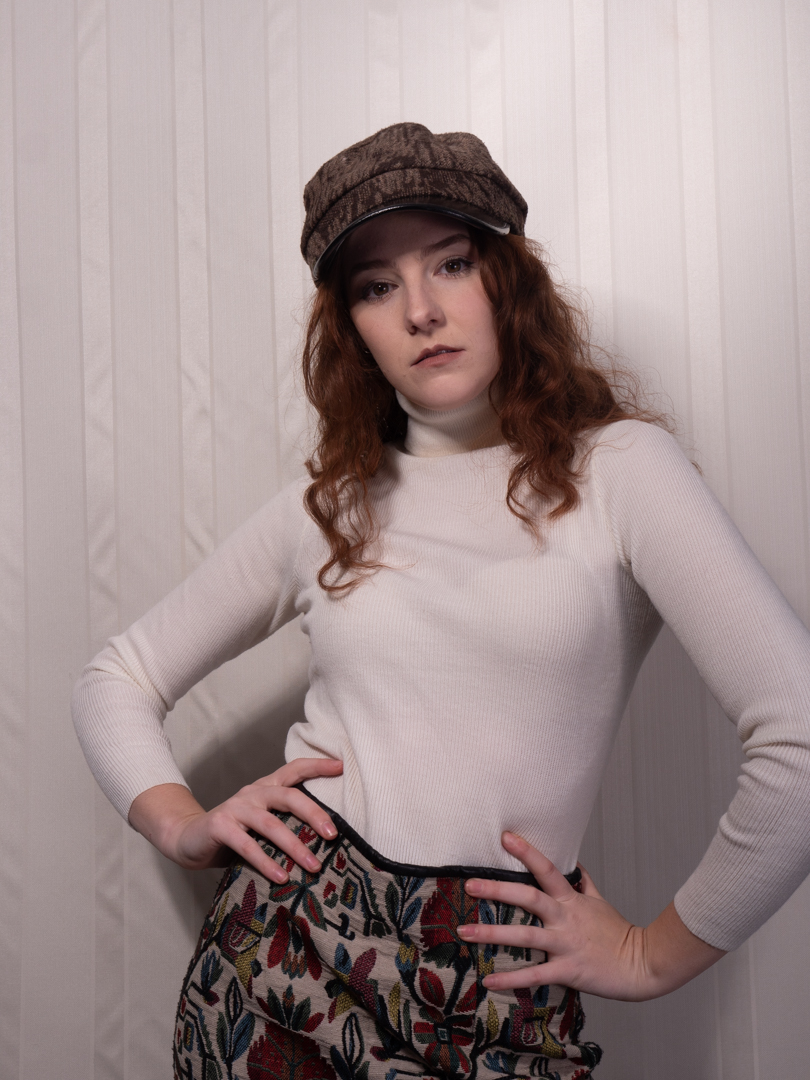
After working together successfully at the workshop in the previous post, I asked Devon if she was interested in helping me with a concept. I also asked her if she would had some ideas she would like. She told me she wanted to do something like a vogue fashion shoot. She sent me a series of images on Pinterest.
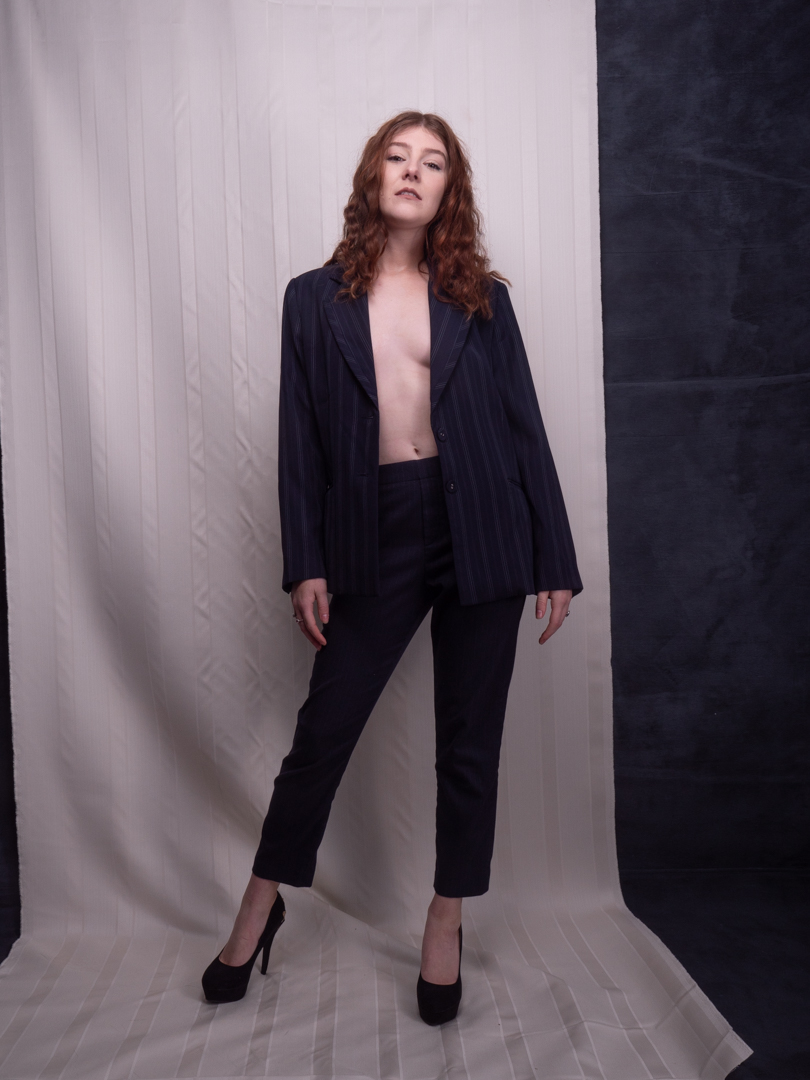
As we were going to be shooting several shoots in the one day I layered up the backgrounds to save time. Devon brought several outfits starting with a suit so we shot that first. In typical vogue style she elected to wear nothing under the jacket.
Beanie, our cat, loves checking in on studio shoots and as usual managed to photobomb into them.
Fashion shoots typically use punchy lights so to achieve this the main light was in a beauty dish positioned above the camera. A second light was positioned camera right. This was shooting into a 7′ umbrella with diffusion to fill in the shadows.
In addition to the suit Devon had brought some other outfits. They had a late 1960s vibe to them so we did a series of images using them.
All of the images in this post was shot with my Lumix G9 with settings 1/200s f10 SO 200 with focal lengths ranging from 26mm to 50mm. The setting ensured that I had full control of the light while also giving me a good depth of field.
My style of photography generally involves one or two models and myself. Therefore, when the opportunity arises to shoot with other photographers, I will take it for the social aspect.
I saw a post on a local Facebook group. It was about a meet up starting at the Photospace Studios in Courtney Place. I was not sure what the plan was but I thought it was a good opportunity so I went along. The studio had been booked by a couple of the photographers who were practising their techniques. They are also arranged for several models to come in and were happy for others to join in.
The studio has a large bank of windows at one end. I took this as an opportunity to practice blending natural light with flash. While it had a number of backdrops and lights I was happy to let the others use that area.
I had taken my Godox V1 speedlight. I also took a small 26 inch soft box. I positioned each one to camera right every time.
The first model I shot was Natalia. We did a series of shoots images utilising the light coming in from the windows. As this was changing I was having to adjust the shutter speed on each image.
She had brought a white shirt. I asked her to wear just that to create a different look. All of the images in this post were shot on my Lumix G9 at f5 with ISO400. The shutter and focal lengths did change as shown against each image.
1/125s 36mm
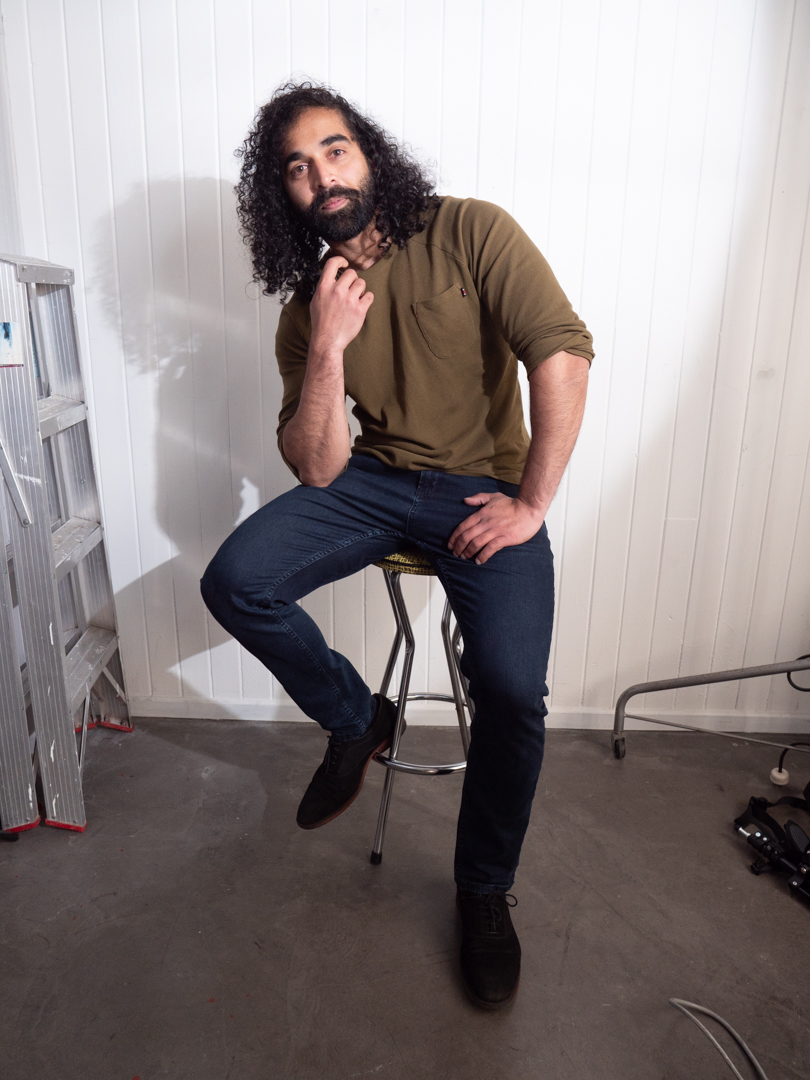
Also present was Armish. I don’t normally get to shoot with a male model so this was a good opportunity. We did a couple of images of him initially with Natalia and then by himself.
1/125s 24mm
The final series of images where with Sean and Libby who were a couple and photographers as well. They were more than happy to pose for the others. It was good to be able to capture images of a couple who were comfortable interacting with each other.
1/80s 36mm
When I processed the images deal with several that looked much better in black-and-white than colour so that is how I presented them to them.
1/125s 24mm1/125s 24mm
All of the models appeared to have a good time and I got positive feedback when the images were sent to them.
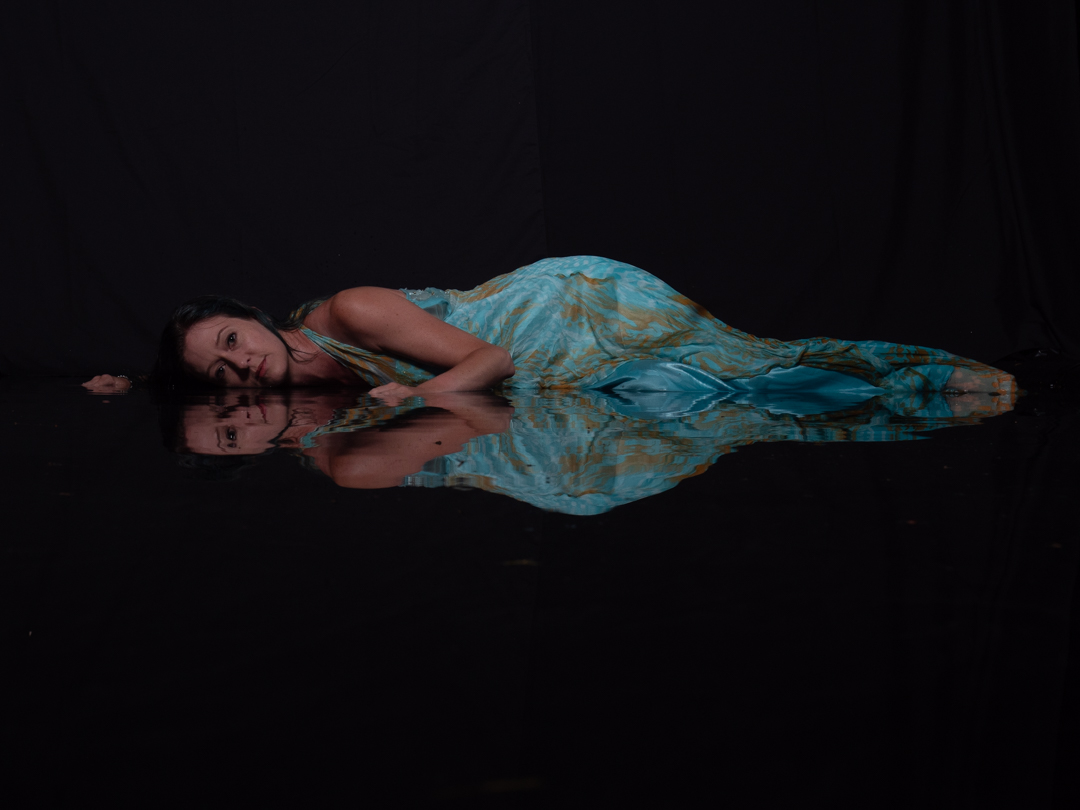
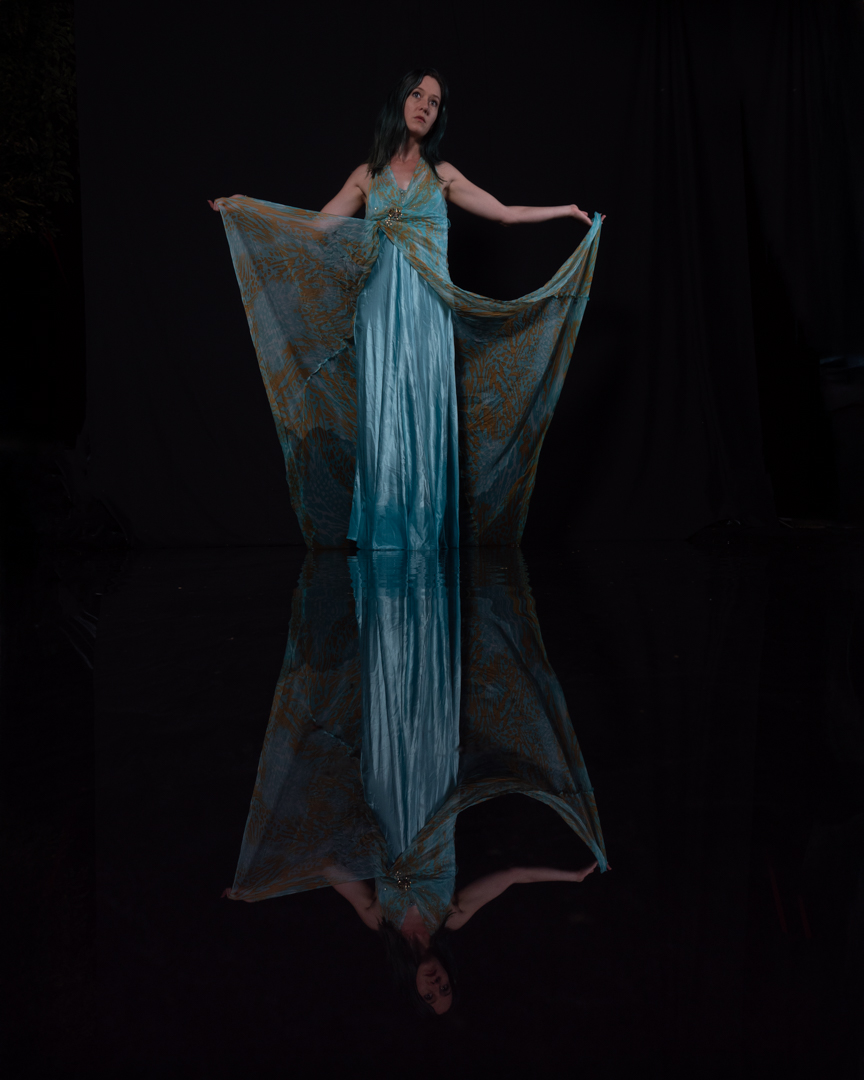
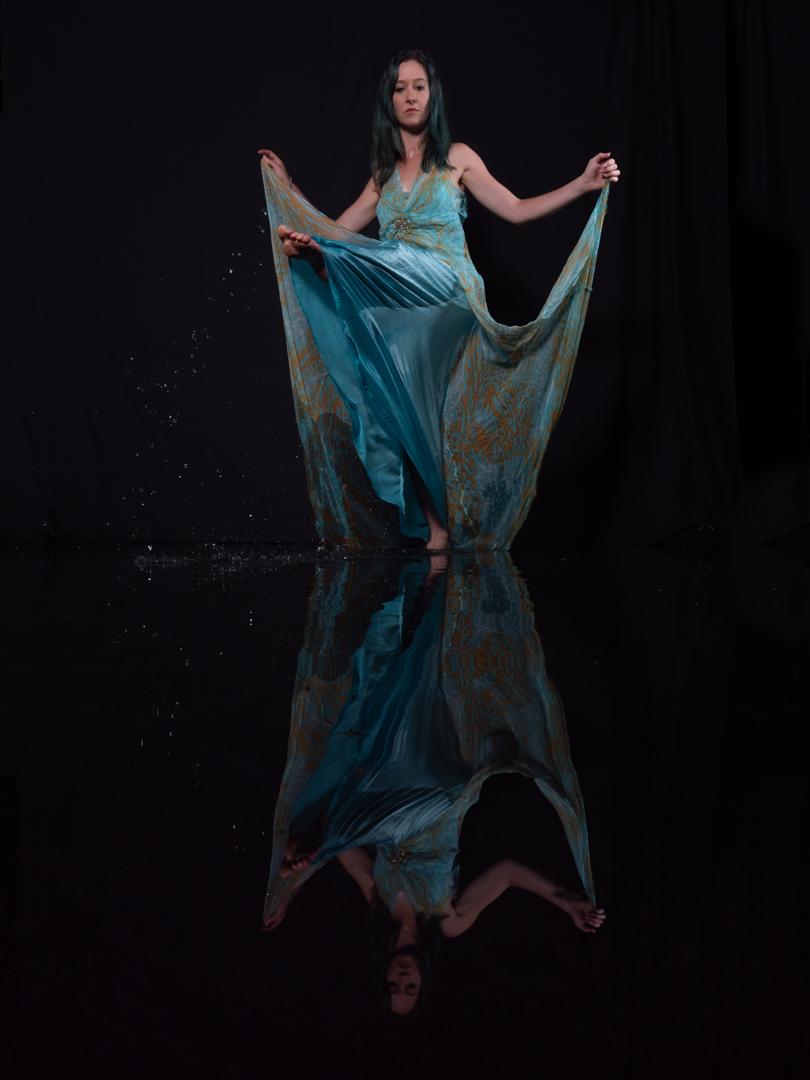
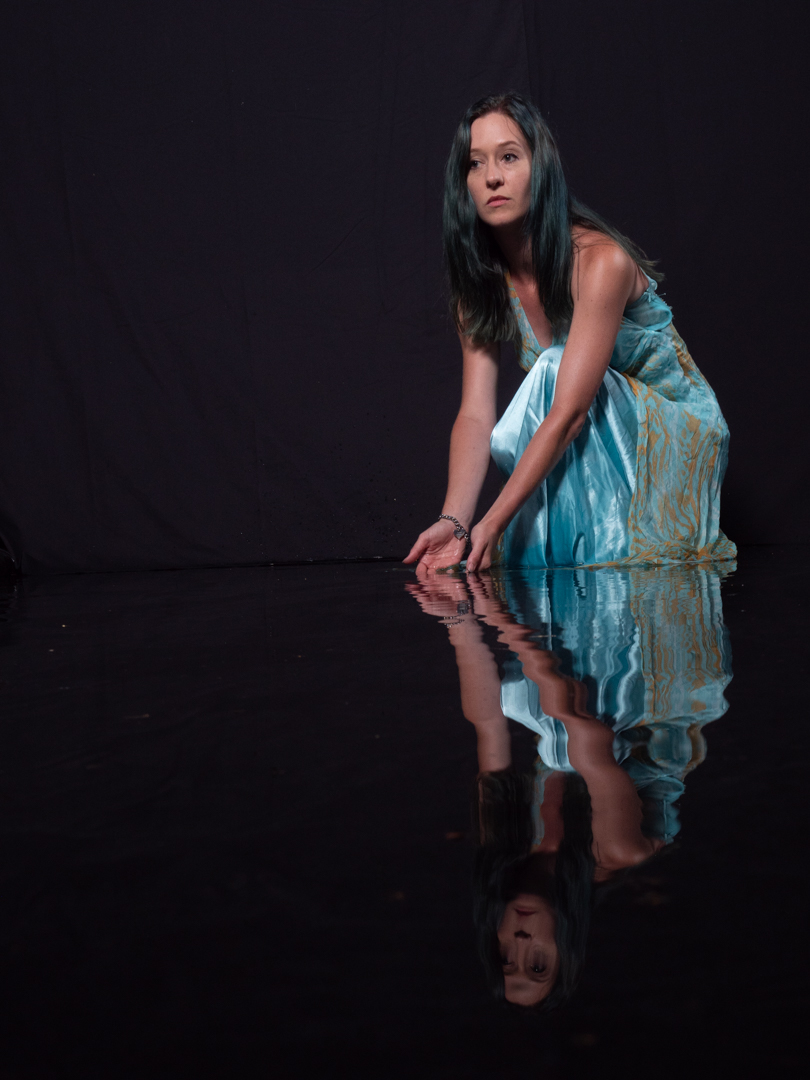
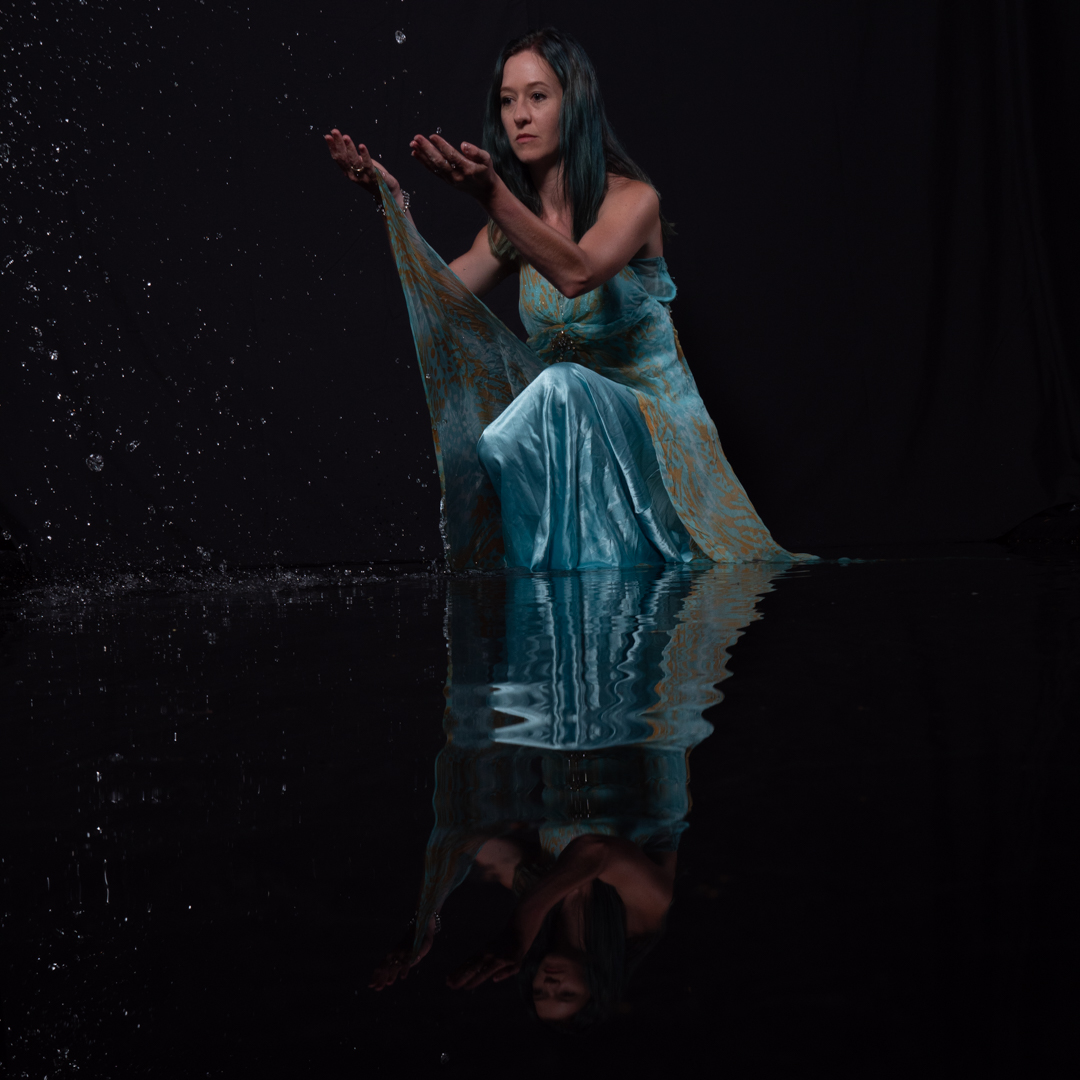
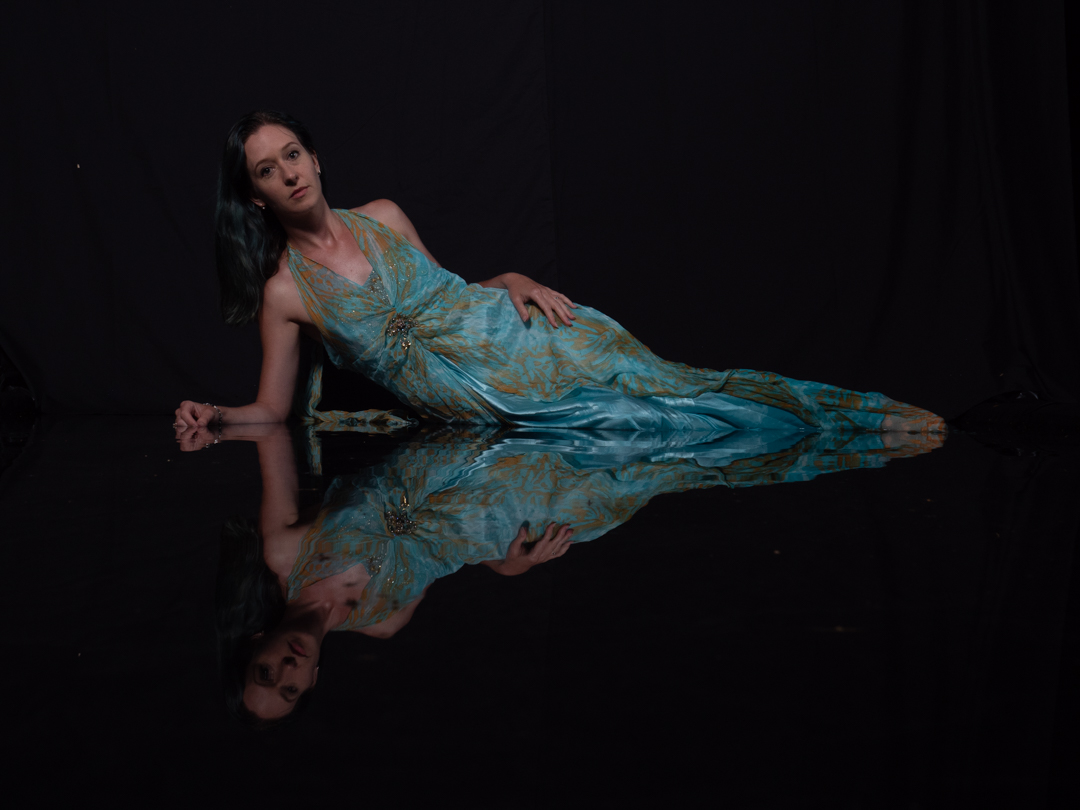
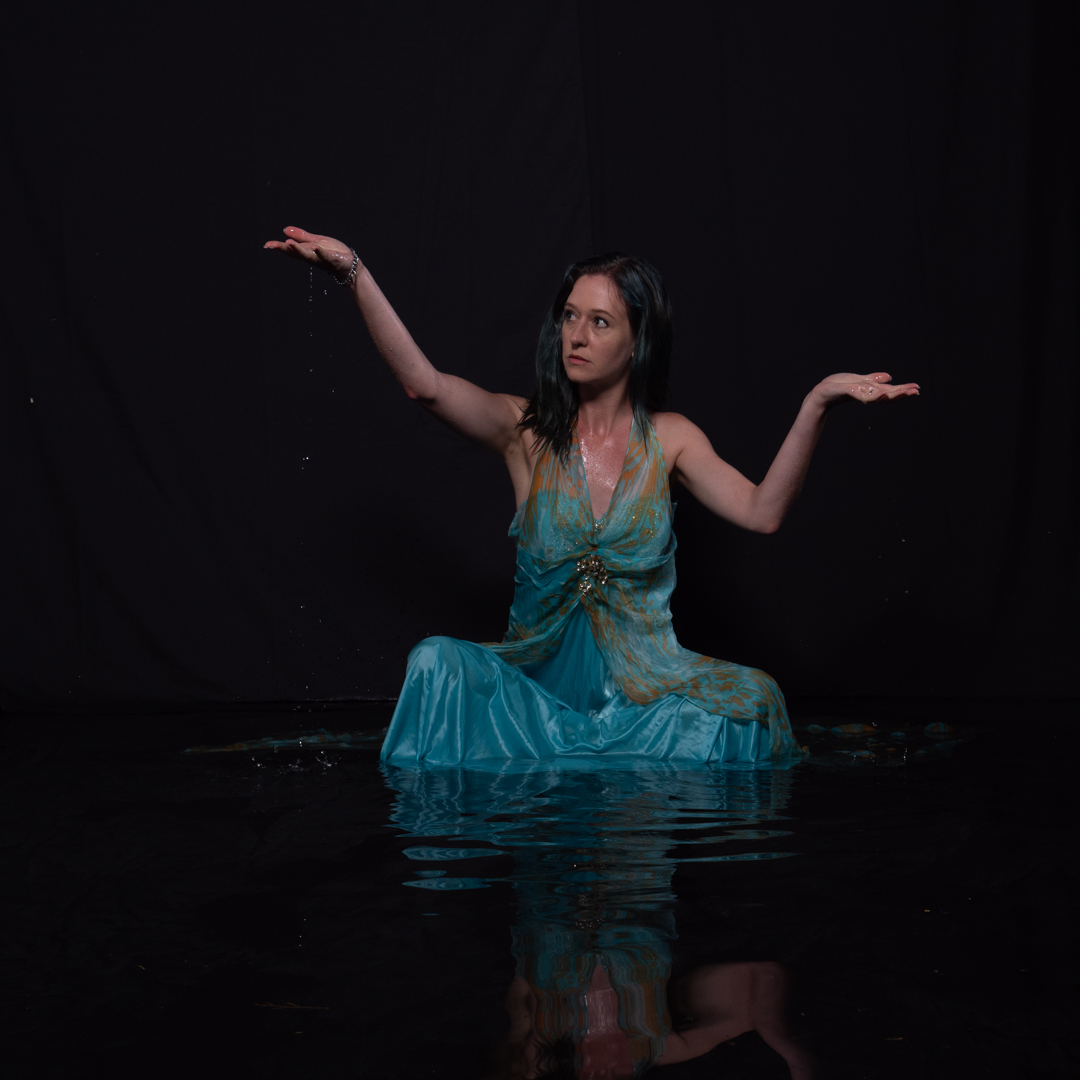
As I mentioned in the previous post I love playing with reflections in camera and also water. After the practise session Sian joined me to do the actual shoot. She was not feeling the best but she was willing to try it.
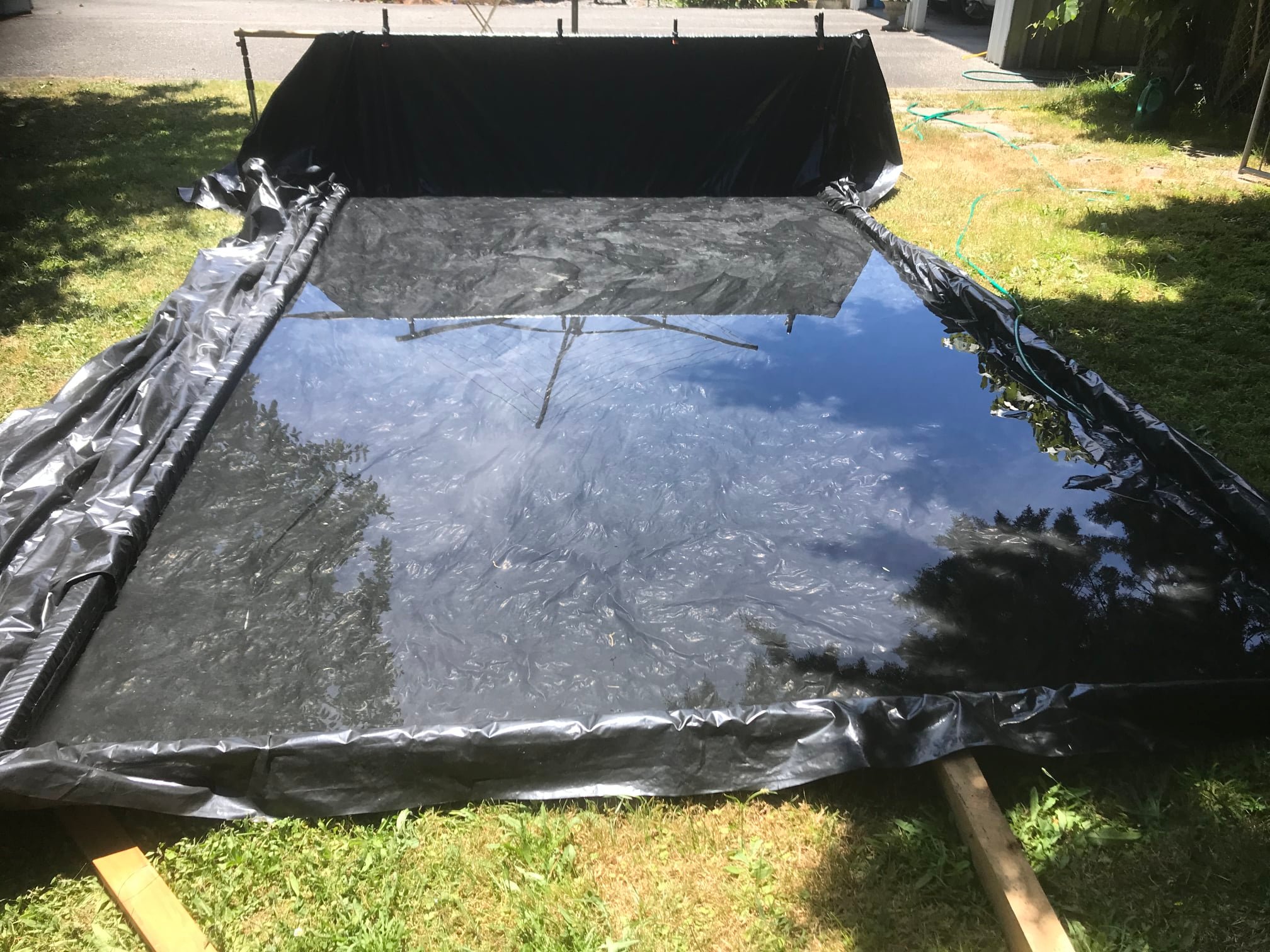
The pool was constructed using a long length of black polythene sheeting and several lengths of 4 x 2 timber. The water was approximately 2″ deep. I placed a paving stone that was just below the water surface so that Sian appeared to be walking on it.
The test shots had shown that the best lighting position was two gridded soft boxes on either side, with a single softbox camera left. . To remove the reflection of the plastic, the fabric backdrop was run down into the water. The backdrop was well anchored as it was an outdoor shoot.
The camera settings were my usual when I wanted to control light and have a decent depth to the field. (1/200s f8 ISO200 using a 50mm equivalent on my Lumix G9).
The shoot only lasted 30 minutes and we shot a variety of poses.
The final images were pretty much strait out of camera except for removing the lights.
I was grateful for Sian’s help with the shoot and the images came out just how I wanted.
I love playing with reflections in camera and also water. It was no surprise that my first shoot of 2022 would involve both of them.
I used a long length of black polythene sheeting and several lengths of 4 x 2 timber. With these materials, I constructed a reflecting pool in the back garden. I filled it up with about 2 inches of water. I then left it to heat during the day. As it was the middle of summer the water managed to get to a very balmy 42°C which is 107.3°F for my American readers.
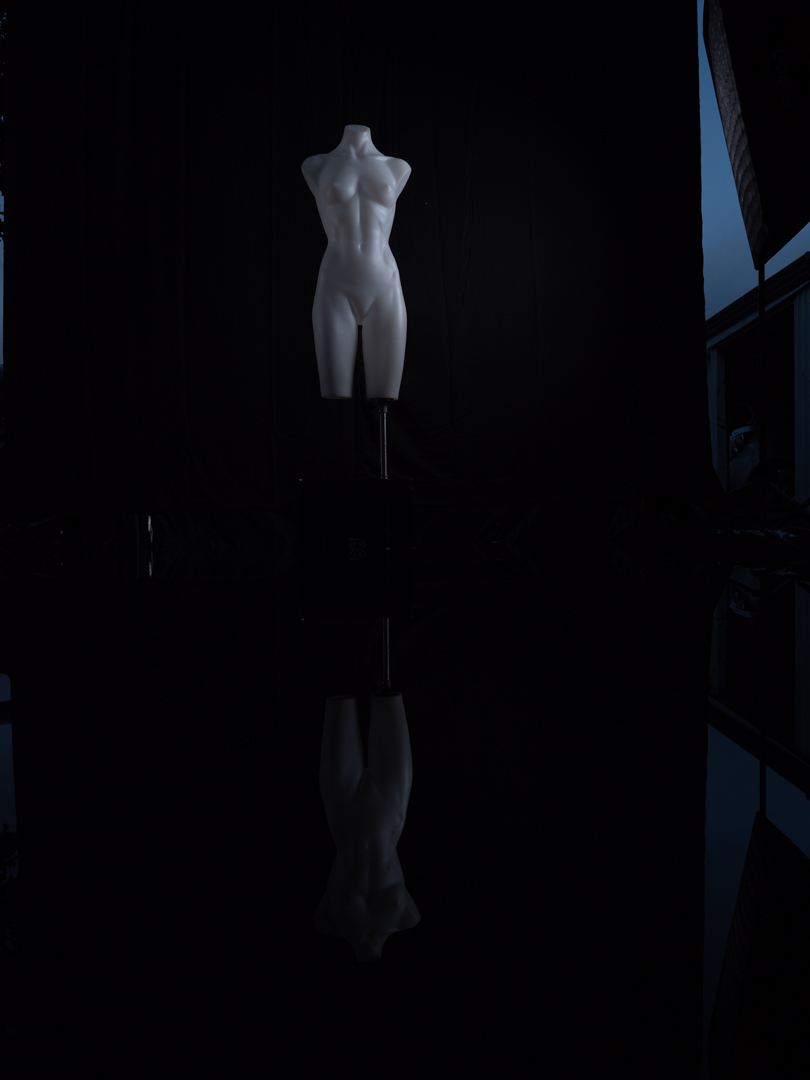
Sian had agreed to be my model for the shoot which was booked for 5 January. To avoid wasting her time, the pool was built the day before. That night, I moved my mannequin out and lights out. I did this to set up lights and determine what settings were needed to capture the images I was after.
I initially tried a single light from the end of the pool. I discovered that it was not strong enough to give me a strong reflection.
So I ended up positioning two gridded soft boxes on either side. In addition a softbox was positioned just to the left of the camera. This gave me the look it was trying to achieve.
The camera settings were my usual when I wanted to control light and have a decent depth to the field. (1/200s f8 ISO200 using a 50mm equivalent on my Lumix G9).
Running a test shoot under the same lighting conditions as you plan to use is advantageous. It enables you to identify issues early and also make the shoot smoother. Any problems that need rectifying can then be addressed.
I noticed that the black plastic at the rear of the pool was picking up too much light from the strobes. This was proving to be a distraction and needed to be eliminated. This was simply achieved by running the fabric background into the water.






















 pwfotos