My second shoot at the 2020 Wellington Cosplay Photofest was with Natasha .
What was unusual about this shoot in terms of cosplay is that most cosplayers recreate characters from either movies, games or cartoons particularly Japanese anime. Natasha had created her own character that she called Rainella the clown.
This means that there was no reference in which to place the character giving us total freedom. We decided that the Lady Norwood Rose Garden and Begonia House in the botanical Gardens would be an ideal location. All of the images were shot under natural light at f7.1.
As the Begonia House is a large greenhouse there was no need to add in additional lighting.
As you can imagine Natasha’s outfit attracted a lot of attention particularly from children.
Each year in February there is a cosplay event organised in Wellington that brings together both cosplayers and photographers who collaborate on a completely TFP basis.
It started in 2019 and I was fortunate to be selected in that year and the two following ones. The images in this and the next two posts were taken at the 2020 event.
The way that the event works is that you are matched with a number of cosplayers and you then sort out a shoot time and location over the course of the weekend. Some of the more experienced cosplayers have multiple costumes so there is often variety available.
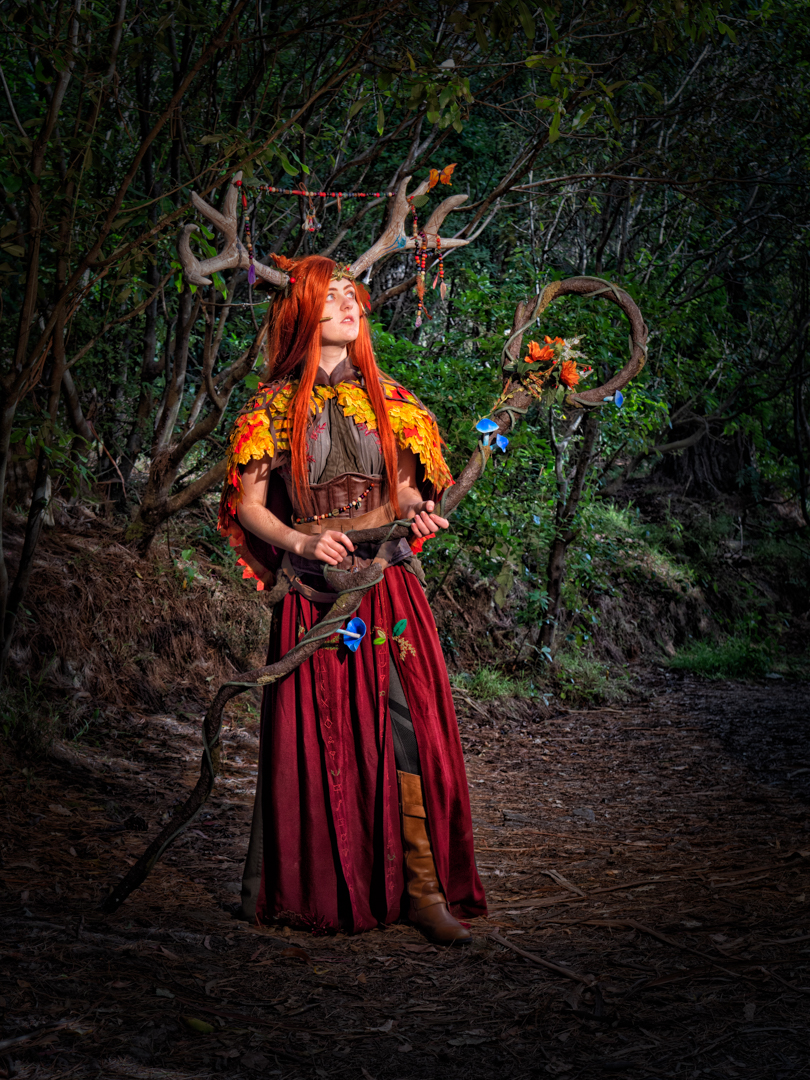
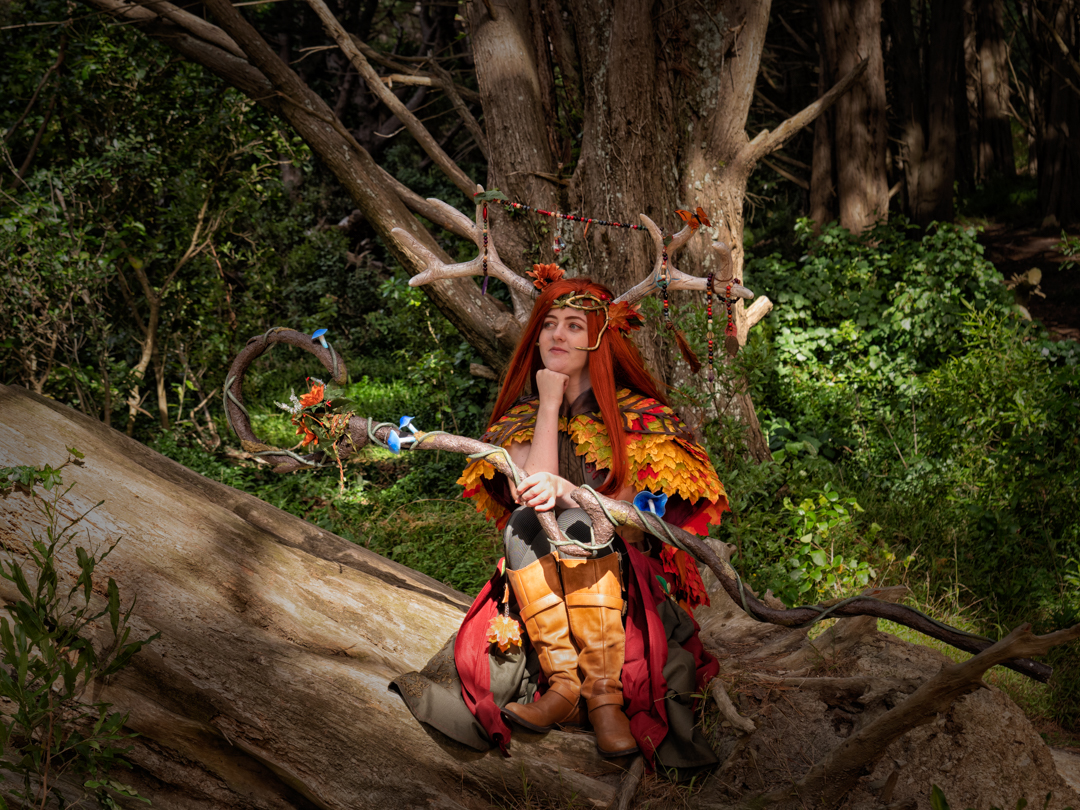
My first shoot in the 2021 event was with Nikki who goes by the Instagram name @chameleon.costume and we decided to shoot her dressed as Leyleth from Vox machina which she explained to me was a dungeons and dragons fantasy series.
The costume screamed nature so we set up to shoot in the redwood trees that form part of the Wellington city belt on Mount Victoria.
It would have been nice to shoot in golden hour but the timing did not allow for that plus the cloned on the day made it impossible anyway. So I used my usual cheat of a speed light with an orange gell.
I had also packed my lensbaby so I brought that out to play as well.
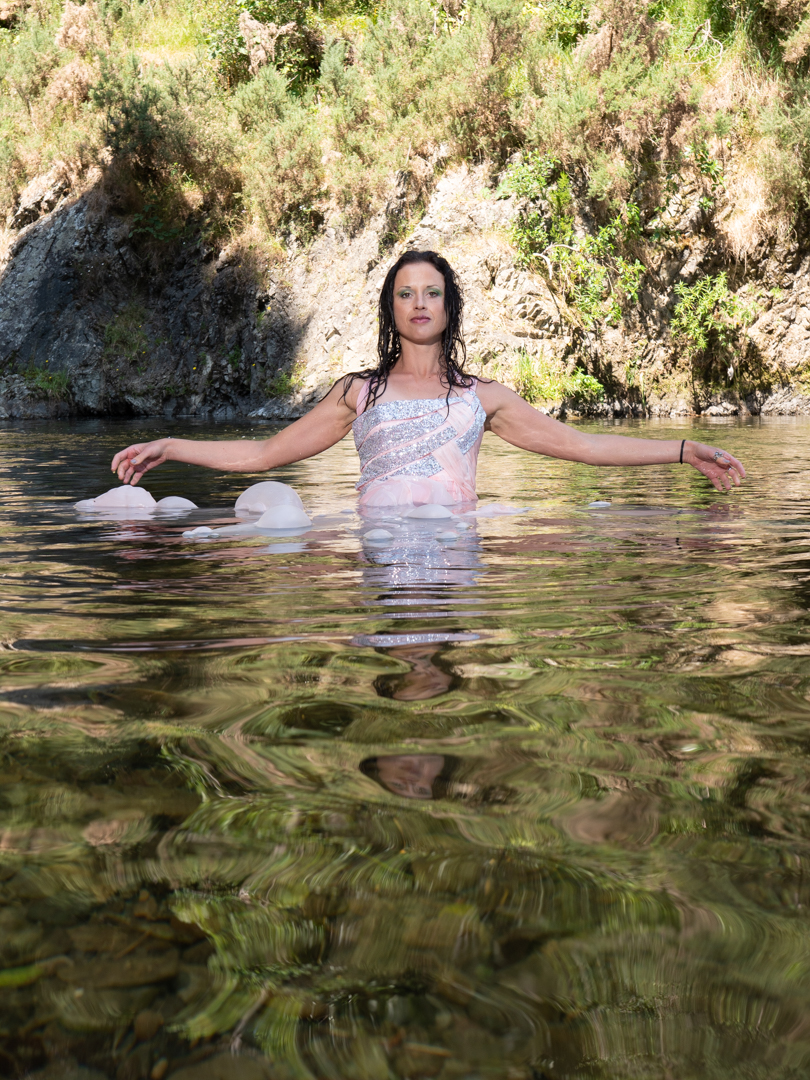
While I mainly enjoy shooting in the studio (due to the control it gives me) I also enjoy shoots the involve holder water. So when Melissa and I finish the studio series we made plans for another shoot when the weather warmed up.
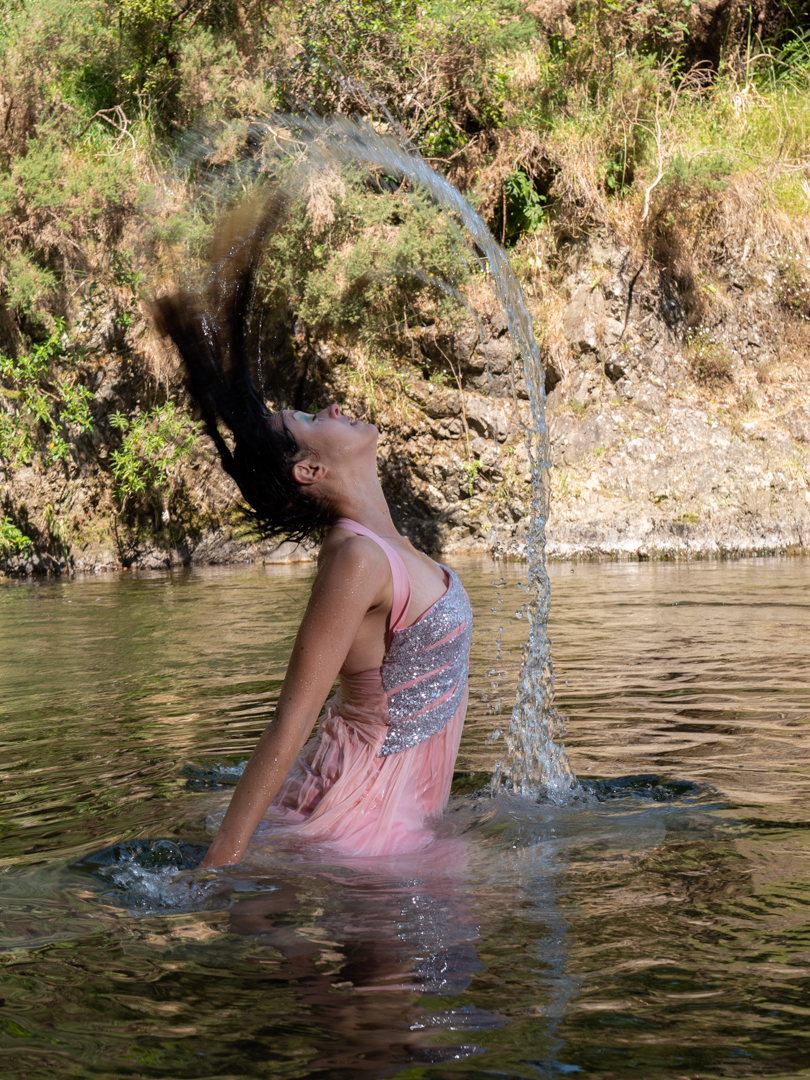
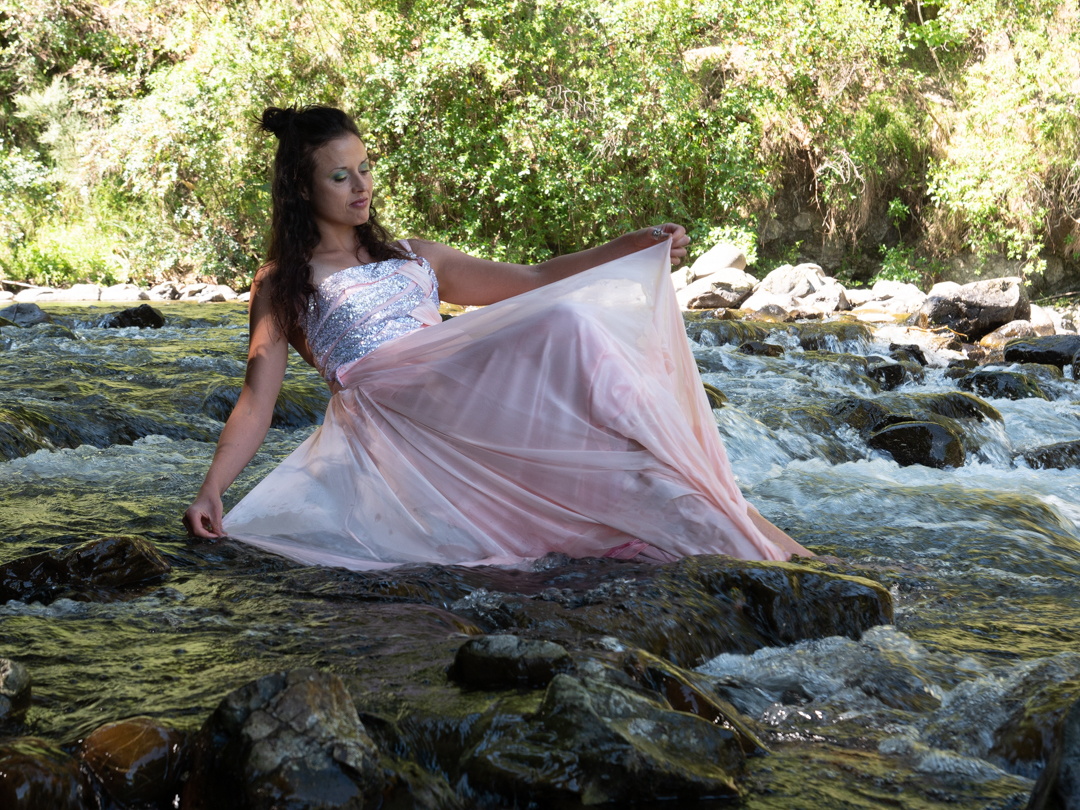
The Hutt River is only a kilometre from my home but during the summer months it does run into the issue of an algal bloom, which means swimming in it is not recommended. As I don’t want my models ending up sick this meant it was out of the question. Fortunately on a walk over the summer I discovered a path out of the housing development up on Riverstone Terraces that lead to a reasonable size stream that was feeding the river.
I figured that the water would be safer here so Melissa and I planned to shoot and I pulled one of the ballgowns that is in my position.
While we were shooting in the middle of summer the reality was that the water temperature did not change very much therefore we knew that the whole shoot would need to be done within a short period of time. This is also the case with pool shoots anyway.
Most of the shots which taken using natural light however for a few I did bring a speed light which was positioned in the river on a tripod. The light was gelled orange so that we could attempt to recreate gold light.
Given that part of the river was deep enough for Melissa to be almost fully emerged we attempted a hair flip. This was not as difficult as it could have been and we managed a reasonable shot after only a couple of the teams.
It was a fun afternoon and I’m pleased with the results.
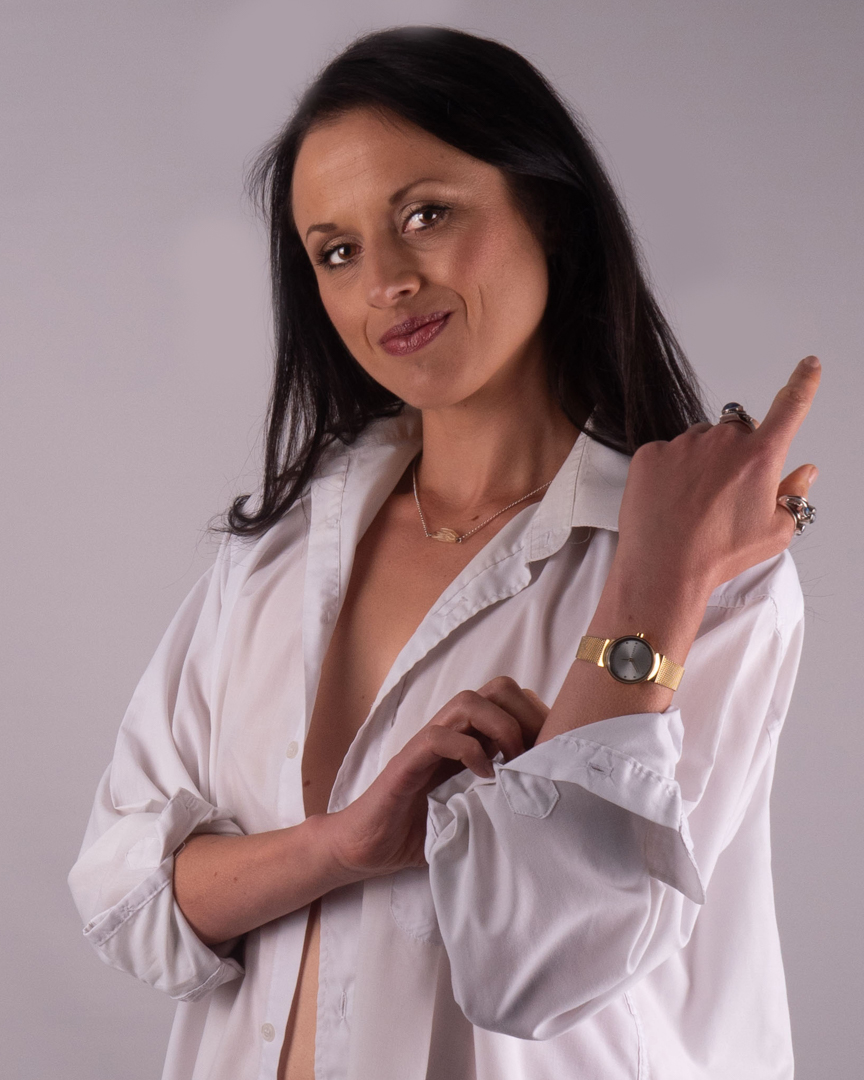
While I have suitcases full of prop clothing, one piece that all models seem to have fun with is a simple white shirt. It is quite a versatile item depending on how it is worn.
The image above was shot when we doing the headshot series and involved a Octobox positioned above the camera and two strip-boxes positioned behind Melissa to light the background.
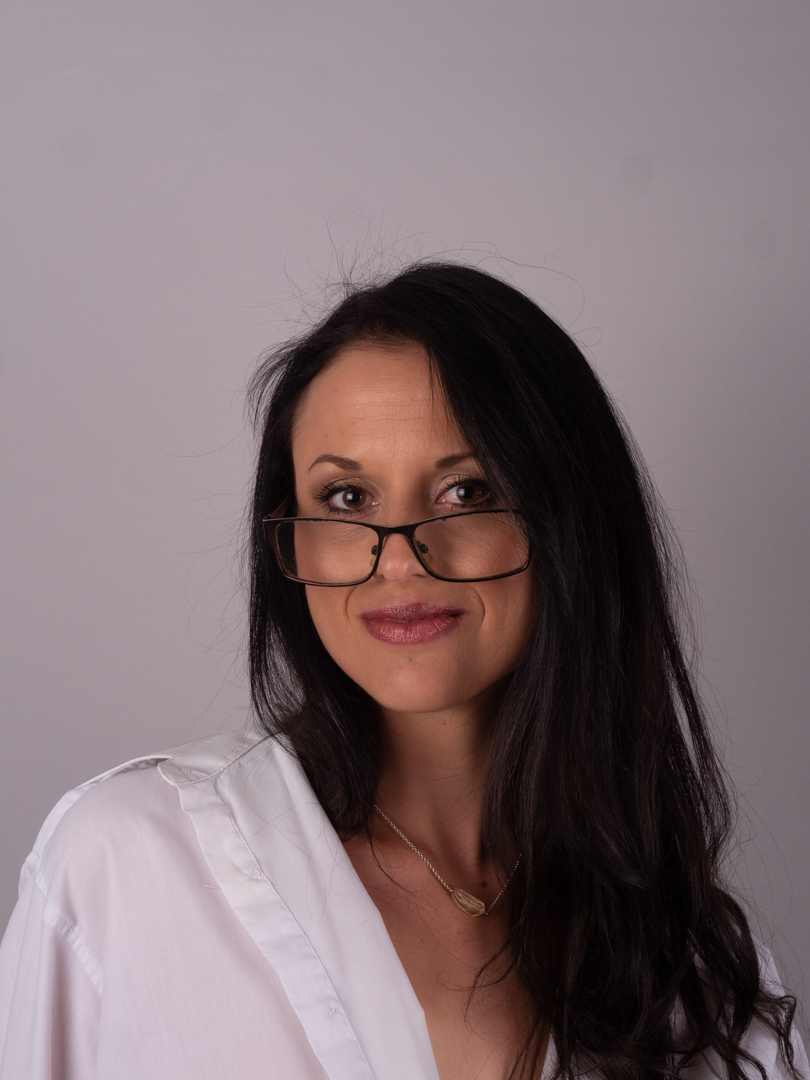
In hhe rest of the images the two strip boxes were brought forward and angled so that they lit Melissa. Both were metered at the same output so the light would be even.
As I have found on many occasions simply letting the model play with the shirt produces the best results.
It is rarely buttoned up which means they can also determine how much skin they wish to show.
Props are also very useful in terms of providing something for the model to interact with. In this case it was pair of my old glasses.
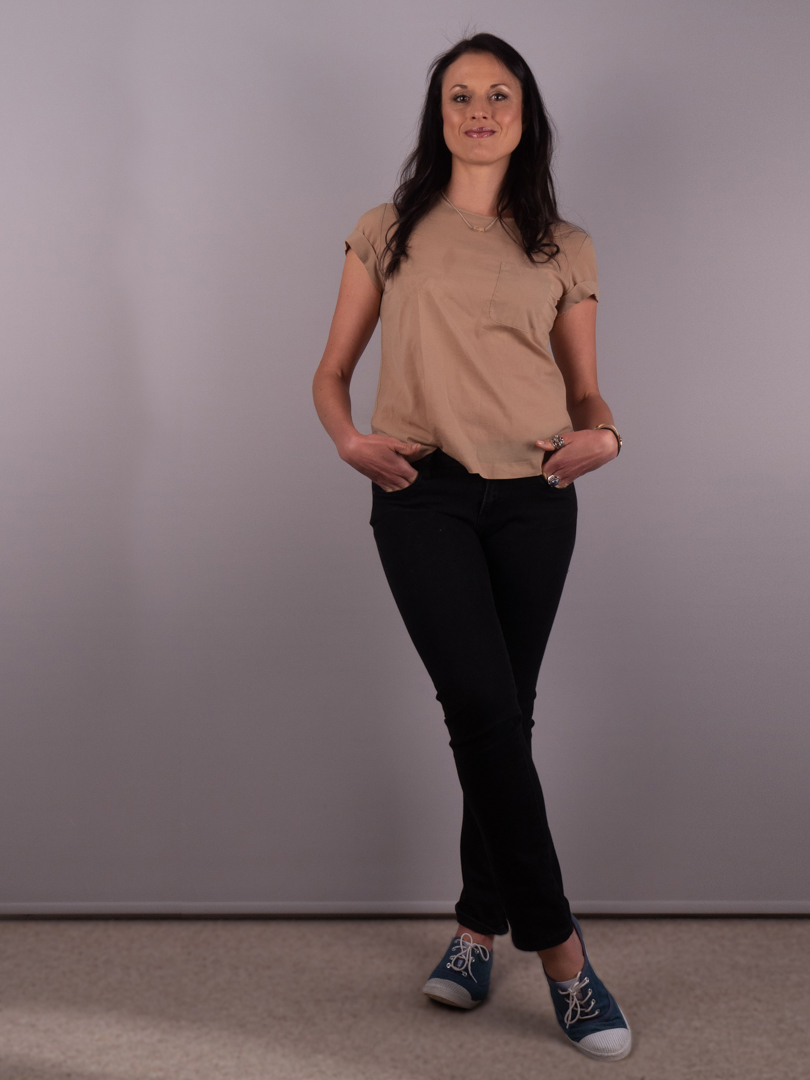
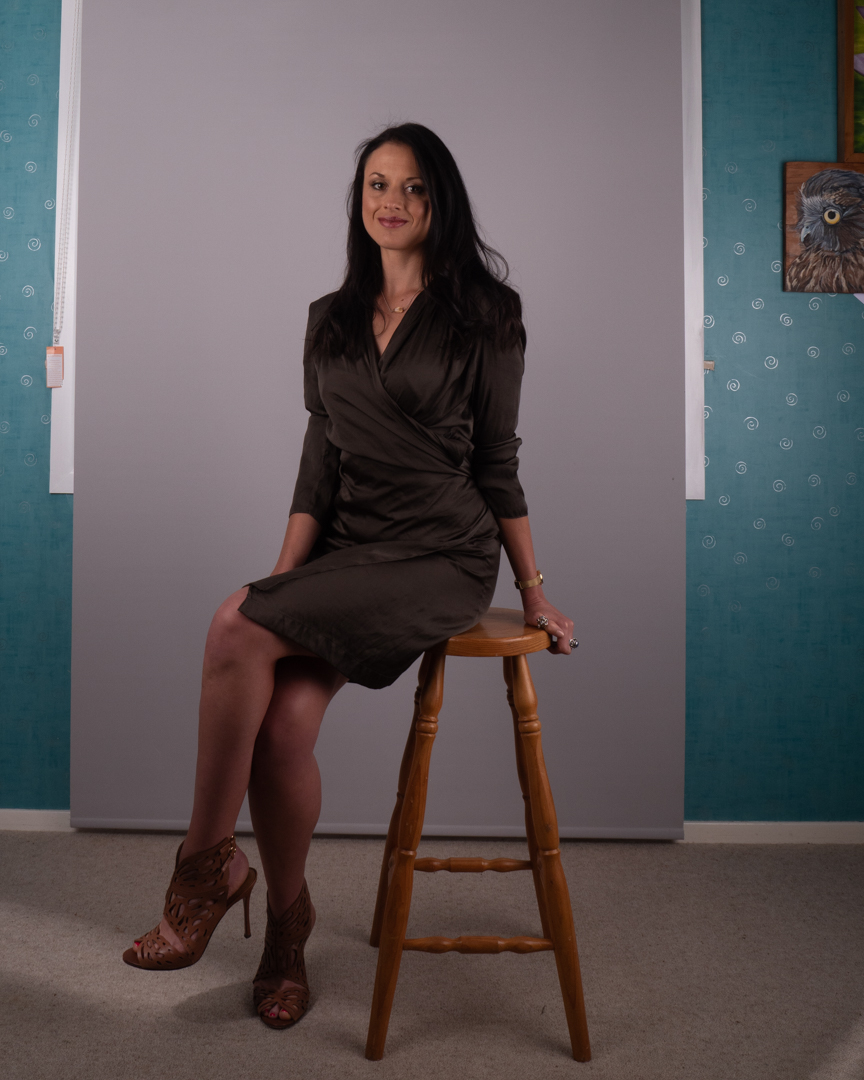
The second series of images that we shot with Melissa in the studio were aimed to be used for casting rolls therefore they were more full body than the head shots.
For these images the two strip boxes that had been lighting in the background in the headshot images were brought forward and angled so that they lit Melissa. Both were metered at the same output so the light would be even.
One of the reason that I like shooting in studio is that I can have full control over the light. I typically shoot at f8 or f9 and 1/200 s. This provides me with plenty of depth of field but more importantly is normally sufficient to eliminate all of the ambient light in the room.
As with the headshots Melissa had brought a variety of outfits that enabled us to have diversity in the images.
We even utilised the stool to provide something different. This shot ended up not being used hence it has not been cropped down.
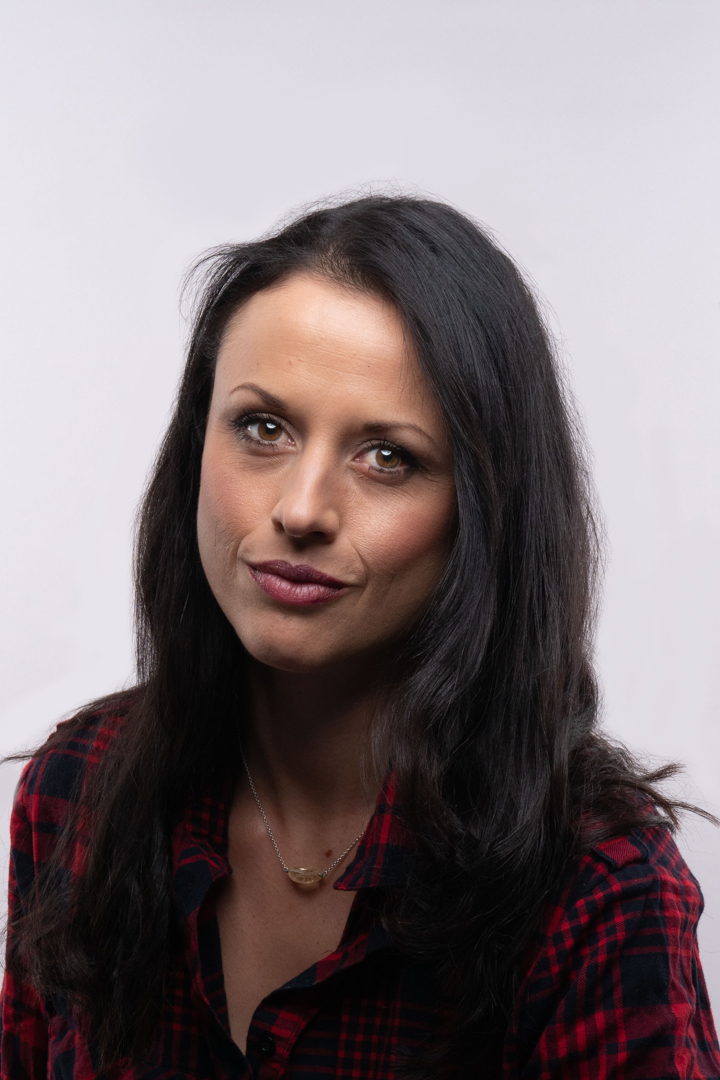
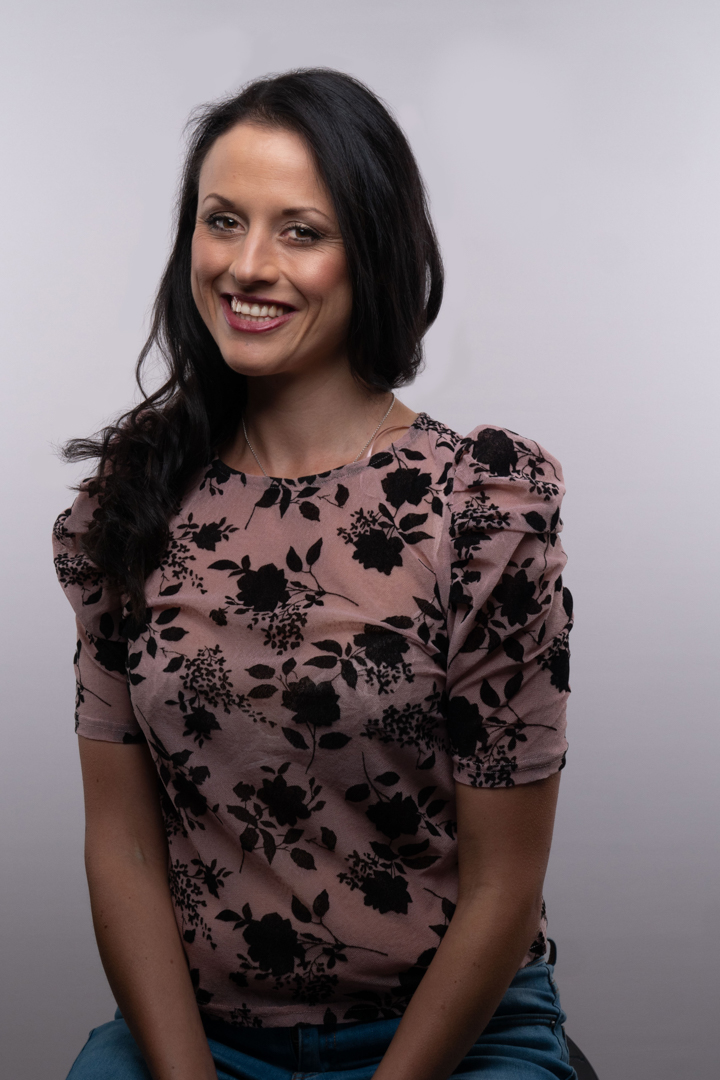
A couple of weeks after our previous shoot I arranged with Melissa to shoot some head shots and images that she could use to promote herself as she is a professional actress.
She came out to my studio and we set up a relatively simple lighting arrangement consisting of an octobox positioned above the camera into strip boxes aimed to light the background. The position of the main light is referred to a butterfly lighting due to the shadow cast under the nose.
Melissa was position on a stool which made everything simple in terms of maintain consistent lighting. In order to give her different options she had come with a variety of outfits.
As with most studio shoots I shot tethered into the computer which meant that at the end of the shoot Melissa was able to select the images that she liked. Tethering is a great tool as it lets you see the images much larger than on the back of the camera, the model can see them as they are being shot to make changes to poses. Plus it really speeds up the process of editing. At the end of the session I get the model to pick their favourites so that I don’t waste time editing images that they will not like.













 pwfotos