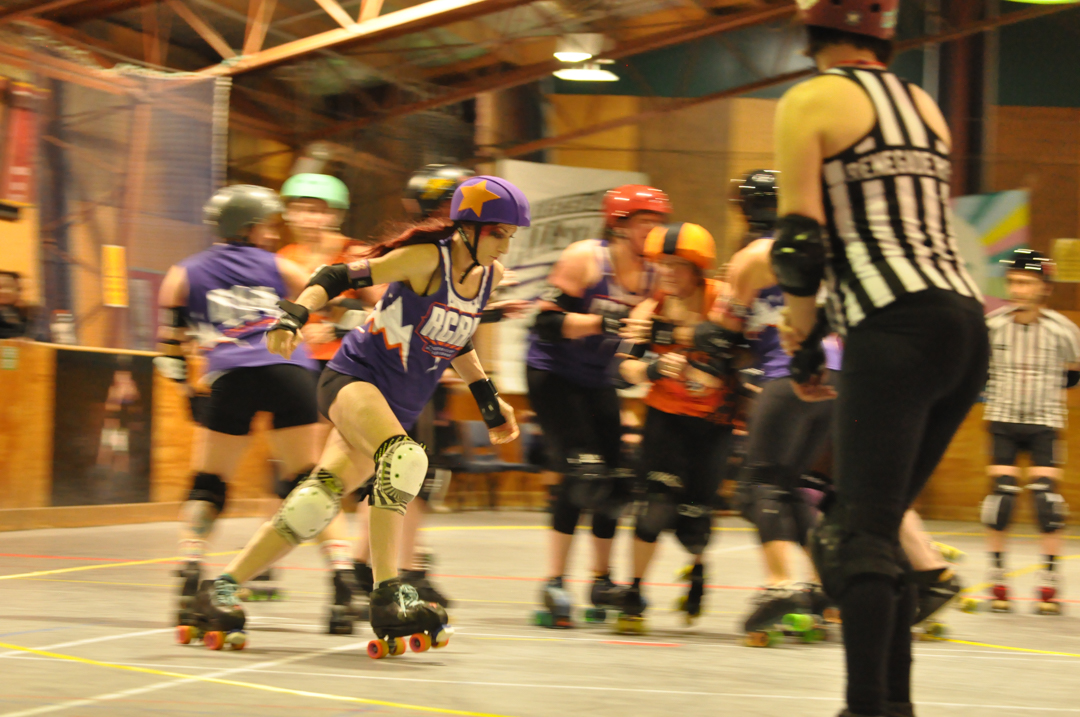
My daughter Samantha was taking an active role in promotions for the Richter roller derby club in Wellington. She asked me would I come and photograph two of the events being held at the Kilbirnie Recreation Centre.
I decided to take two cameras to the event. My main camera would be my Nikon D90 with a 70 -200mm f2.8 lens. This has been my “go to ” sports lens for many years. The D90 is a crop sensor camera meaning that the lens had an effective full frame equivalent range of 105-300mm
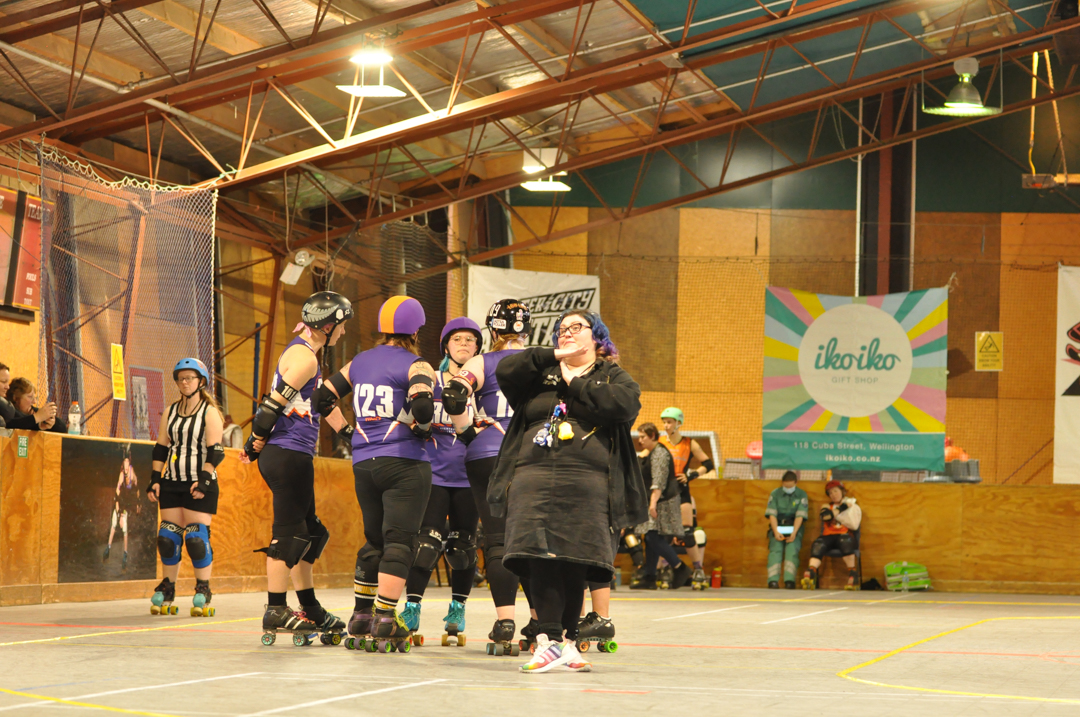
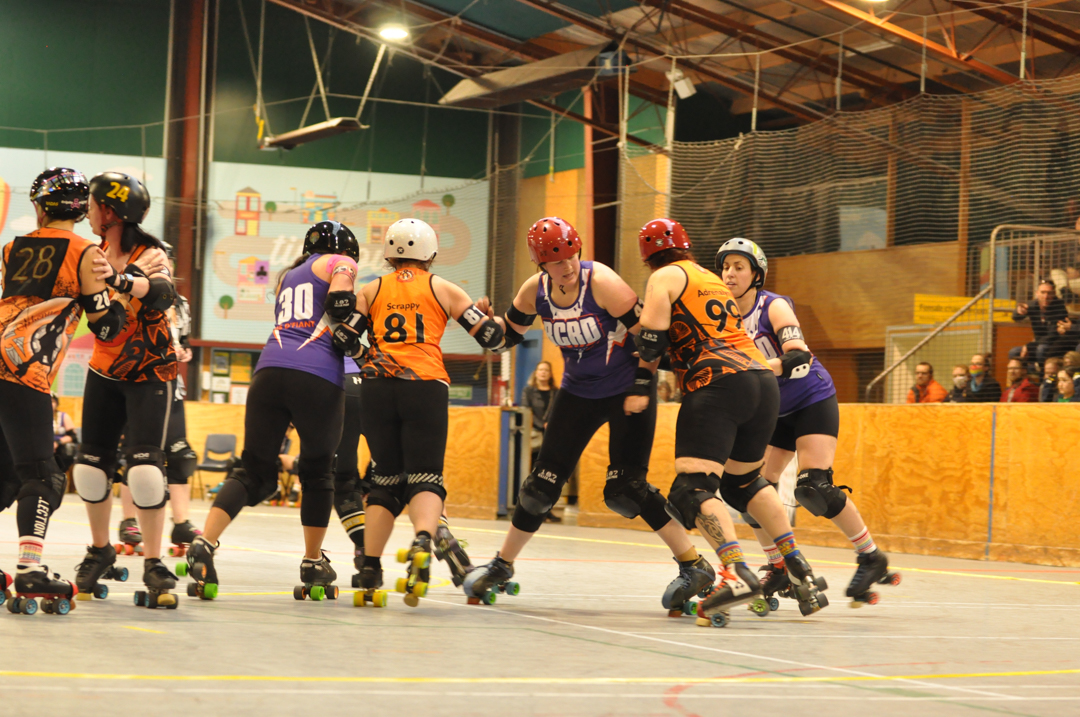
I had never shot at this location before. I figured it would not be that different from the many stadiums I had previously shot. I also knew that I would need to take a lot of images to get usable one. Therefore, I would be shooting in JPG’s rather than RAW’s.

This has two advantages. Firstly the cards can store more images. Secondly images would be written faster to the card, meaning that the camera’s buffer would not fill up so fast. Again that meant that a burst would have more images in.
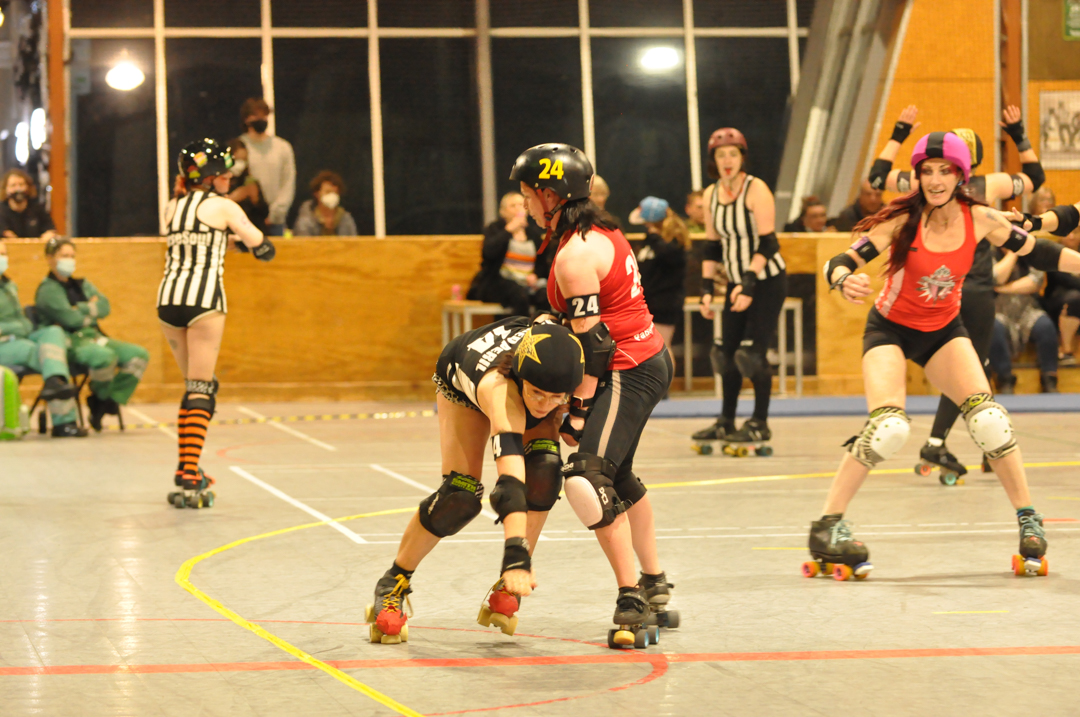
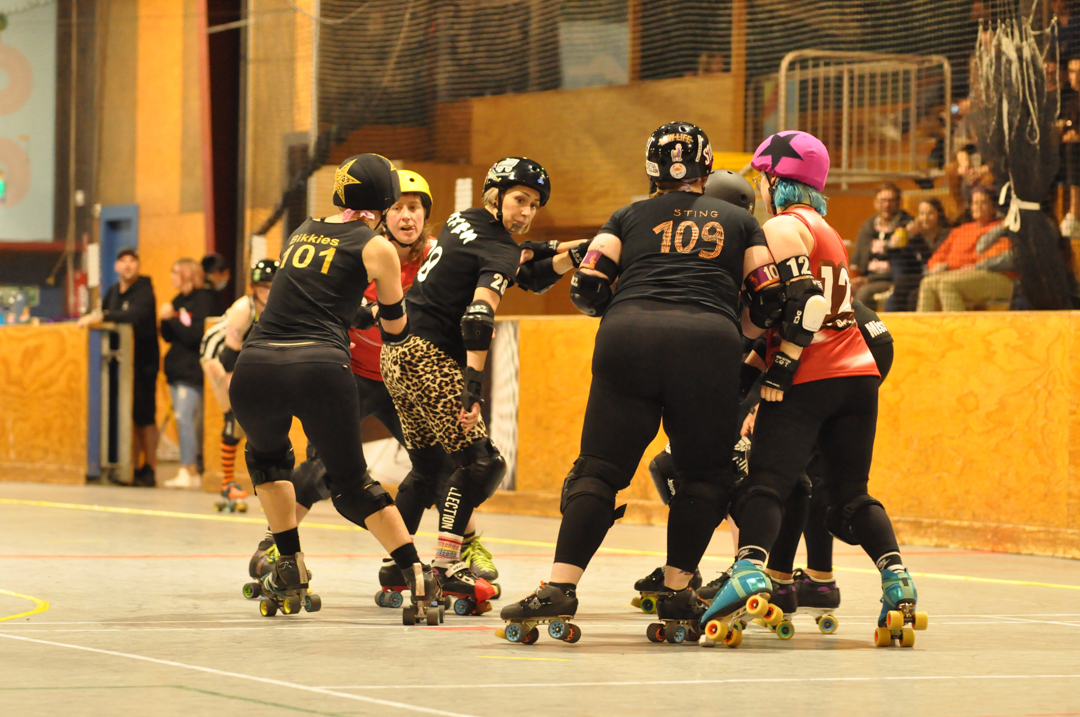
The camera was set in shutter priority mode. In this mode you set the shutter speed and allow the camera to alter either the Aperture or ISO. I started with a shutter speed of 1/80s. I found that this was a little slow and so I increased it to 1/125s of the second.

As a result the images were shot between f2.8 and f5 with an ISO range between 800 and 3200. Traditionally you would think that f2.8 would produce a very narrow depth of field. That is true if you are close to the subject. However the further you move away the greater the DOF becomes. As I was shooting some 40m away it was not an issue.
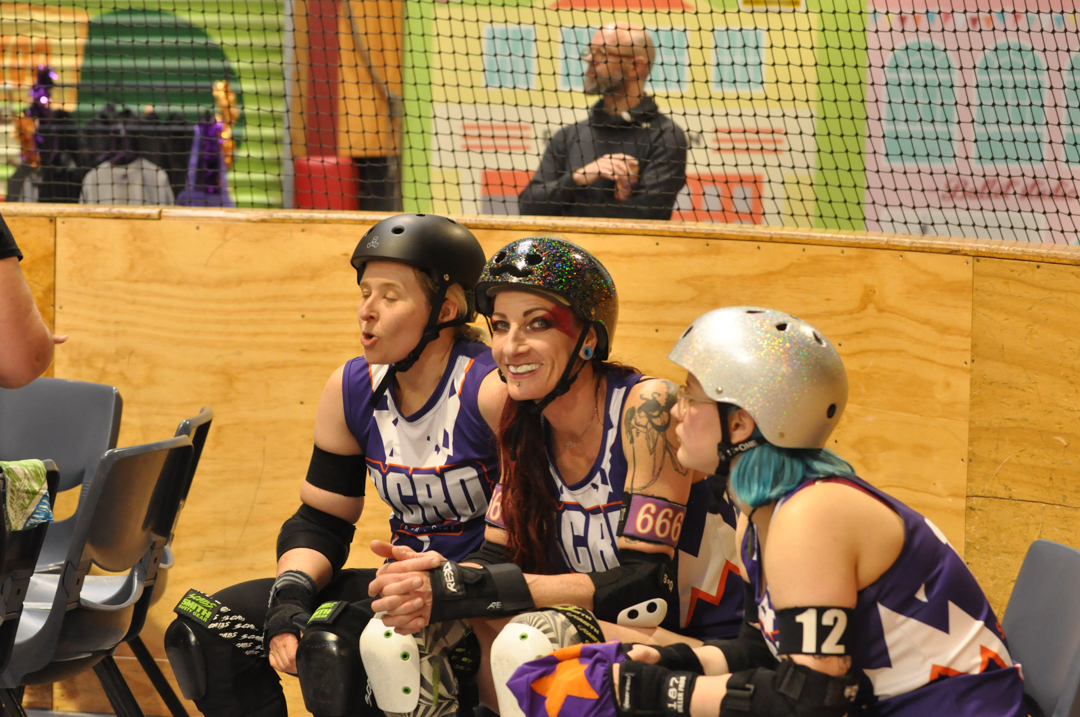
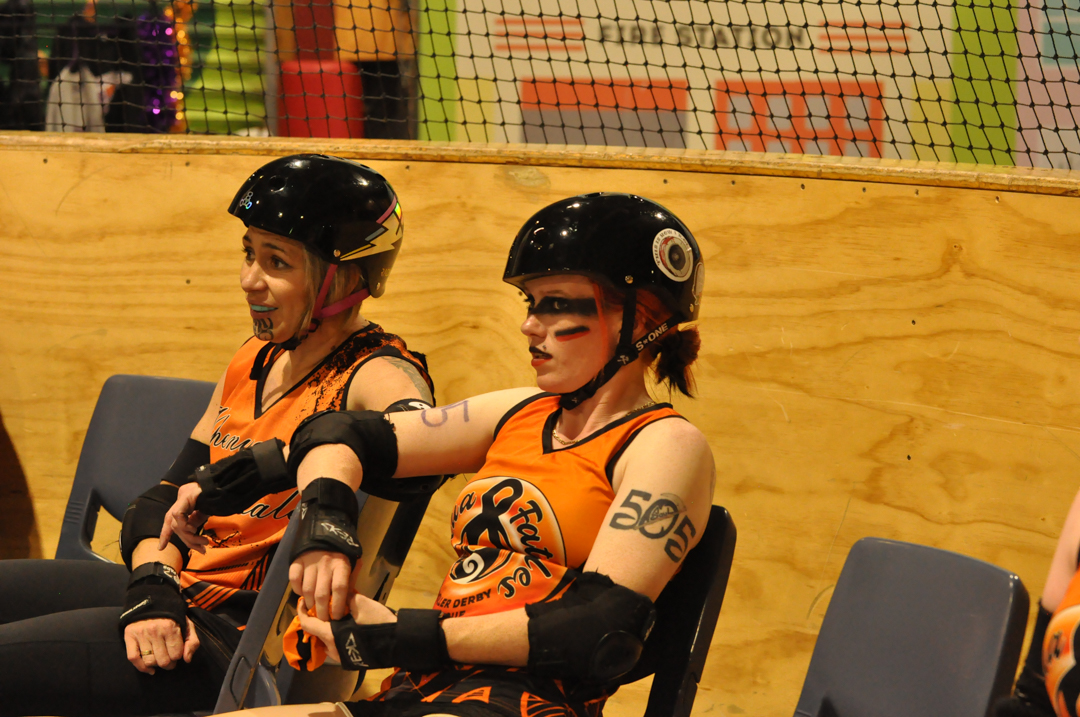
The action in roller derby is very fast and quite often a jumble of people. This makes focusing somewhat challenging for the camera. Generally speaking I would stay tracked on the Jammer. However, it was also good to capture the activities away from the main action. This includes team members waiting to be subbed in.
The second camera I took was my Lumix G9. For it I took two lenses. Ultra wide 14-28mm and a longer 90-300mm. I wanted to see how the camera would perform.

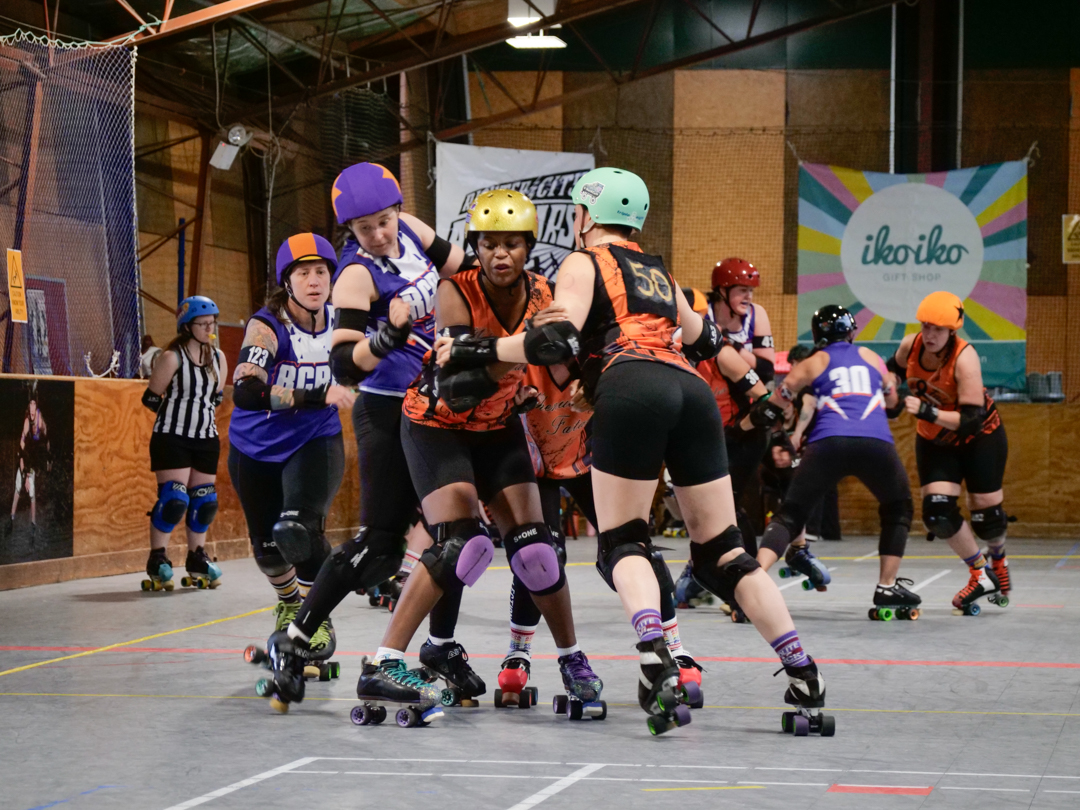
The wide angle lens let me shoot images that was so different from the others. Such as being able to capture what the venue look like. Or putting the camera closer to the ground and shooting up.
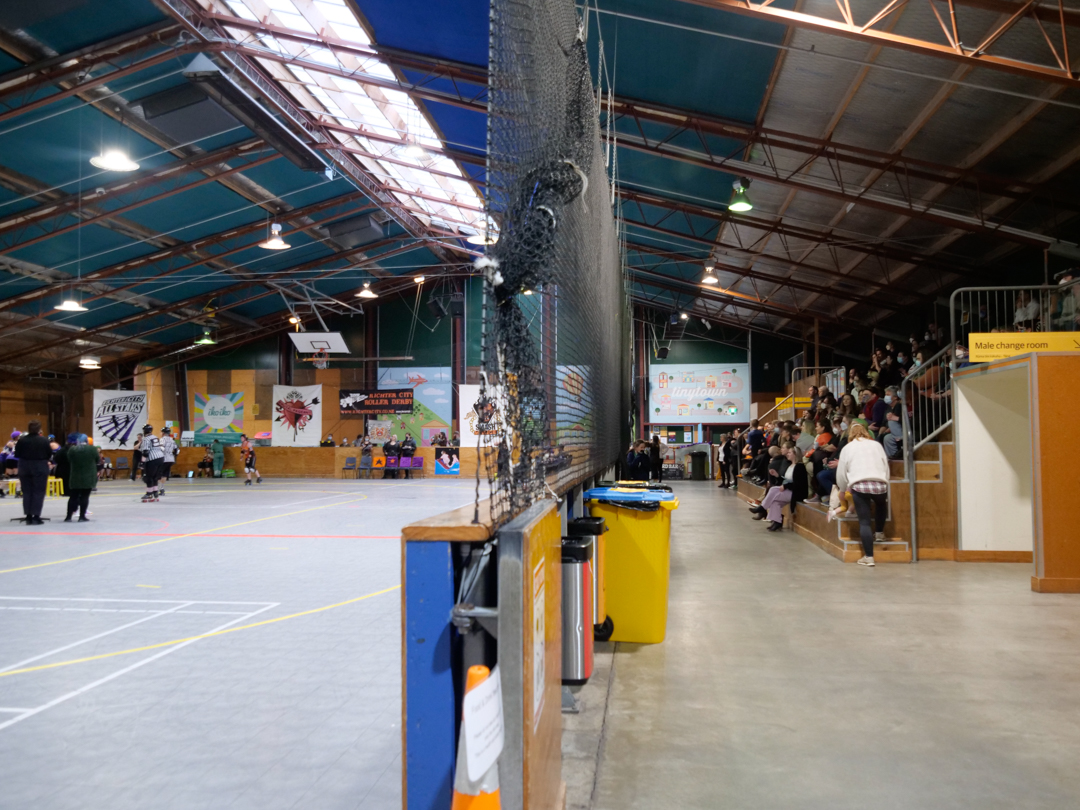
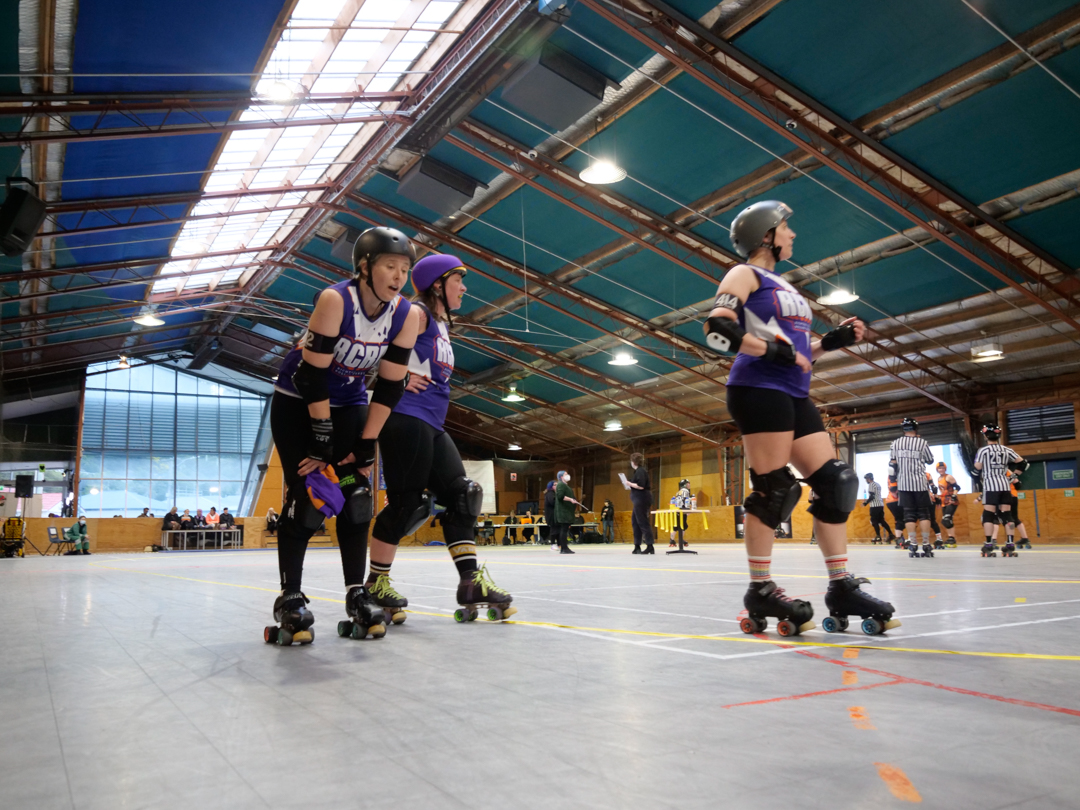

At the end of each match, there is always a group photo with everybody involved. The wide angle was perfect for those shots.

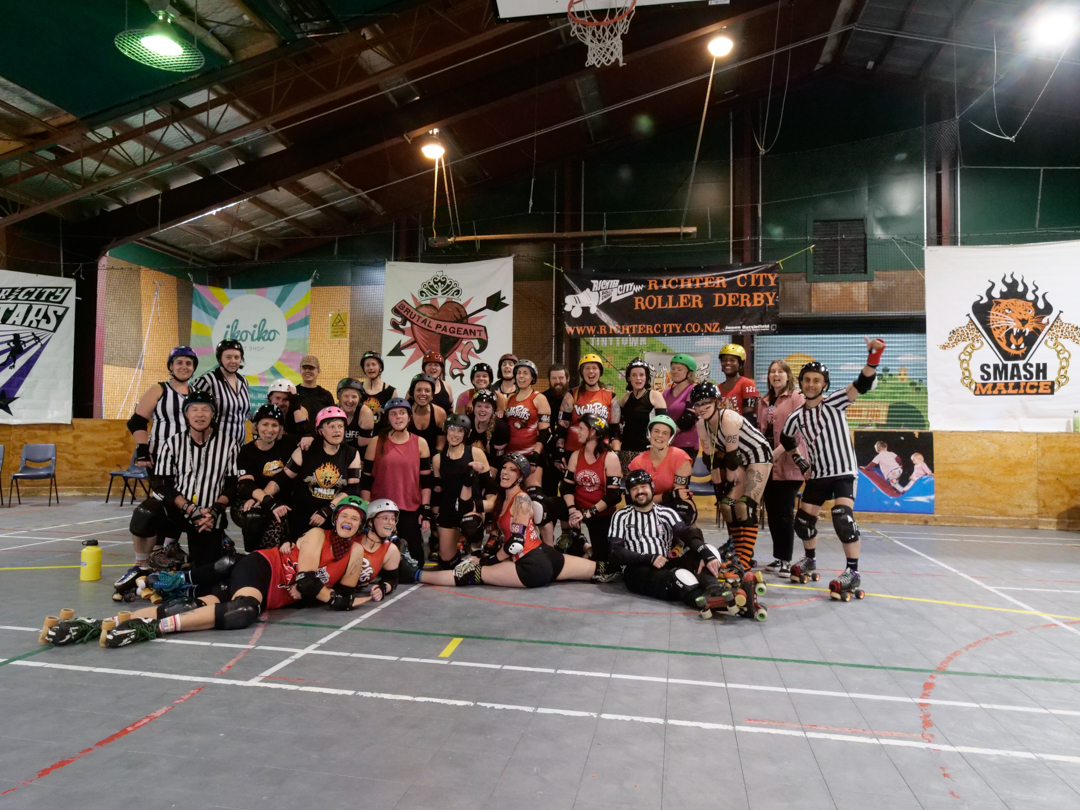
I ended up shooting over 3000 images in the two games. As the images were shot in JPG I knew that I would not be doing much processing to them.
After importing them into Lightroom it set about culling them. I used the same approach as I normally do when handling large numbers of images. The first stage is a cull of images that are either out of focus, or where the focus is on the wrong place, or have other issues.
Then the second cull will look for those images that do not add to the record of the event. In the case of the games these included shots of the Jammer skating on their own.
Finally I looked to crop any of the images to better center in on the action. I then loaded the final images onto a drive for the club to chose whatever they wanted.
It was a full on evening with two games but I enjoy the challenge.
 pwfotos