Richters Roller Derby Clash

My daughter Samantha was taking an active role in promotions for the Richter roller derby club in Wellington. She asked me would I come and photograph two of the events being held at the Kilbirnie Recreation Centre.

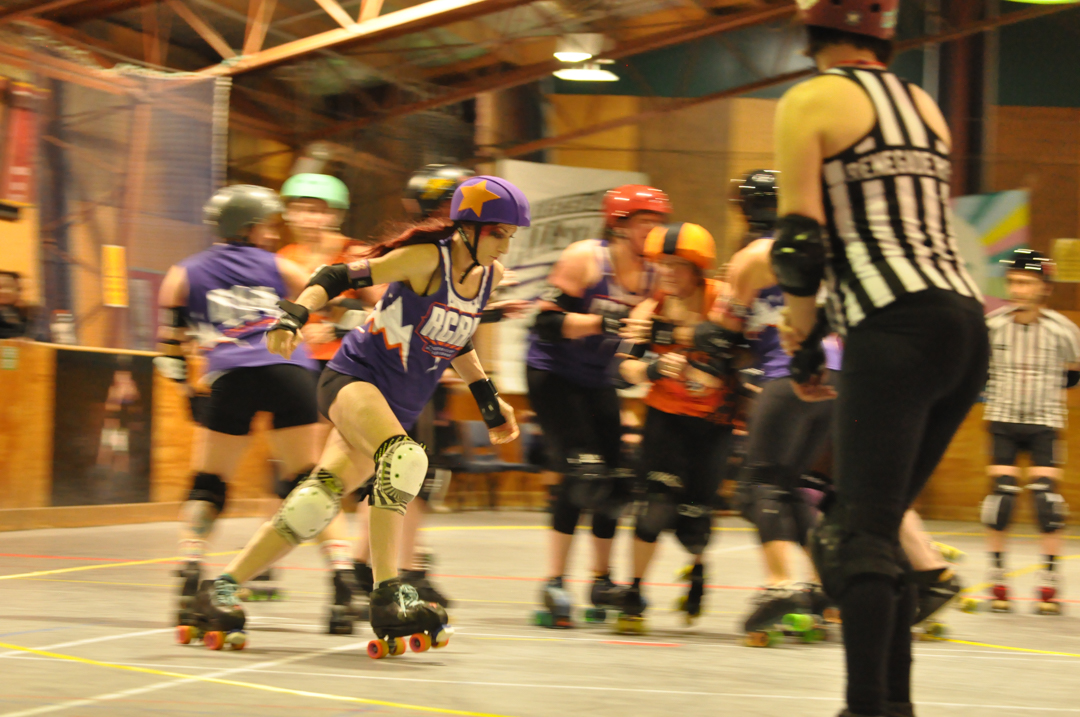
I decided to take two cameras to the event. My main camera would be my Nikon D90 with a 70 -200mm f2.8 lens. This has been my “go to ” sports lens for many years. The D90 is a crop sensor camera meaning that the lens had an effective full frame equivalent range of 105-300mm
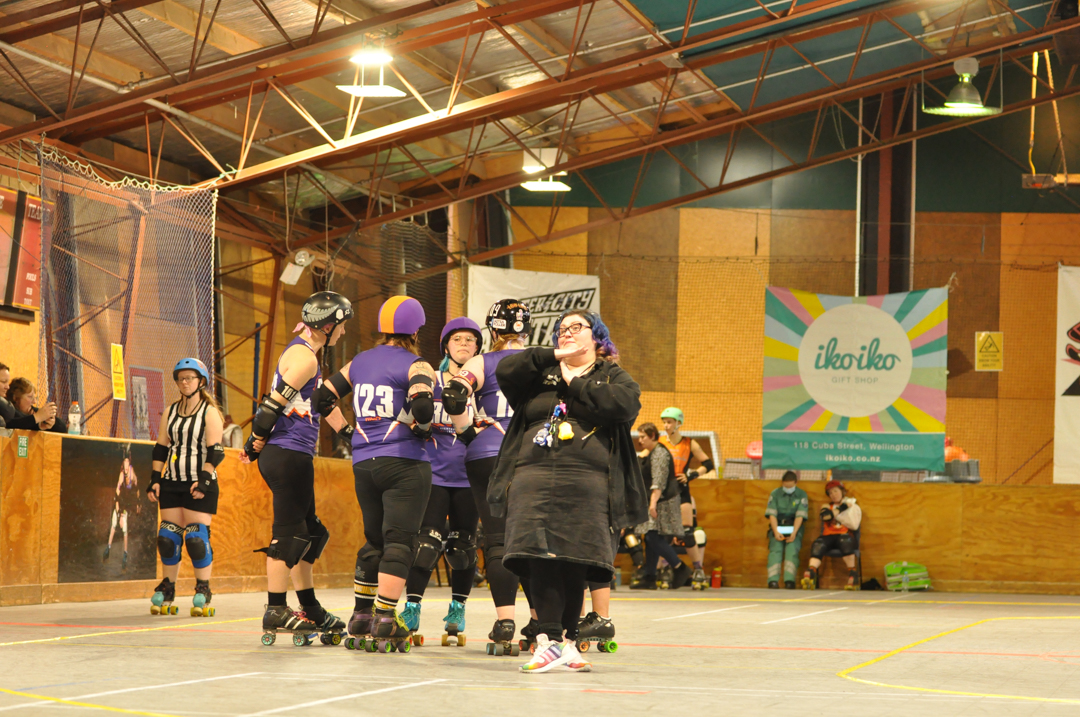
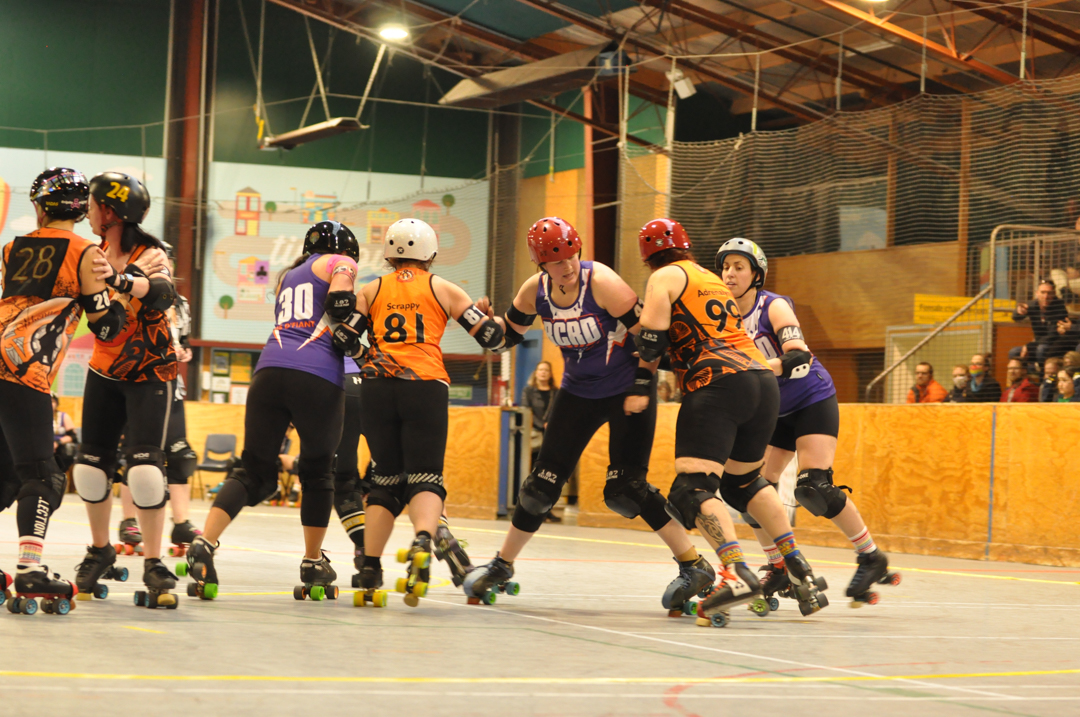
I had never shot at this location before. I figured it would not be that different from the many stadiums I had previously shot. I also knew that I would need to take a lot of images to get usable one. Therefore, I would be shooting in JPG’s rather than RAW’s.

This has two advantages. Firstly the cards can store more images. Secondly images would be written faster to the card, meaning that the camera’s buffer would not fill up so fast. Again that meant that a burst would have more images in.
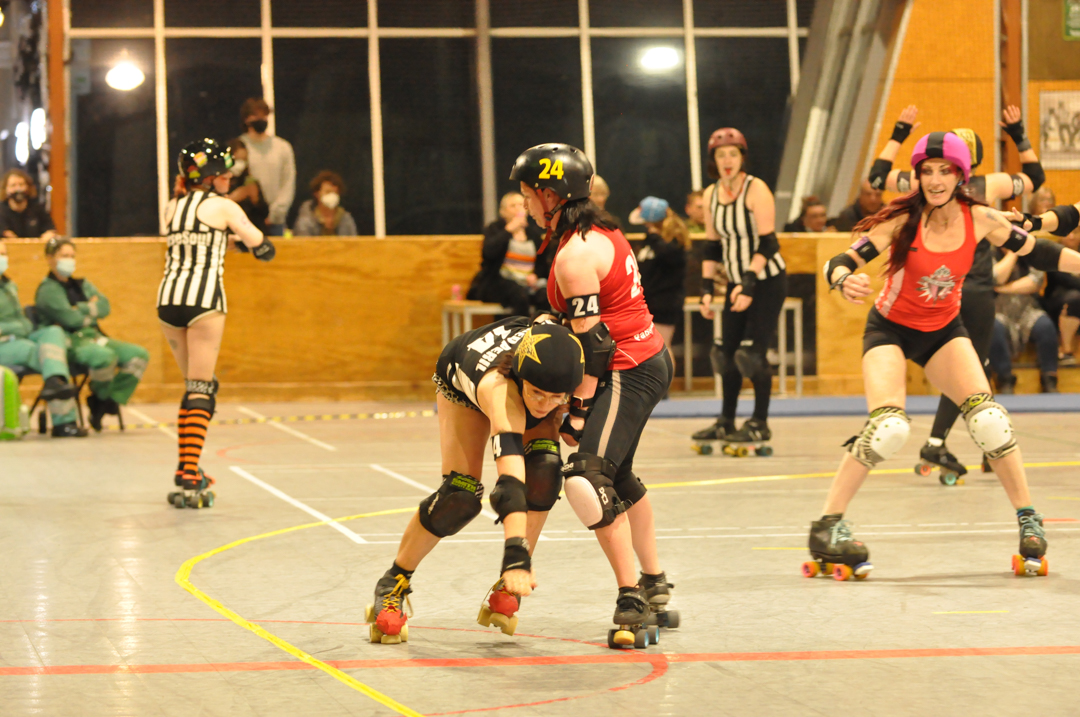
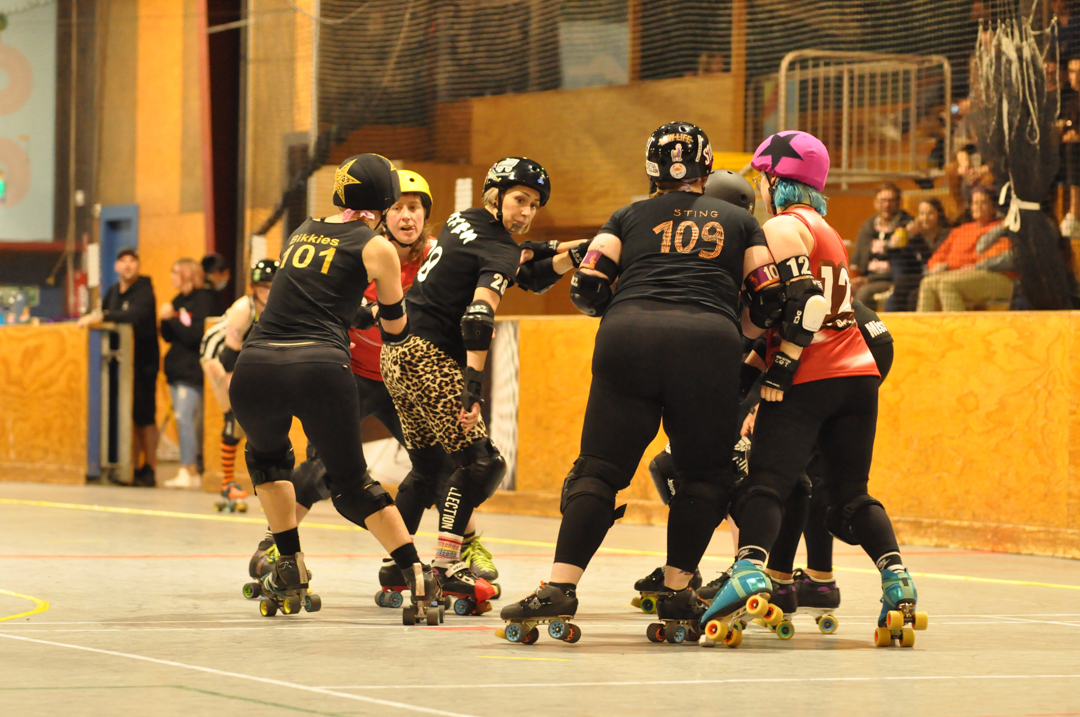
The camera was set in shutter priority mode. In this mode you set the shutter speed and allow the camera to alter either the Aperture or ISO. I started with a shutter speed of 1/80s. I found that this was a little slow and so I increased it to 1/125s of the second. 

As a result the images were shot between f2.8 and f5 with an ISO range between 800 and 3200. Traditionally you would think that f2.8 would produce a very narrow depth of field. That is true if you are close to the subject. However the further you move away the greater the DOF becomes. As I was shooting some 40m away it was not an issue.
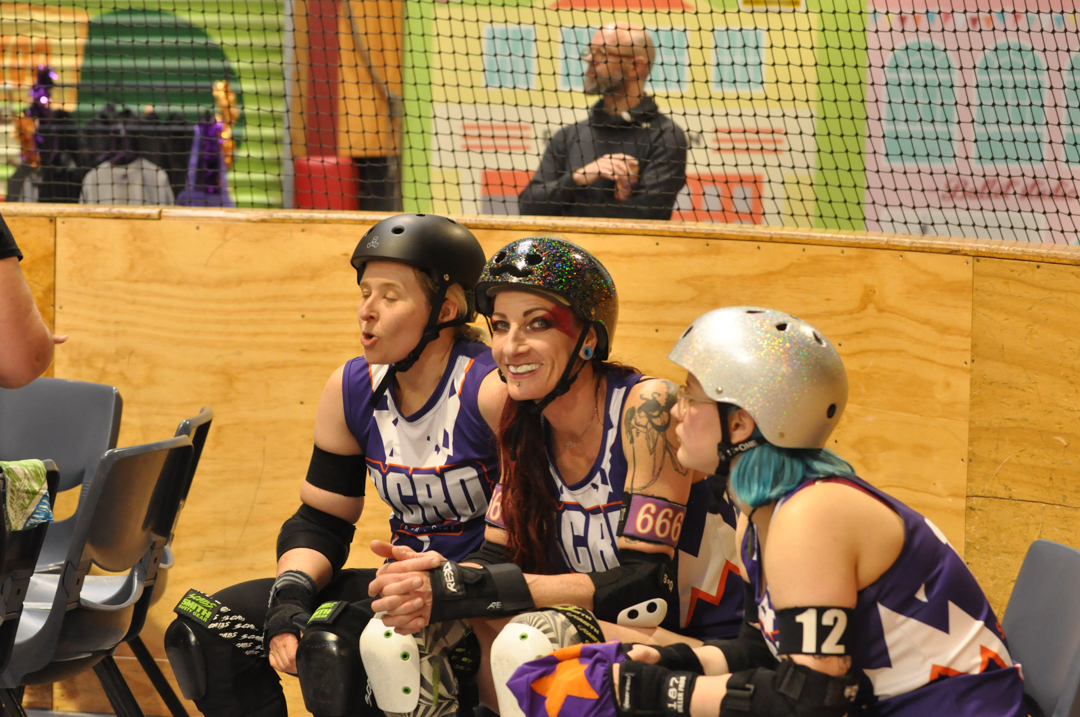
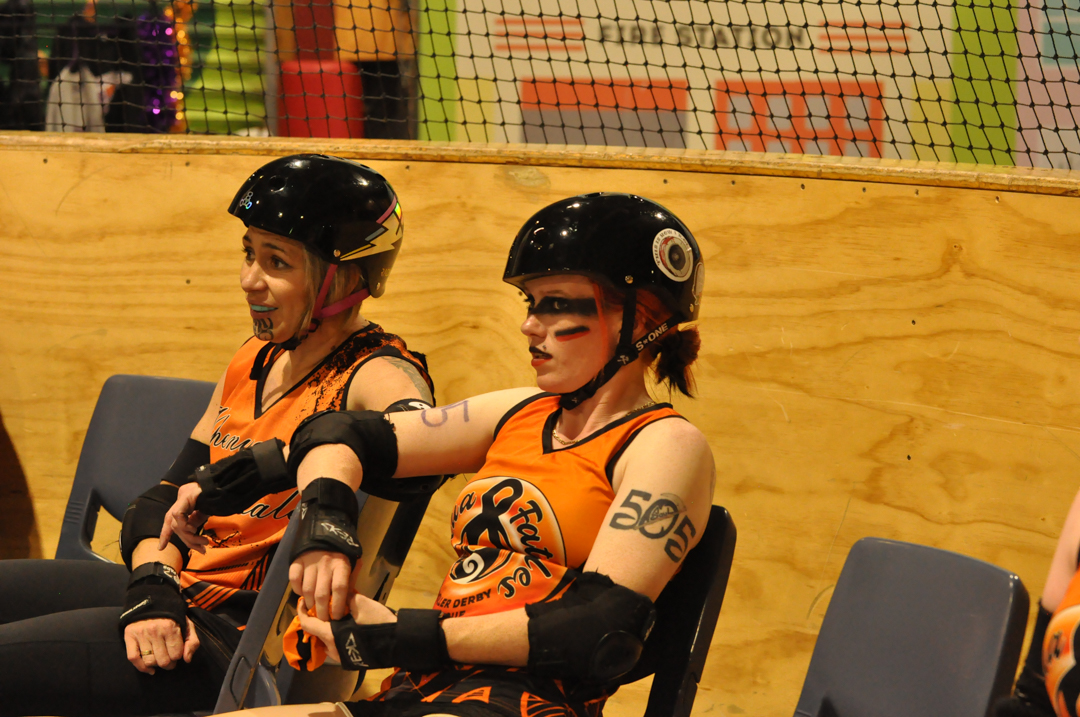
The action in roller derby is very fast and quite often a jumble of people. This makes focusing somewhat challenging for the camera. Generally speaking I would stay tracked on the Jammer. However, it was also good to capture the activities away from the main action. This includes team members waiting to be subbed in.

The second camera I took was my Lumix G9. For it I took two lenses. Ultra wide 14-28mm and a longer 90-300mm. I wanted to see how the camera would perform.

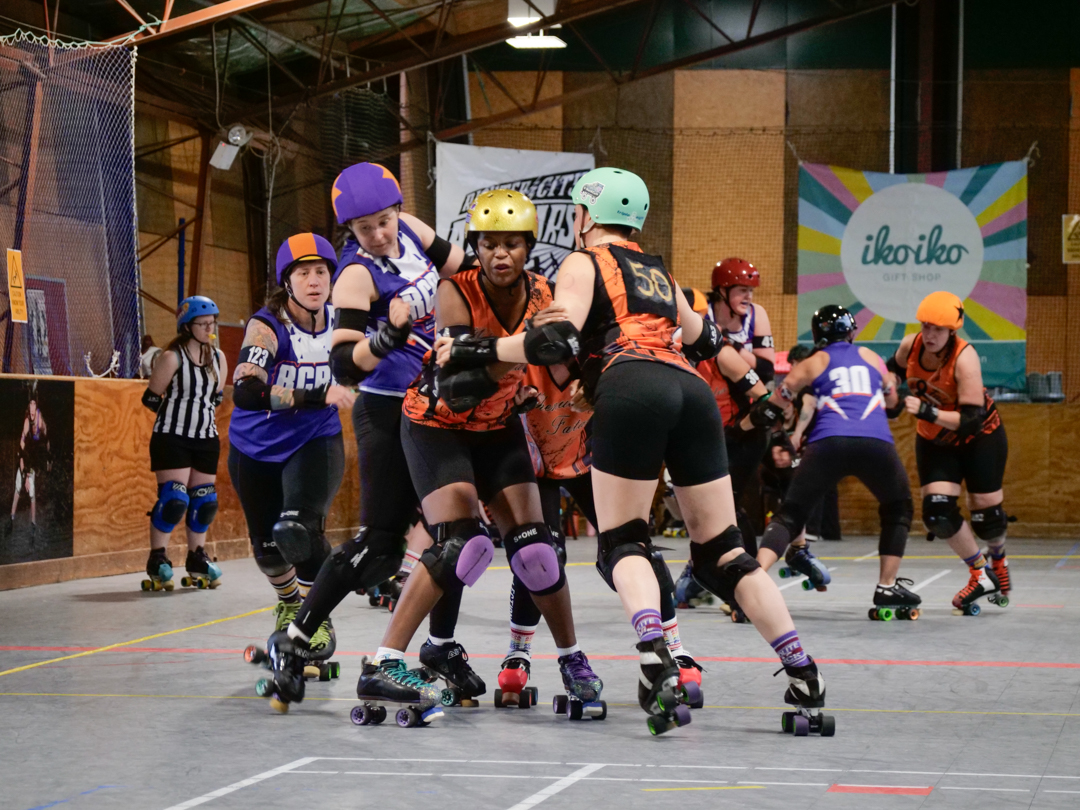
G9 1/80s f4 90mm ISO800
G9 1/125s f4.8 130mm ISO1600

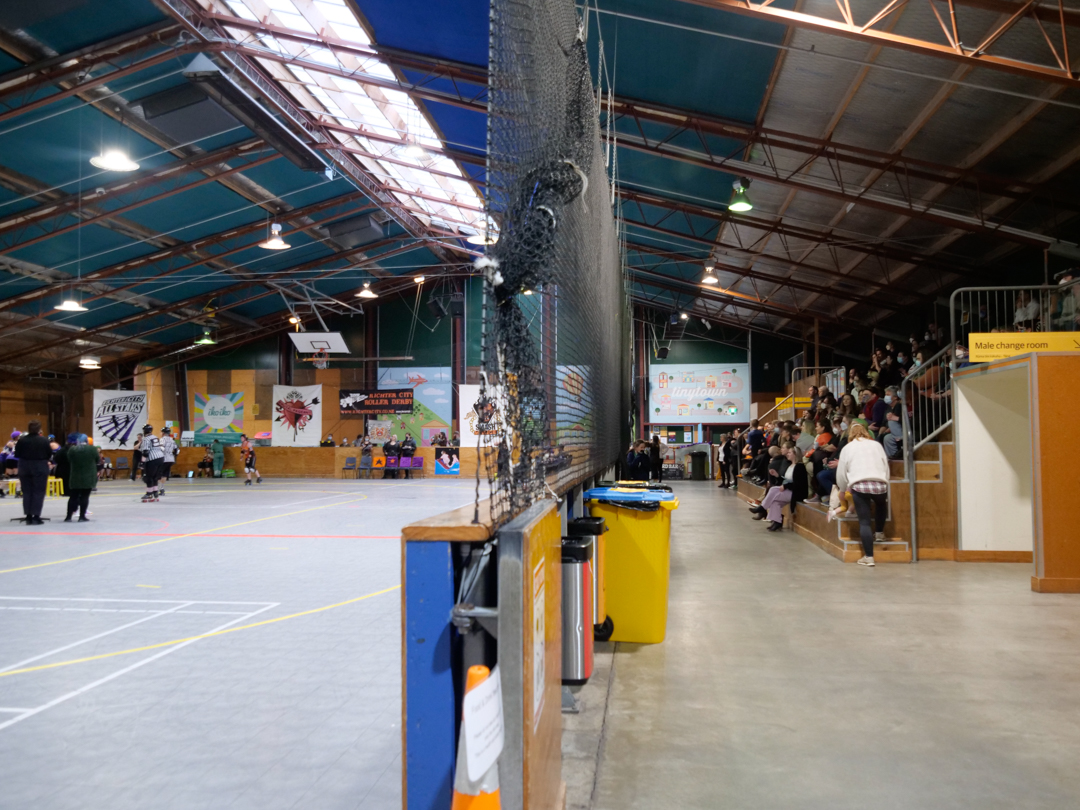
The wide angle lens let me shoot images that was so different from the others. Such as being able to capture what the venue look like. Or putting the camera closer to the ground and shooting up.
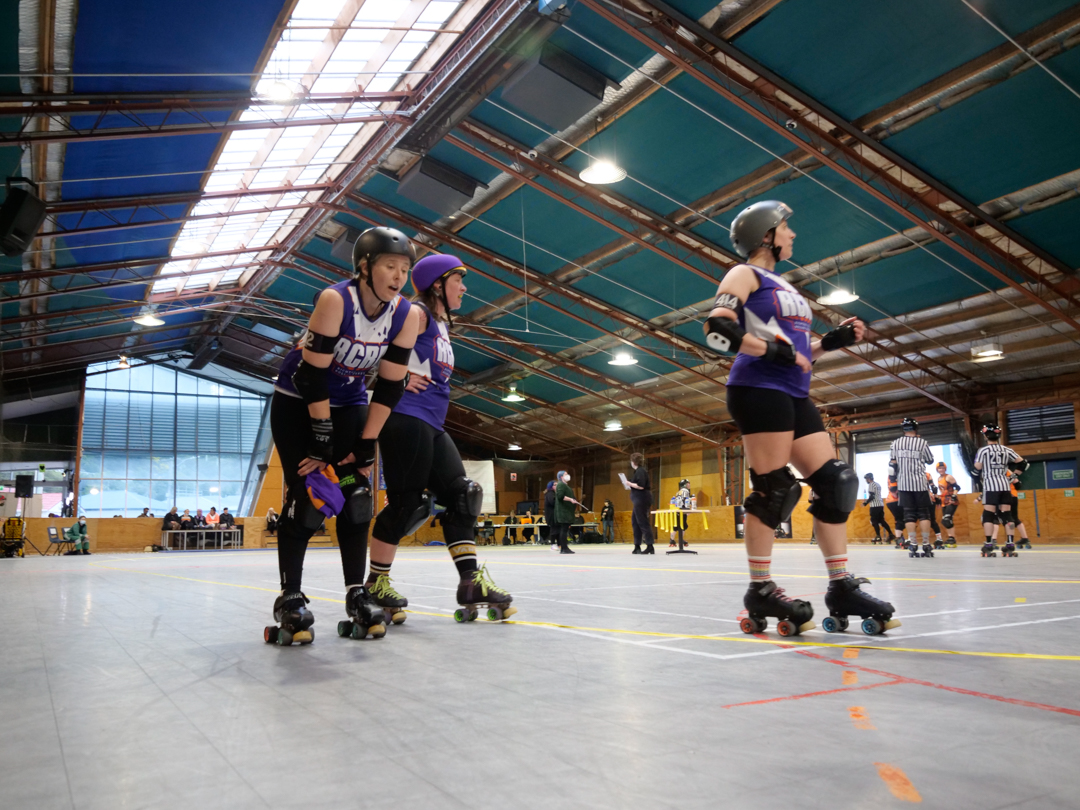
At the end of each match, there is always a group photo with everybody involved. The wide angle was perfect for those shots.

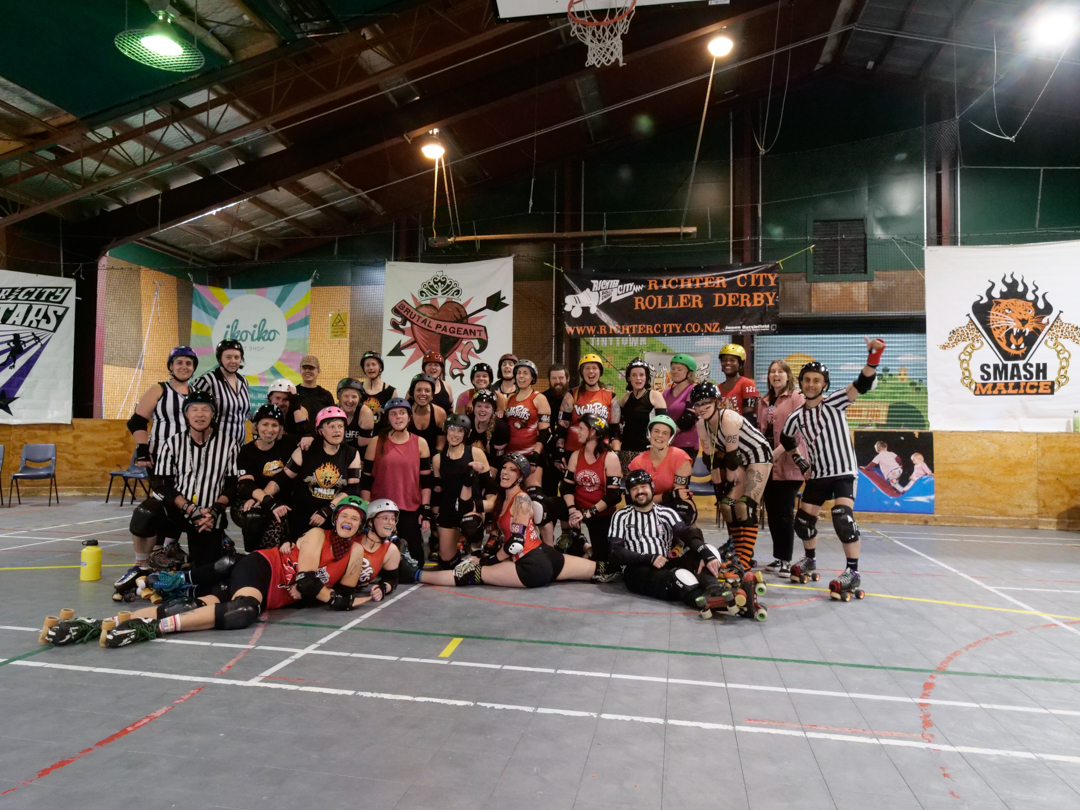
G9 1/10s f5.6 28mm ISO1600
G9 1/40s f6.3 28mm ISO3200

I ended up shooting over 3000 images in the two games. As the images were shot in JPG I knew that I would not be doing much processing to them. 

After importing them into Lightroom it set about culling them. I used the same approach as I normally do when handling large numbers of images. The first stage is a cull of images that are either out of focus, or where the focus is on the wrong place, or have other issues.

Then the second cull will look for those images that do not add to the record of the event. In the case of the games these included shots of the Jammer skating on their own. 

Finally I looked to crop any of the images to better center in on the action. I then loaded the final images onto a drive for the club to chose whatever they wanted. 

It was a full on evening with two games but I enjoy the challenge.
American Beauty (NSFW)

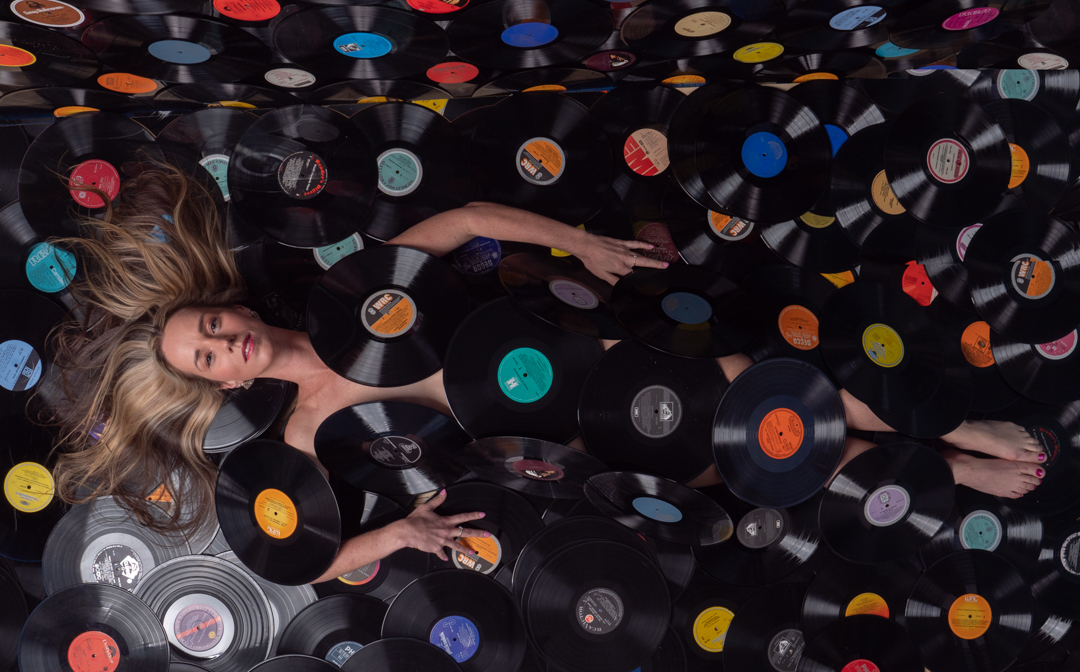
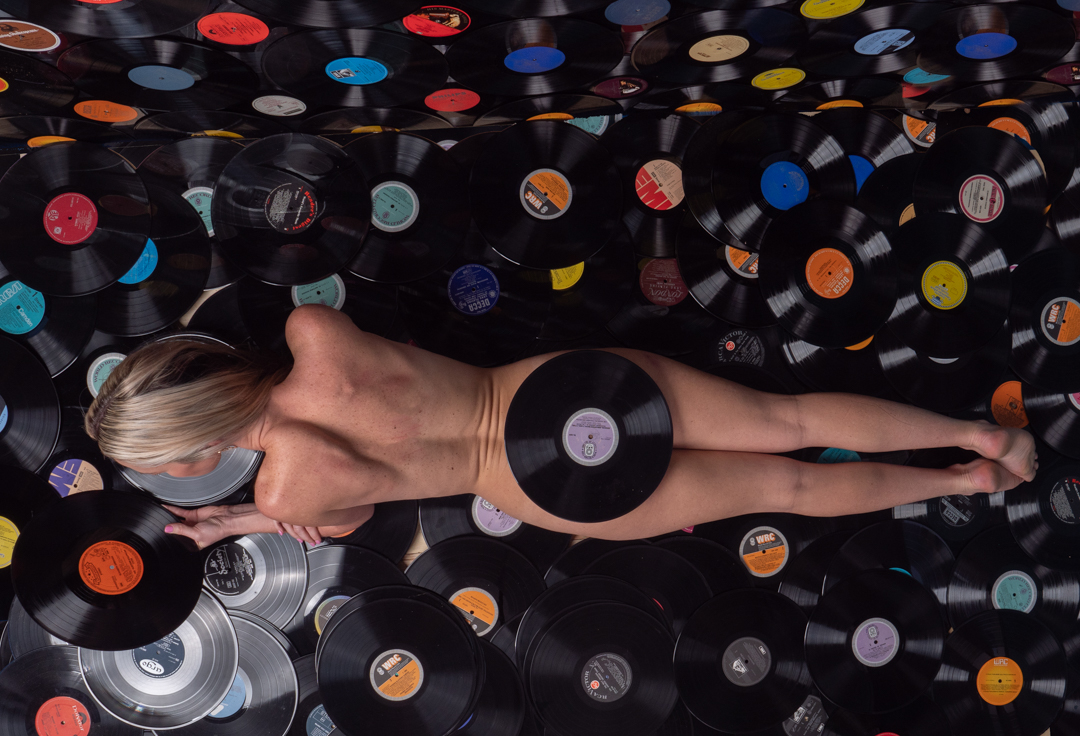
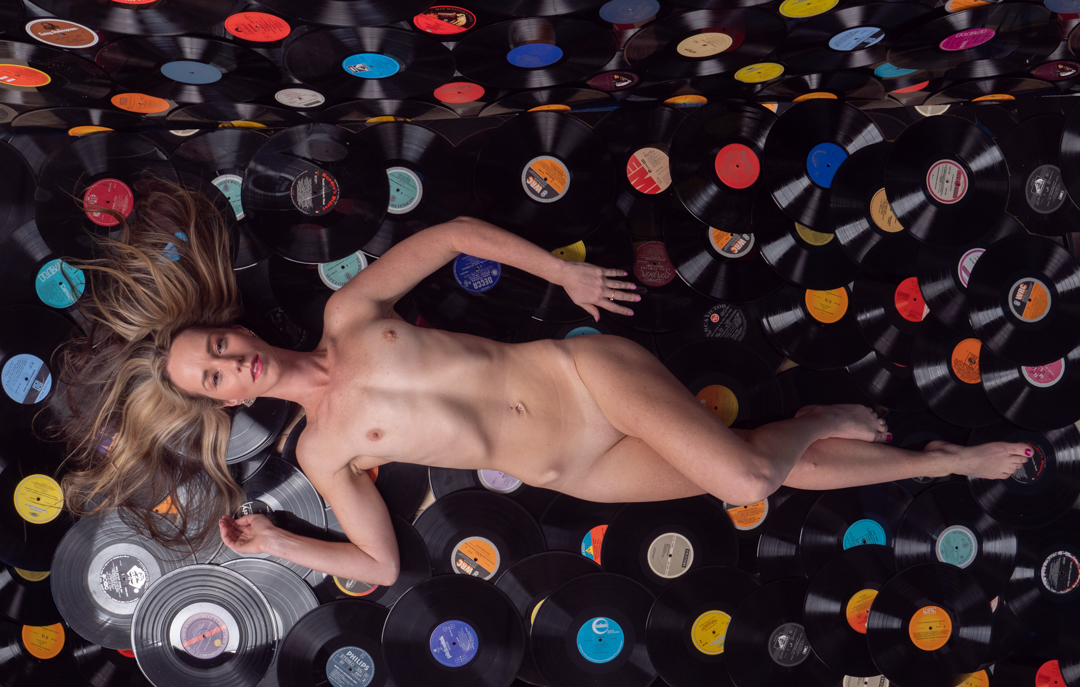
This is the final post covering a concept shoot with Rachel and around 300 vinyl records. As mentioned in the previous post the records were all classical discards from a bookfest that my wife is involved with.  In this shoot we recreated the famous flower scene from “American Beauty”.

For this set in addition to the records on the backdrop I covered the flooring with them. 

I positioned Rachel on the floor and then used records or pose to shoot. The camera was at the end of a boom arm over her. As it was tethered to the computer I was able to control it. Using the the boom enabled me to get the camera positioned level. This is much more preferable than standing on a stool and trying to take the shot.

The lighting was the same as the previous two posts. It consisted of a Godox AD600 shooting into a 1.5m softbox. This was positioned at Rachel’s head and shot along her body. The light was also elevated and then angled down. At the rear of the room my Elinchrom D400 was shooting into a 7 foot umbrella with diffusion covering it. This light was being fired by an optical slave built in.

In addition to the overhead shots I did shoot some from floor level so that we had a variety.

All of the images in this post were shot on my Lumix G9. The setting was 1/200s f8 ISO200. The focal lengths ranged was 24mm.

The angle of the main light did mean that I was getting some reflection/hotspots in some of the records. This was a relatively simple adjustment to fix in post. In the final images I also cloned in more records to fill blank spots on the floor. Some were also needed when I created the images using the 1.91:1 ratio used for Instagram landscape images.

The whole afternoon was enjoyable and Rachel really loved the Images that we produced during the sessions.

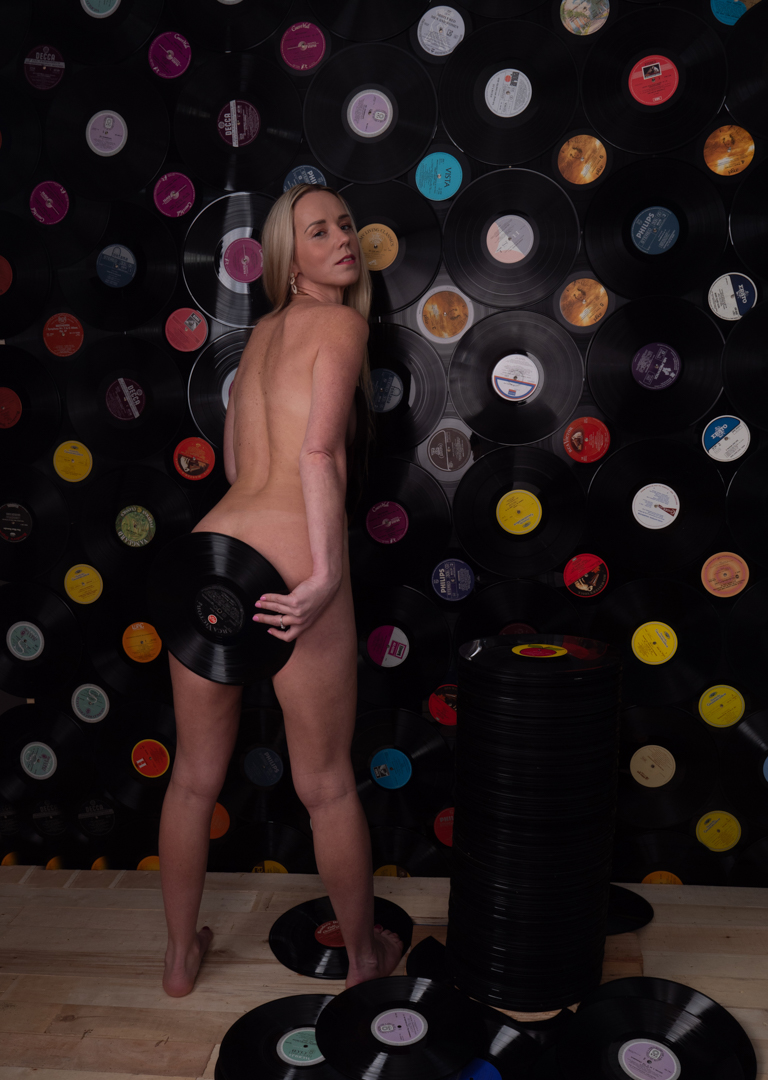
Nude with the Records (NSFW)

This is the second post covering a concept shoot with Rachel and around 200 vinyl records. As mentioned in the previous post the records were all classical discards from a bookfest that my wife is involved with.  

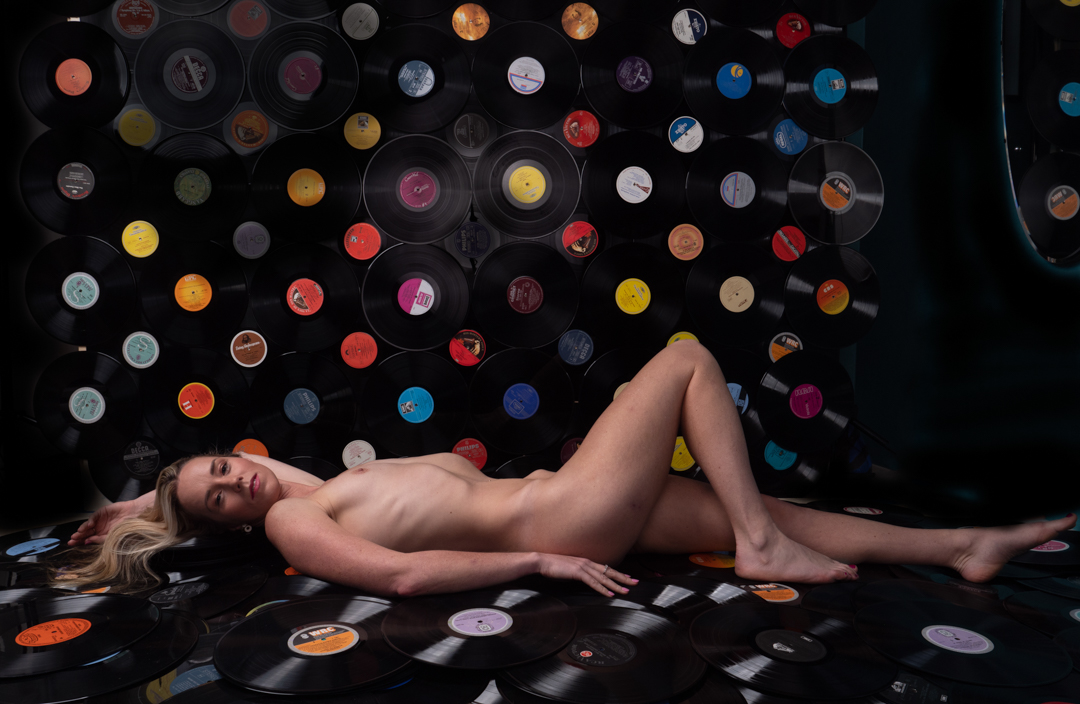
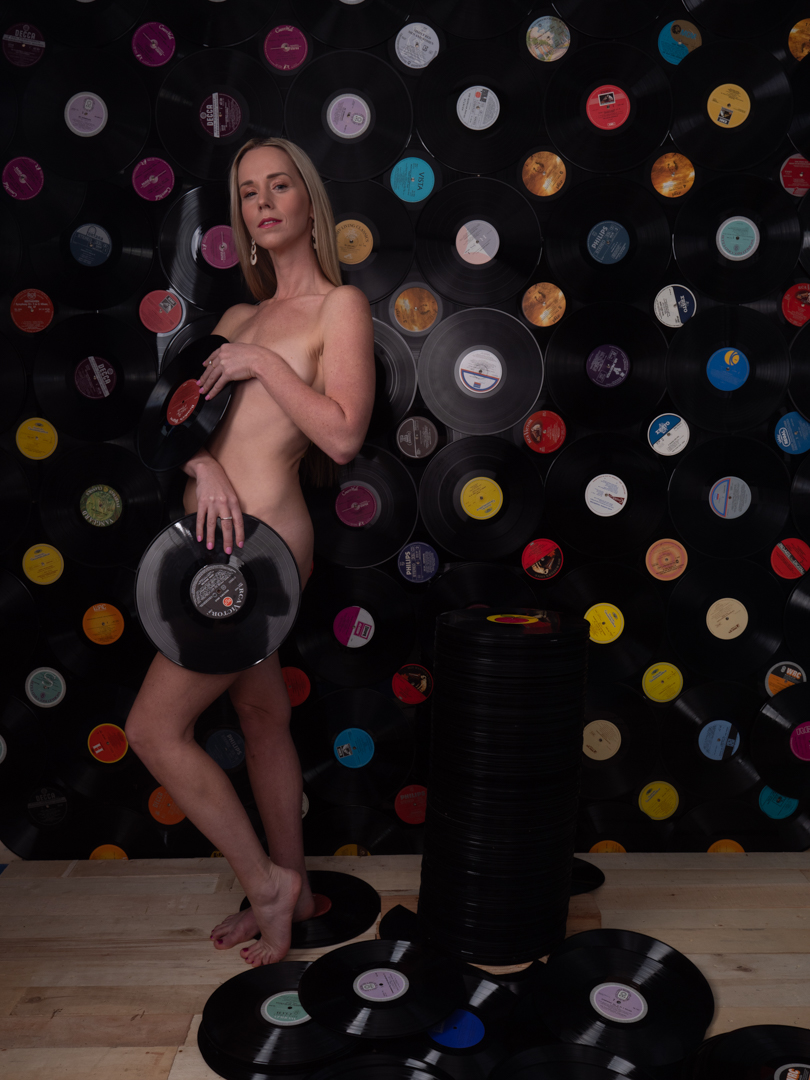
In the studio I had positioned two sheets of plywood as a backdrop. Onto this I attached overlapping records using small nails to hang them up. It took the best part of two hours to nail them all in. I lost count of how many times I hit my thumb during the process.

On the floor I placed plywood planking as I thought this gave a better look than the carpet. The records stack was made up of groups of ten records glued together with a central steel rod giving it stability.

The video below shows what the overall studio set look like as well as the lighting positions. 

The actual lighting is shown in the diagram below.  It consisted of a Godox AD600 shooting into a 1.5m softbox positioned 90° to Rachel. At the rear of the room my Elinchrom D400 was shooting into a 7 foot umbrella with diffusion covering it. This light was being fired by an optical slave built in. The video shows a hairlight but this was not actually used.

For the second shoot Rachel was naked and used records to create images that wouldn’t get me banned from IG. Rachel is comfortable being nude in front of camera so the shoot flowed easily. 

My studio has mirrors on both sides so we also used them in the shots.

All of the images in this post were shot on my Lumix G9 at the following setting 1/200s f8 ISO200 with focal lengths ranging from 24mm to 32mm. The combination of 1/200s and f8 ensures that I have full control of the light while giving me a reasonable depth of field. I am operating in a small studio with only 2.4m (8 feet) available between my model and camera. So if I want full body I am forced to shoot wide. This is not an issue if you place the subject in the middle third of the frame.

With the Records

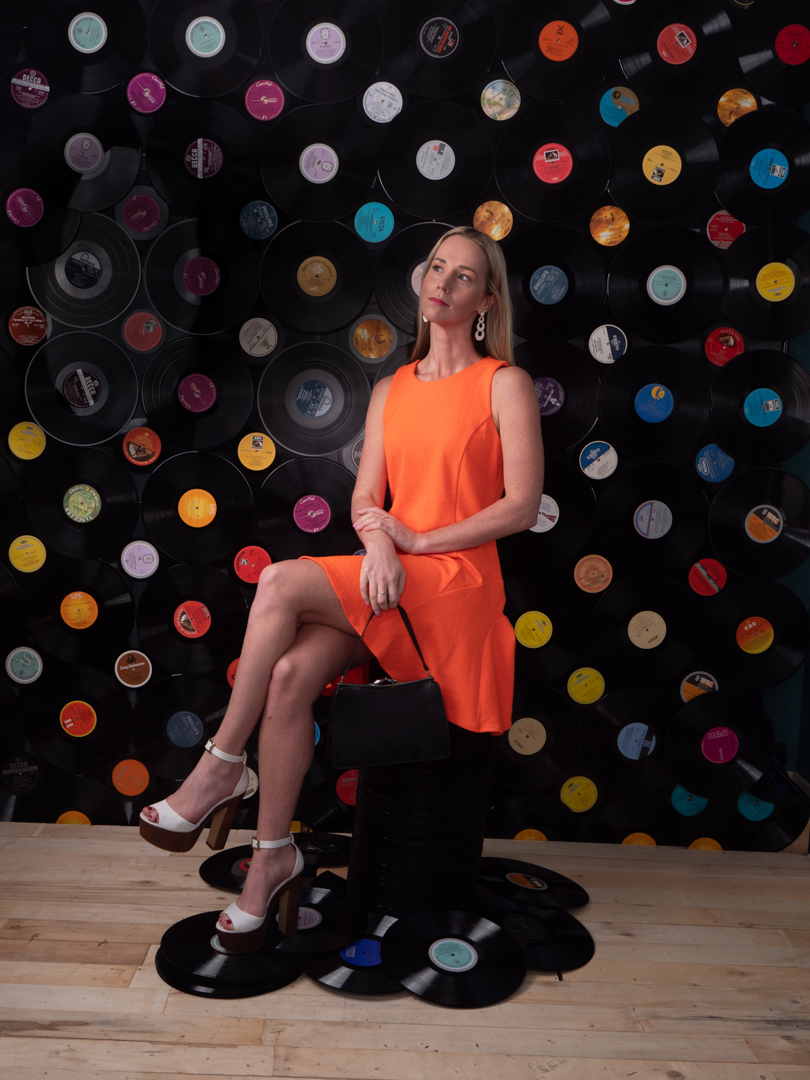
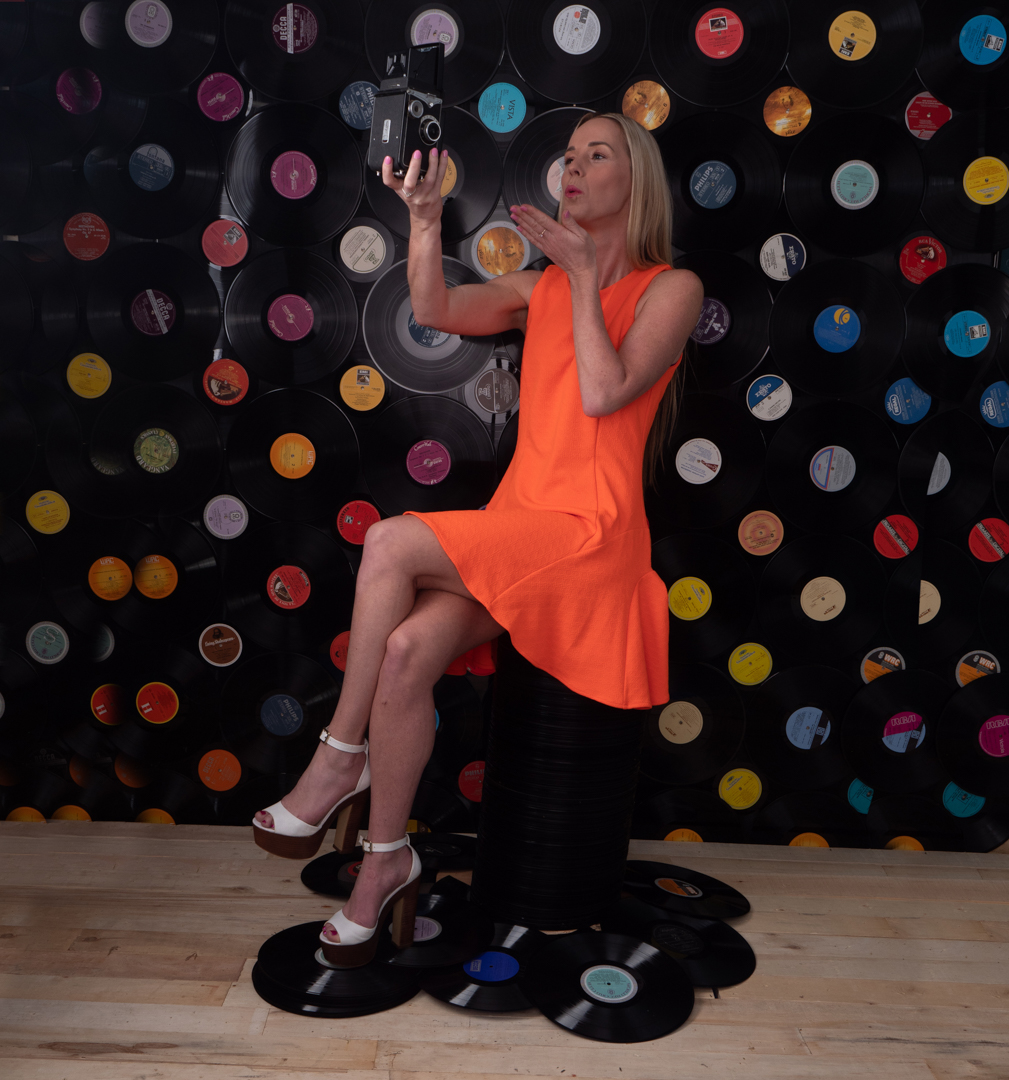
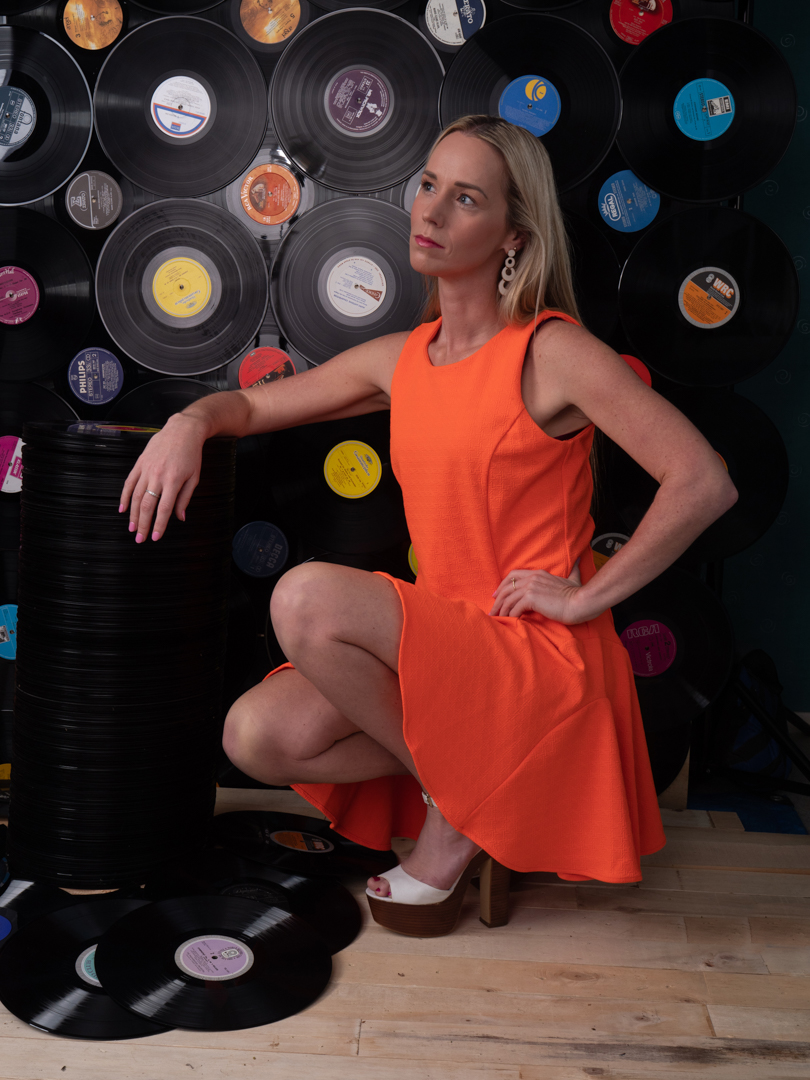
In this post, I’m going to cover a concept shoot with Rachel. In the next two posts, I’ll share more about the experience with around 200 vinyl records. The records were all classical discards from a bookfest that my wife is involved with.  I had them stored in boxes in the garage for around two years before I started using them. I had used a small number to build a stool which was incorporated in my shoot with Lucy.

In the studio I had positioned two sheets of plywood as a backdrop. Onto this I attached overlapping records using small nails to hang them up. It took the best part of two hours to nail them all in. I lost count of how many times I hit my thumb during the process.

On the floor  I placed plywood planking as I thought this gave a better look than the carpet. The records stack consisted of groups of ten records. These were glued together. A central steel rod gave it stability.

The video below show what the overall studio set look like as well as the lighting positions.

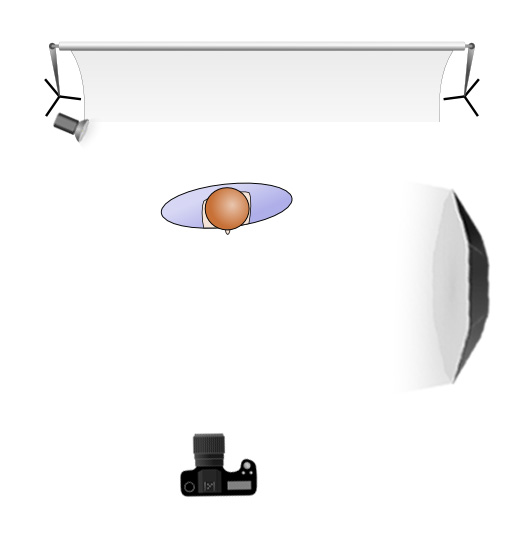
The actual lighting is shown in the diagram below.  It consisted of a Godox AD600 shooting into a 1.5m softbox positioned 90° to Rachel. At the rear of the room my Elinchrom D400 was shooting into a 7 foot umbrella with diffusion covering it. This light was being fired by an optical slave built in. The video shows a hairlight but this was not actually used.

For the first shoot, I had Rachel wear a selection of clothes and accessories that I had acquired from thrift shops. I felt these items had a 1960s sort of vibe to them.

As with most of my shoots I tend to not direct the model, but rather let them do what they want. I find that this produces much more relaxed and better images. It does help when you are working with an experience model such as Rachel.

All of the images in this post were shot on my Lumix G9 at the following setting 1/200s f8 ISO200 with focal lengths ranging from 24mm to 32mm. The combination of 1/200s and f8 ensures that I have full control of the light while giving me a reasonable depth of field. I am operating in a small studio with only 2.4m (8 feet) available between my model and camera. So if I want full body I am forced to shoot wide. This is not an issue if you place the subject in the middle third of the frame.

Devon Wet Play

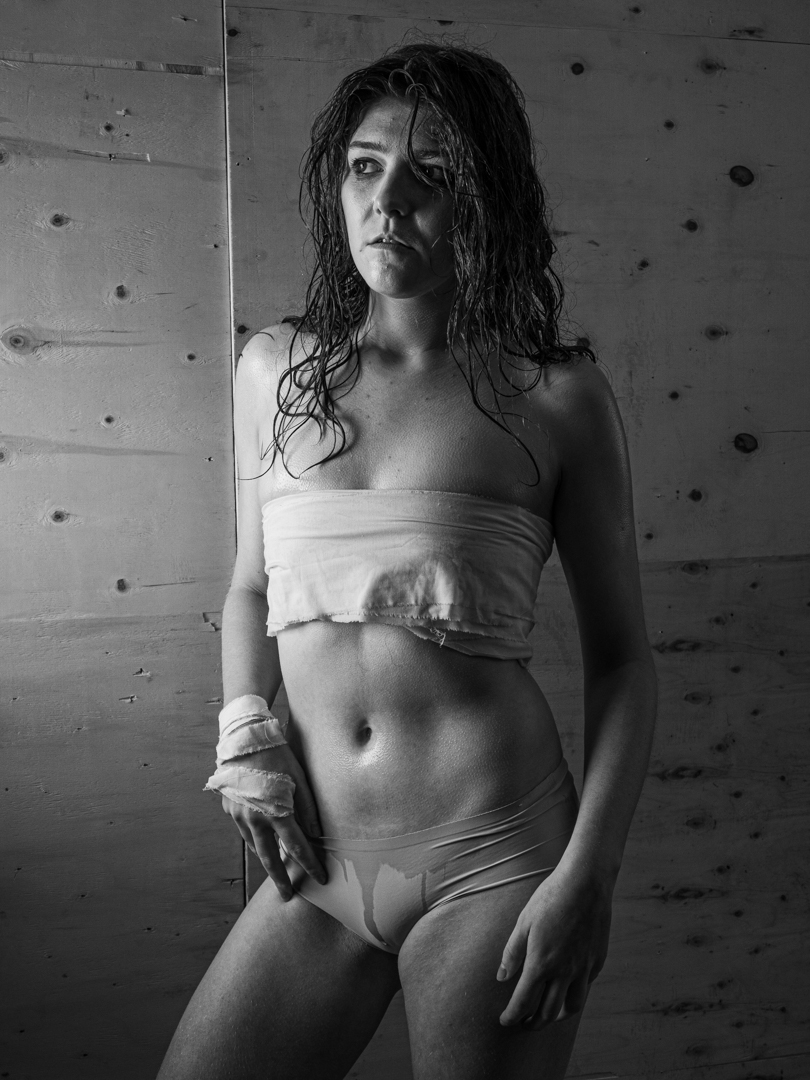
The second set with Devon involved water. She wanted to look like an athlete that had been competing really hard and was covered in sweat. She had brought some strips of fabric that she fashioned into a top and gloves.

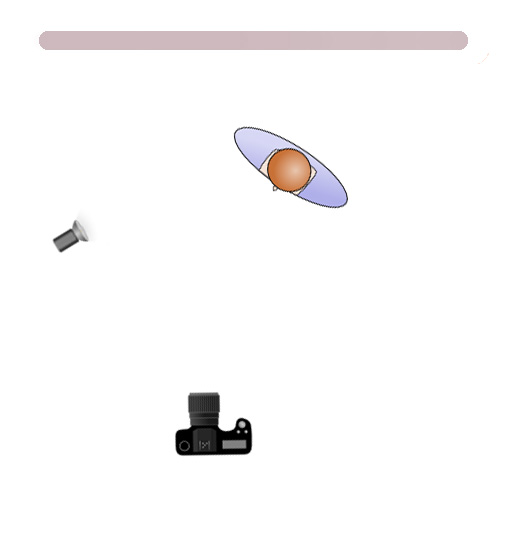
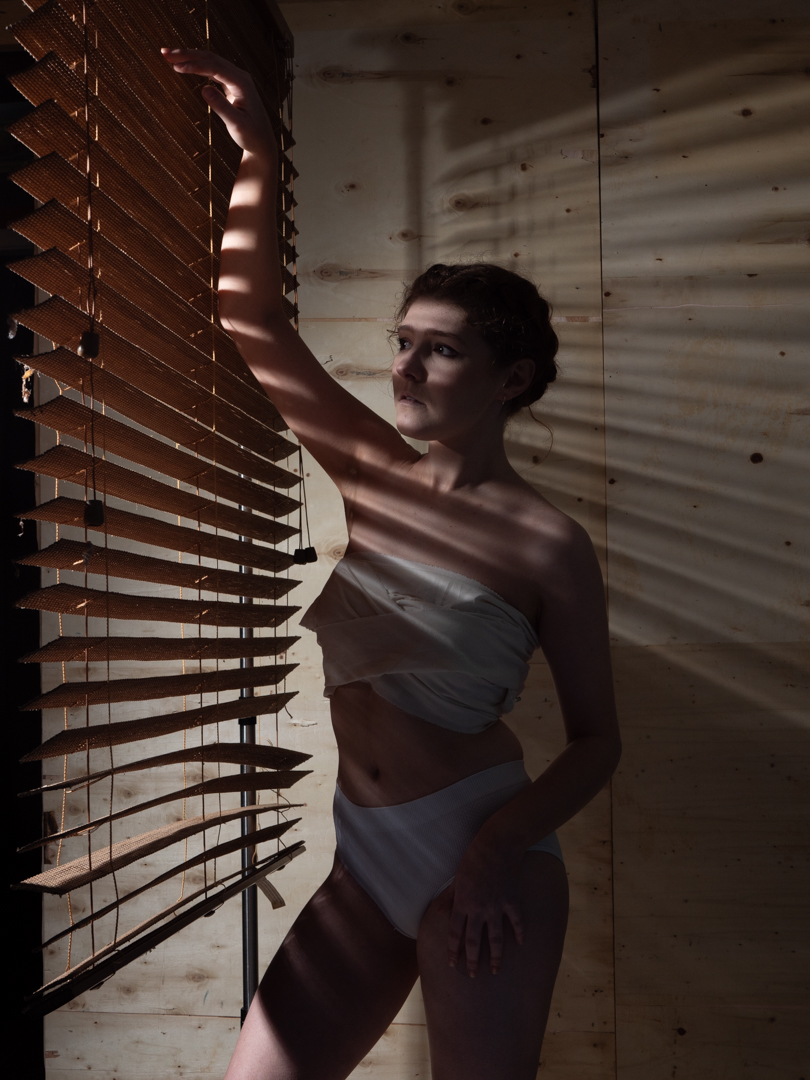
The example images she had shown me had a high degree of contrast. I knew that we needed to go with a punchy hard light. We essentially used it to create shadows in the previous post. It was a simple matter of removing the blinds. Then, we slightly adjusted the strength of the light.

Devon is a real trooper when it comes to getting into a character. She was not phased when she was asked to put baby oil over her skin. Then she was sprayed with water. The oil has two effects. Firstly it prevents the water from absorbing quickly into the skin and secondly it increases the skins reflection. Both of these add to a higher contrast image.

All images were shot using my Lumix G9 1/200s f8 ISO 200 at an equivalent focal length of 50mm. These settings ensured that I had full control over the ambient light.

Devon was really happy with the way that shoot turned out.. 

Devon Shadow Play

After we had such a great time with the Barbie shoot I arranged another session with Devon. I left it up to her to decide what concepts she wanted to shoot. As before, she created a Pinterest board. From it, we determined that she was looking for two quite distinct looks. The first involved heavy shadow and the second water.

In this post we’re going to cover the first one.

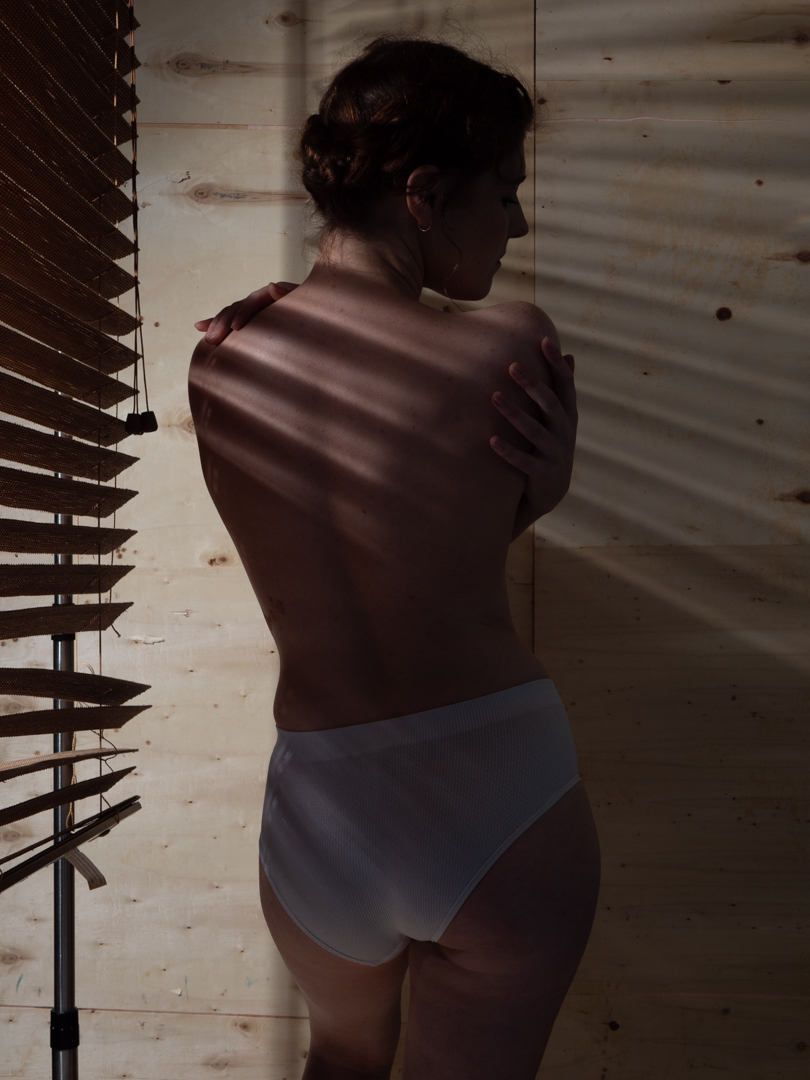
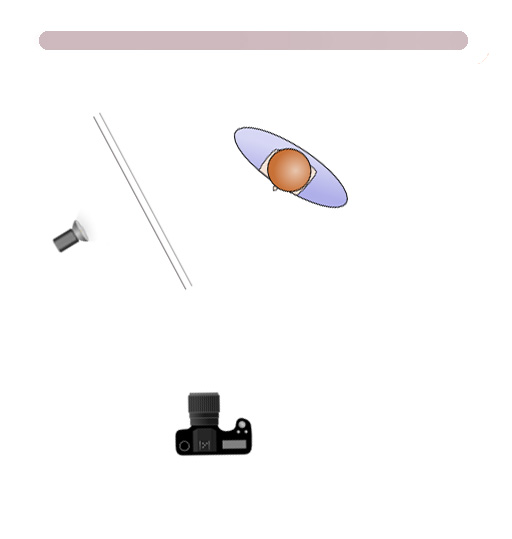
I knew from previous shoots that you could create interesting effects by shooting hard light through Venetian blinds. This appears quite often in film noir images. The key to getting hard shadow was that light had to be very hard. It also needed to be positioned reasonably close to the blinds.

The shoot was planned for the same weekend as the more elaborate record shoot with Rachel that will be covered in later posts. For that I had built a wall using plywood panels. These had interesting features in them so I did not bother covering them.

I clamped a bamboo Venetian blind to the crossbar of light stand and then positioned a strobe in front of it. It was in a 7 inch reflector which insured it delivered a lot of power.

Devon went through a number of costume changes so that we had a variety of images to use.

All images were shot using my Lumix G9 1/200s f8 ISO 200 at an equivalent focal length of 50mm. These settings ensured that I had full control over the ambient light.

The images were exactly what Devon wanted. 

Mumtaz – on the couch

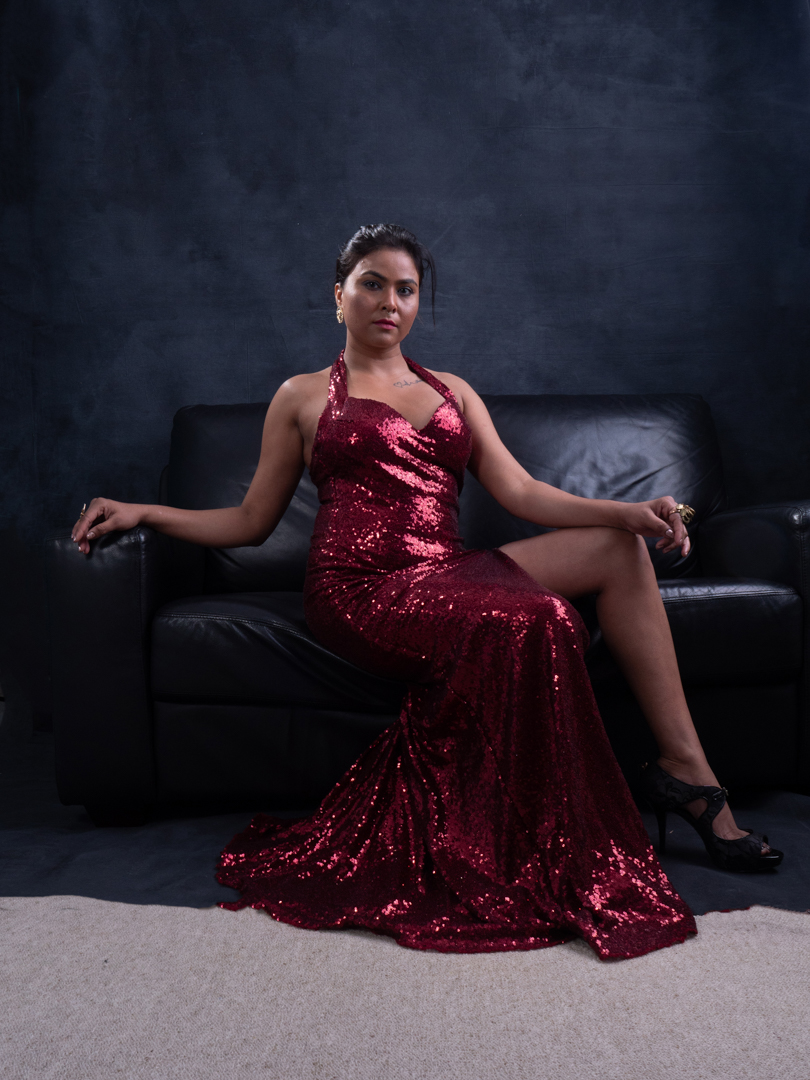
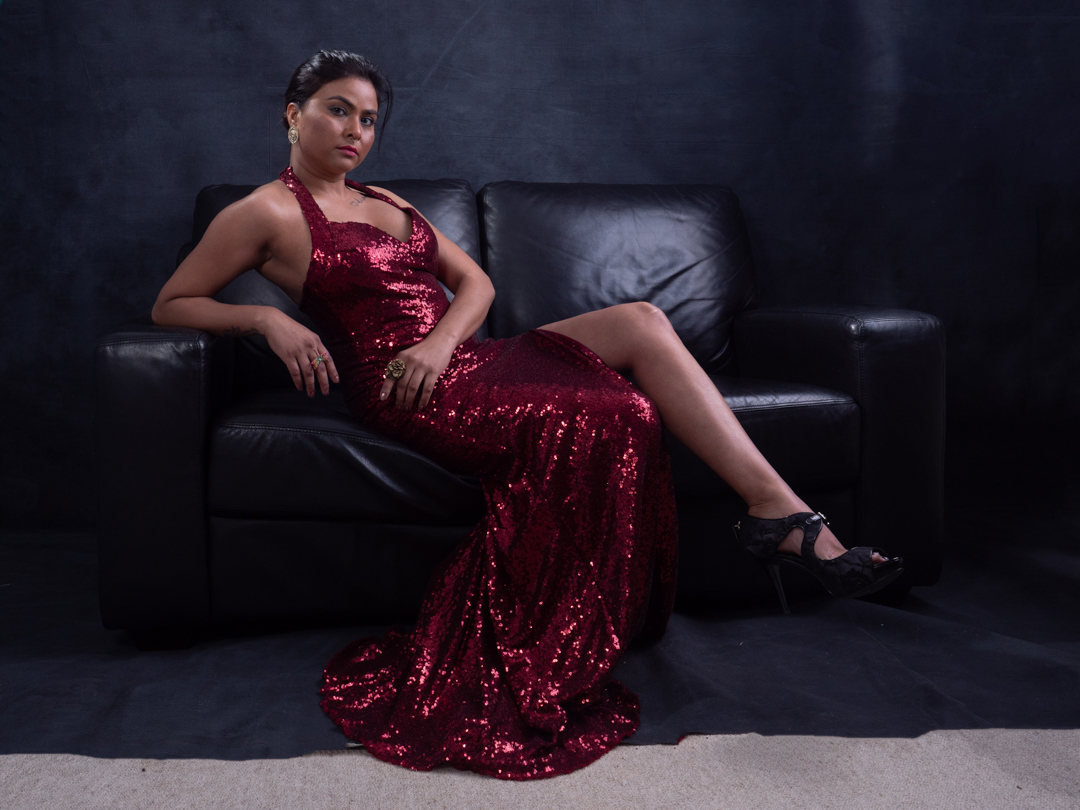
The final outfit that Mumtaz brought was a red sequinned red dress with a long slit up one side. Again it was a good opportunity to show off Mumtaz’s legs.

Unlike the previous shoots, I wanted this one to be slightly more relaxed. So, I brought in a black leather couch for her to recline on.

I asked her to think about a scene where she was relaxing after a night out on the town. Giving a model a concert also helps get them into the right frame of mind for the shoot.

The lighting did not change from the previous shots. The main light was in 1.5m octabox positioned camera right and at a 90° angle to Mumtaz.  

The grid was placed back on the the 7” reflector that was positioned camera left to act as a hairlight. 

As with the previous set on the stool gave Mumtaz a prop to interact with.

All of the images in this post were shot with my Lumix G9. The settings were 1/200s f8 ISO 200. The focal lengths were at 24mm.  Shooting so wide did mean that I was capturing more than I wanted. Fortunately Photoshop makes it fairly easy to remove elements you don’t want from the image.

The other impact of shooting so wide is that it makes anything close to the camera larger. In the final image, her legs are really emphasized.

It was a fun afternoon shooting with Mumtaz.

Mumtaz – on the stool

Asking anyone to stand in front of the camera can be daunting. This is true even if they have substantial experience doing it. I have found that if you want someone to relax, give them something to interact with. This can be as simple as something to sit on or something to put in their hands.

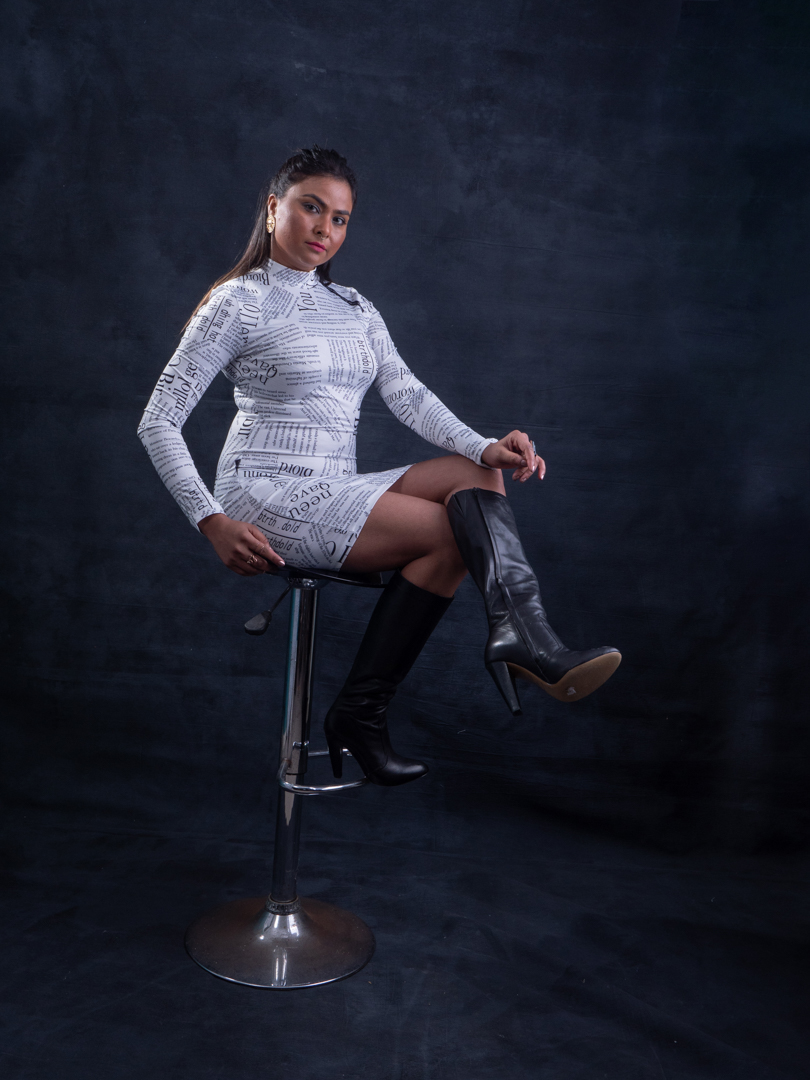
The fourth outfit that Mumtaz brought was a printed white dress. Unlike the previous outfits this one was quite short so it was a good opportunity to show off Mumtaz’s legs. I brought in an adjustable stool for her to sit on.

I also gave her some props to work with. The camera is part of my collection has become somewhat of a theme in that I try to get an image each time with a different models.

The lighting did not change much from the previous shots. The main light was in 1.5 m octabox positioned camera right and at a 90° angle to Mumtaz.  

The grid was placed back on the  the 7” reflector that was positioned camera left.

All of the images in this post were shot with my Lumix G9. The settings were 1/200s f8 ISO 200. The focal lengths were at 24mm. 

Mumtaz – in blue

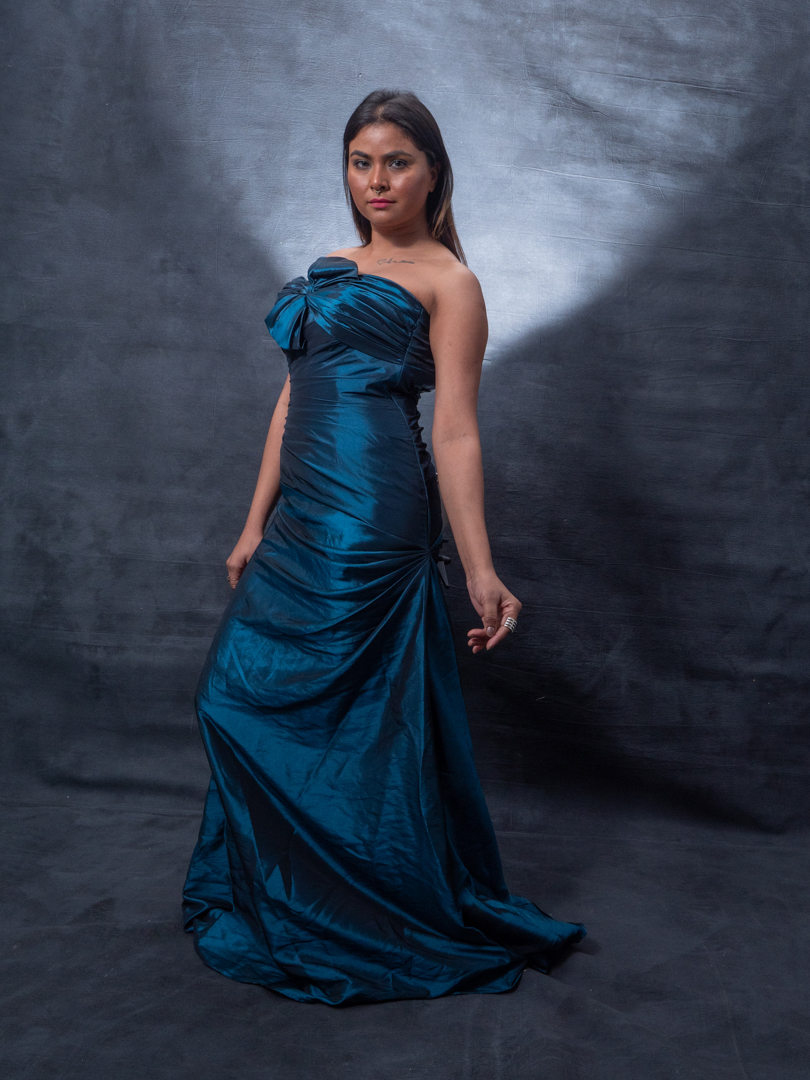
The second outfit that Mumtaz brought was a royal blue dress. This needed to be lit much more than the previous red outfit.

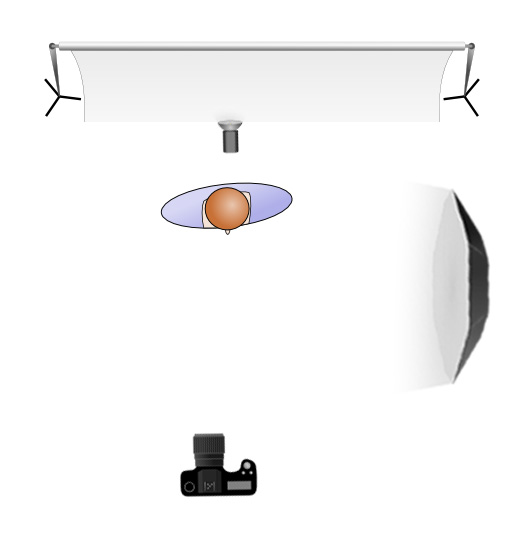
I brought in a 1.5 m octabox and positioned camera right and at a 90° angle to Mumtaz.  This was a much bigger and softer light than the one used in the previous post. 

The grid was removed from the 7” reflector and this was positioned camera left. In this position it acted as a hair light but also without the grid spilled on the background. 

At the end of the session, I repositioned the hairlight. I put it on a floor stand behind Mumtaz, shooting upwards straight into the backdrop. This created definite separation and lighting pattern that I would not normally use.

All of the images in this post was shot with my Lumix G9 with settings 1/200s f8 ISO 200 with focal lengths at 24mm. 

Mumtaz – one light

Mumtaz what’s the other model that had come to the portrait workshop held earlier in the year. At the end of that session, I had arranged for her to come to the studio. We could shoot under more controlled lighting.

She brought along a number of outfits. The shoot nearly lasted two hours that I will cover in this and the next three post. I have split the session into multiple posts because there were a number of lighting changes. I want to show the effect of these changes rather than confuse them in a long single post. 

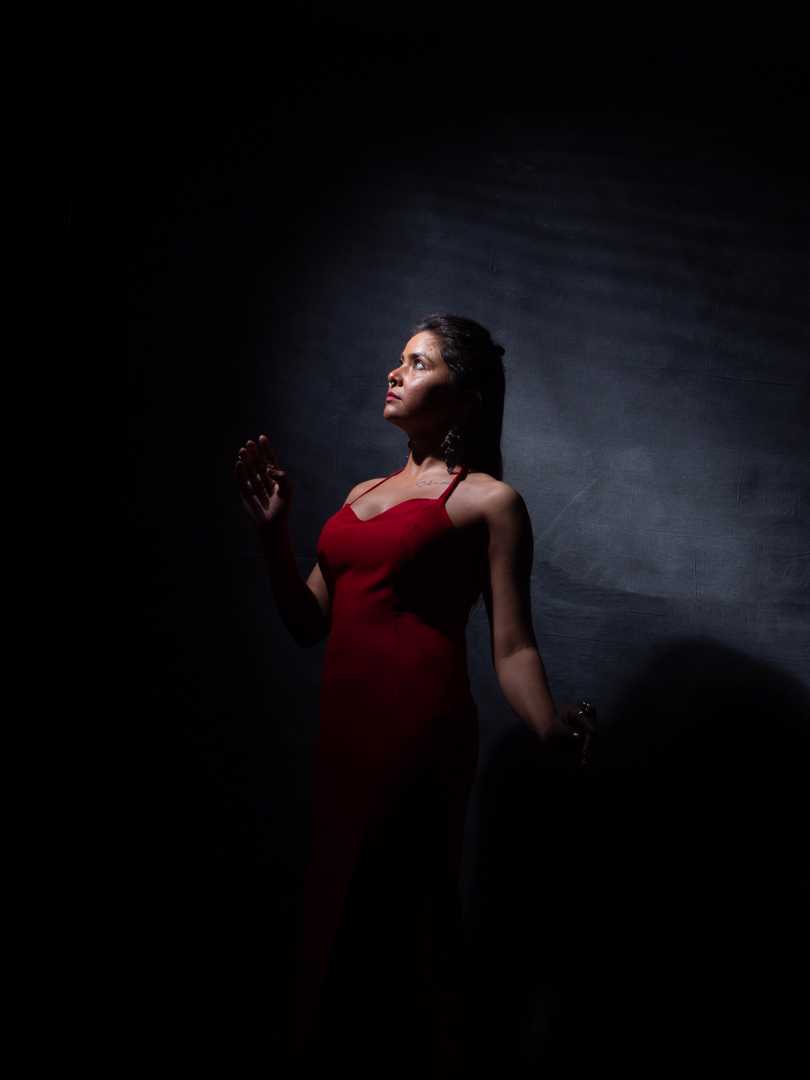
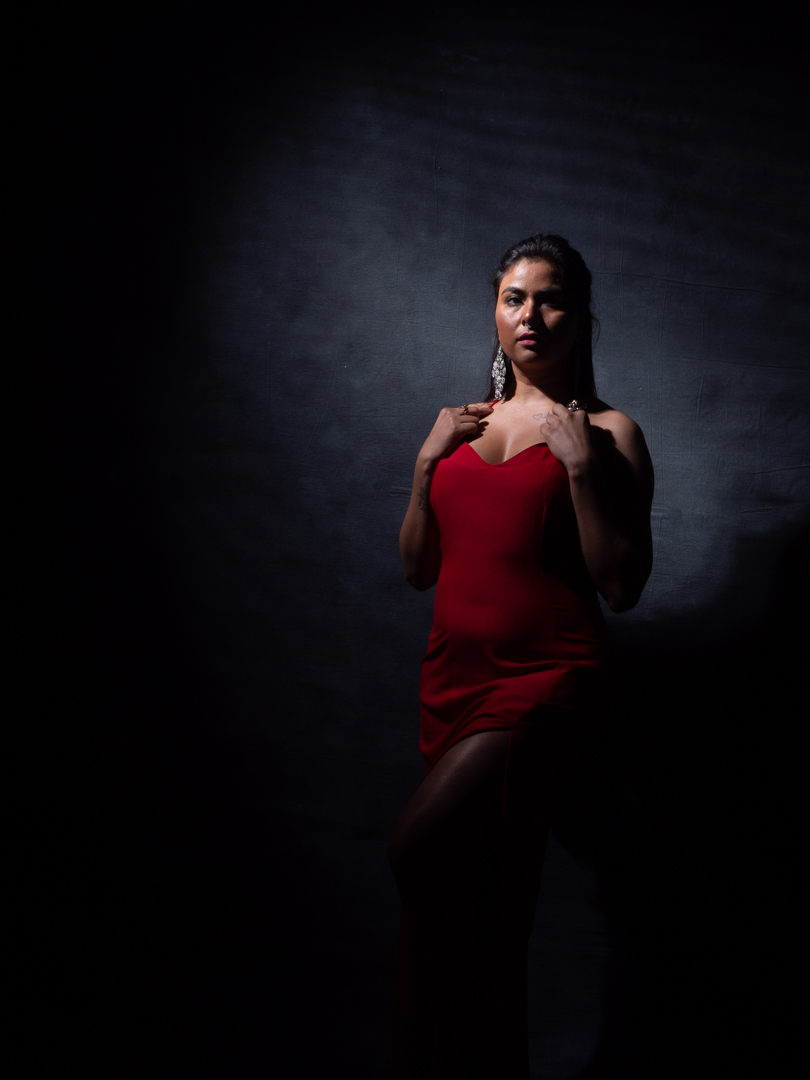
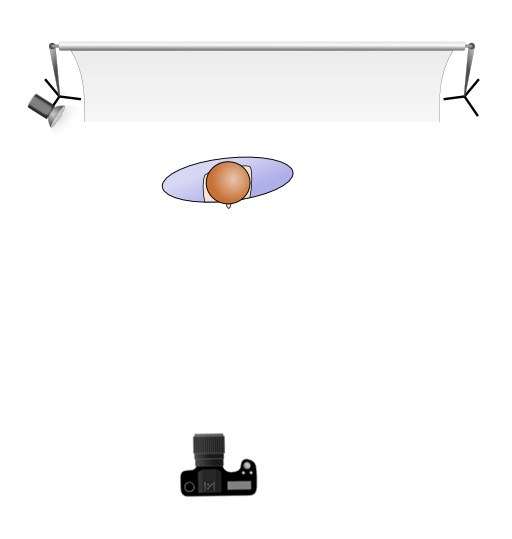
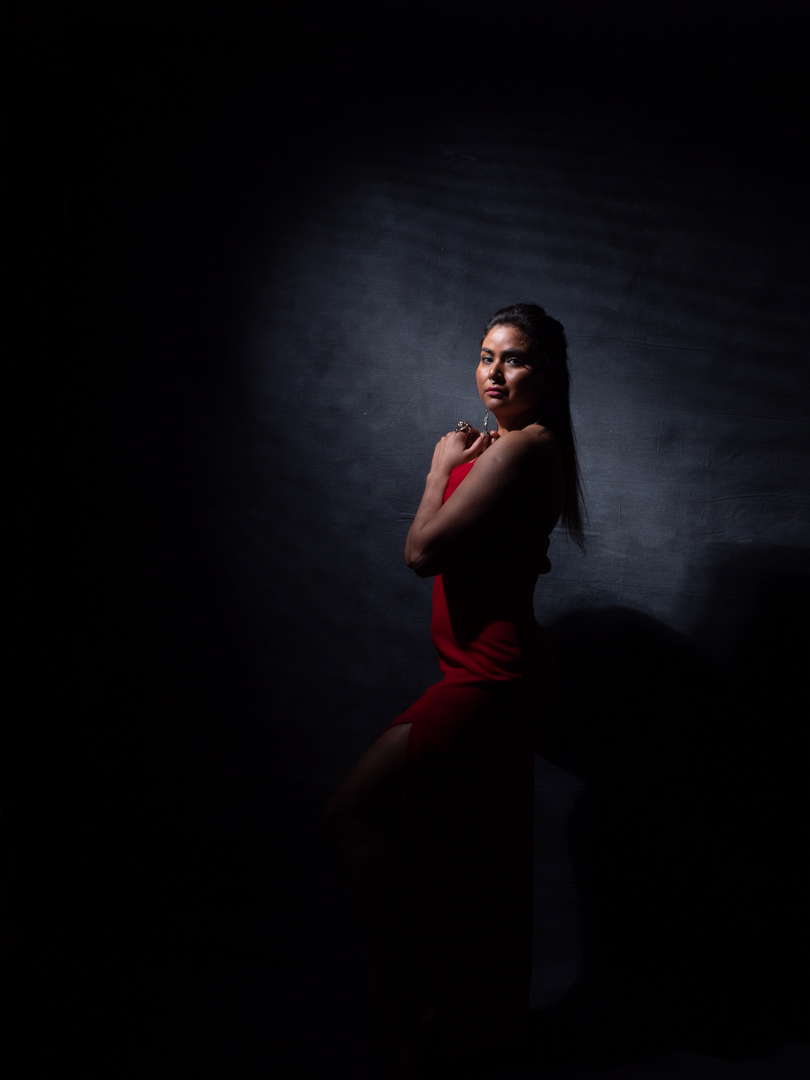
We started with a single light in a 7 inch gridded reflector positioned to camera left and at a 90° angle to Mumtaz. The grid was to control the amount of spill from the light onto the backdrop. This created a very dramatic light with strong contrast and dark shadows.

The disadvantage of such a small light source is that it is very difficult to get light in the models eyes unless they are looking directly towards it.

I shot all of the images in this post with my Lumix G9. The settings were 1/200s f8 ISO 200 with focal lengths at 24mm. The setting ensured that I had full control of the light while also giving me a good depth of field.  

The focal length enabled me to shoot full body in my relatively small studio. The camera was tethered to the computer meaning that I could see them much larger than on the back of the camera. The computer also enabled my subject to see the images and make adjustments on the fly.

I used software developed by Panasonic for the tether. In addition to the memory card in the camera, the photos were transferred to the computer as they were taken. They were stored in a specific folder that I had said up Adobe Lightroom to monitor. As each image came in then appeared in Lightroom.

Lightroom does have a tethering function but at the time it was not available for my camera. I have also found it was not all that stable at the time I was shooting.